
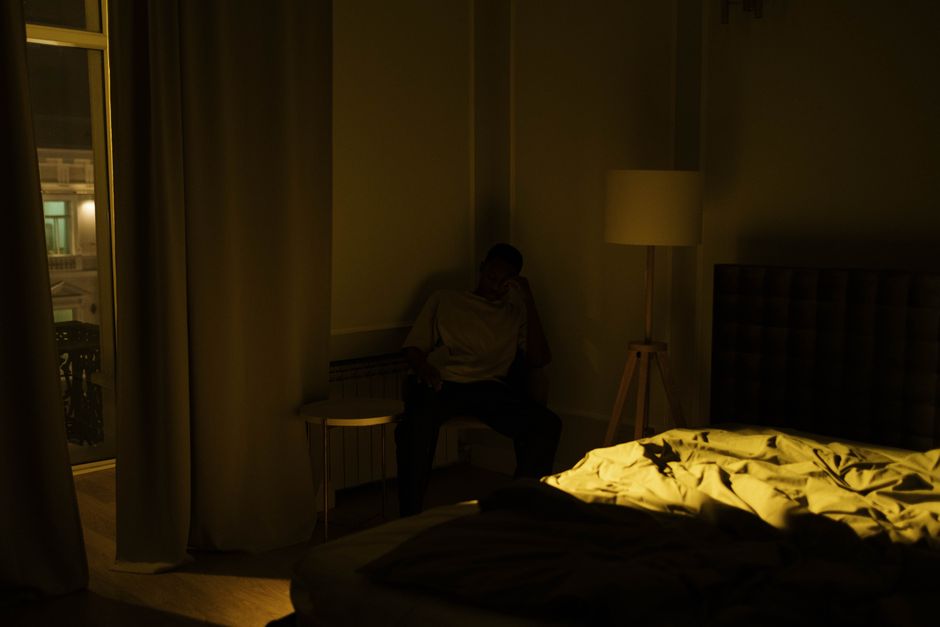
Anxiety often gets louder at night. The house is quiet, distractions fade, and your mind finally has room to run. That shift is not imagined — it reflects real changes in brain activity, hormone levels, and the absence of daytime stimulation that normally keeps worry in the background. Calming nighttime anxiety naturally means working with your body’s sleep and stress systems, not fighting them. The most reliable approaches combine a consistent wind-down routine, breathing and relaxation techniques, light and temperature control, and limits on caffeine and screens.
Why Does Anxiety Get Worse at Night?
Your body runs on a daily rhythm called the circadian system. In the evening, it raises melatonin and lowers core body temperature to prepare you for sleep. At the same time, the prefrontal cortex — the part of the brain that helps you reason through worries — becomes less active as you get sleepy. The amygdala, which generates fear and alarm, does not quiet down on the same schedule.
That mismatch matters. You lose some of the mental braking power that helps you dismiss a passing worry during the day, while the emotional alarm system stays online. A thought that would slide off at noon can feel urgent at midnight.
There is also a feedback loop. Anxiety raises arousal — heart rate, muscle tension, alertness. Arousal makes it harder to fall asleep. Lying awake then fuels more worry, which raises arousal further. Breaking that loop is the goal of most natural approaches.
One clarification worth making: nighttime anxiety is not a sign of weakness or a character flaw. It is a predictable interaction between a stress response and a sleep system that are both doing what they evolved to do.
How Can You Calm Anxiety at Night Naturally?
The most dependable natural methods target the physical side of anxiety first. When your body shifts toward a calmer state, the mental spiral usually loosens on its own.
Slow breathing is the most accessible tool. Breathing at roughly six breaths per minute — slower and deeper than normal — engages the parasympathetic nervous system, the branch that promotes rest. A simple version: inhale through your nose for a count of four, hold briefly, then exhale for a count of six. The long exhale is the part that matters most.
Progressive muscle relaxation is another well-established technique. You tense a muscle group for about five seconds, then release it, moving from your feet to your face. The contrast teaches your body what “relaxed” actually feels like, which many anxious people have trouble sensing.
Guided imagery and body-scan meditation can help too. Some studies suggest these practices reduce self-reported anxiety, though results vary and the quality of evidence differs across techniques. They are low-risk and worth trying if breathing alone is not enough.
What these methods share is that they give your attention a job. An anxious mind at night is often a mind with nothing to do but rehearse. Redirecting attention to breath, sensation, or a mental image interrupts that rehearsal.
What Bedtime Habits Help Most?
Consistency does more for nighttime anxiety than any single trick. Going to bed and waking at the same times every day — including weekends — stabilizes the circadian system that governs both sleep and mood.
A wind-down period of 30 to 60 minutes before bed signals to your brain that the day is closing. During that window, keep the lights dim. Bright light, especially the blue-rich light from screens, can suppress melatonin and delay sleepiness.
- Keep your bedroom cool — most sleep guidance points to a range around 60 to 67°F for adults.
- Use your bed only for sleep and intimacy, so your brain links it with rest rather than worry.
- Write down tomorrow’s tasks or worries before bed. Getting them onto paper can reduce the mental replay.
- Avoid heavy meals, alcohol, and large amounts of fluid close to bedtime.
- Get bright light early in the day to anchor your rhythm.
Alcohol deserves a specific note. It can make you feel drowsy, but it disrupts sleep architecture later in the night and can worsen anxiety the next day. Many people find that a drink before bed backfires.
Does Caffeine Affect Nighttime Anxiety?
Yes, and the effect is often underestimated. Caffeine blocks adenosine, a molecule that builds up during the day and promotes sleepiness. It also stimulates the release of adrenaline-related signals. Caffeine has a half-life of roughly five hours in most adults, meaning a significant portion can still be circulating many hours after your last cup.
The practical takeaway is to set a caffeine cutoff in the early afternoon. For people who are sensitive, even morning coffee can linger. If you are unsure whether caffeine is a factor, a simple experiment is to move your cutoff earlier for a week and notice what changes.
Nicotine is a stimulant as well and can have a similar effect on sleep onset and anxiety.
When Should You Get Help for Nighttime Anxiety?
Occasional anxious nights are common and usually respond to the habits above. It is worth talking to a doctor or mental health professional when anxiety is frequent, when it interferes with work or relationships, or when it has lasted for weeks or months.
Specific signs that warrant a conversation include:
- Lying awake for long stretches most nights
- Daytime fatigue, irritability, or trouble concentrating
- Panic symptoms such as a racing heart, shortness of breath, or a sense of doom
- Anxiety that is spreading to more areas of your life
These patterns can respond well to treatment. Cognitive behavioral therapy for insomnia, often called CBT-I, is a structured approach with strong evidence for chronic sleep problems. Therapy and, in some cases, medication can help with anxiety itself. A clinician can also check for medical causes — thyroid problems, sleep apnea, and some medications can all mimic or worsen anxiety.
If you ever have thoughts of harming yourself, reach out for help right away. In the US, you can call or text 988 to reach the Suicide and Crisis Lifeline.
Can Natural Remedies Replace Treatment?
No. Natural approaches can reduce mild, situational nighttime anxiety, but they are not a substitute for care when anxiety is significant. Supplements marketed for calm or sleep are a mixed picture. Some, like melatonin, have evidence for certain sleep problems, while many others have limited or no strong human trial support for anxiety.
Herbal products can also interact with medications and are not tightly regulated for purity in the US. If you are considering a supplement, especially alongside prescription drugs, talk with a pharmacist or doctor first. This is not a reason to avoid all natural methods — breathing, routine, light control, and caffeine limits carry little risk and real benefit. It is a reason to be skeptical of any product promising a quick fix.
Frequently Asked Questions
What is the fastest natural way to calm anxiety at night?
Slow breathing with a long exhale is the quickest tool for most people, because it directly engages the calming branch of the nervous system. Try inhaling for a count of four and exhaling for a count of six.
Why does my anxiety get worse right before bed?
At night your reasoning brain quiets down while your emotional alarm system stays active, so worries feel bigger. Fewer daytime distractions also give anxious thoughts more room.
Does melatonin help with anxiety at night?
Melatonin helps with sleep timing, not anxiety itself, so it is not a treatment for anxious thoughts. It may help some people fall asleep, but talk to a doctor before using it regularly.
Can I calm nighttime anxiety without medication?
Yes, many people reduce mild nighttime anxiety with breathing, a consistent sleep schedule, dim light, and a caffeine cutoff. If anxiety is frequent or intense, professional support such as therapy is worth pursuing.
