
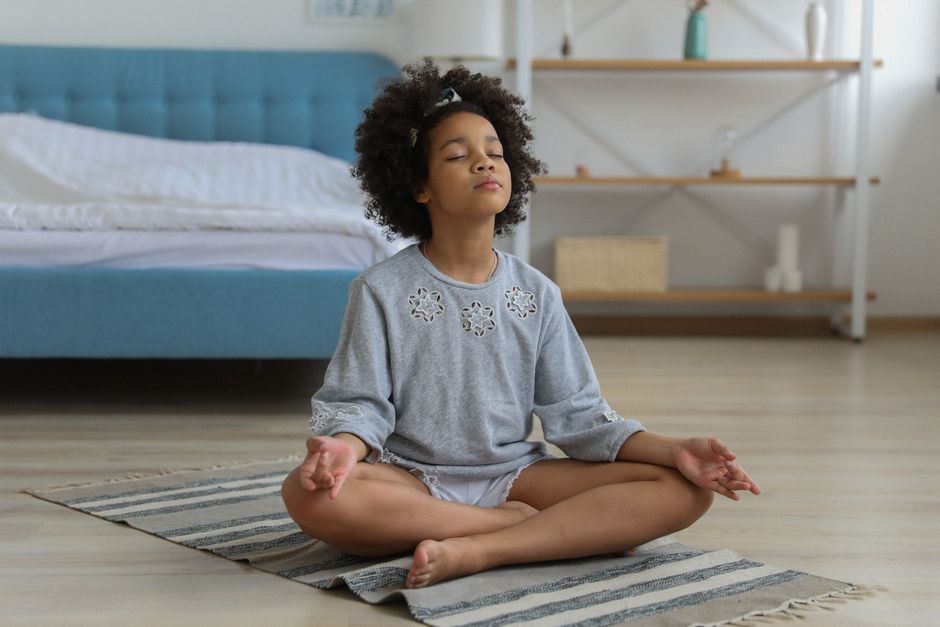
A child’s nervous system calms through the body first, not through reasoning. When a child is upset, their thinking brain is largely offline and their stress response is running the show. The most reliable ways to help are physical: slow breathing, steady touch, movement, and a calm adult nearby. These signal safety to the brainstem before words can reach the thinking mind.
This is not a theory. It reflects how the autonomic nervous system works. The calming branch — the parasympathetic system — responds to physical cues like slow exhaled breath, warmth, and rhythm. Understanding that order of operations changes how you respond to a dysregulated child.
Why Can’t A Child Just Calm Down When Asked?
Because the part of the brain that handles reasoning is not fully available during distress. During a strong stress response, activity shifts toward lower, more primitive brain regions. The prefrontal cortex — responsible for logic, impulse control, and self-talk — becomes less influential. This is not defiance. It is physiology.
This process is more pronounced in children because the prefrontal cortex keeps developing well into early adulthood. A young child has less capacity to override a stress response than an adult does. Asking a child mid-meltdown to “use their words” or “calm down” asks them to use a brain region that is temporarily suppressed.
The practical takeaway is simple. Calm the body first. Reasoning comes later, once the stress response has settled. This is why a child who seemed unreachable during a tantrum can often discuss it calmly twenty minutes afterward.
How Do You Calm a Child’s Nervous System in 8 Ways?
These eight approaches target the body’s calming pathways directly. They work best when used early, before distress escalates. None of them require special equipment or training.
1. Slow the Exhale
Breathing out slowly activates the parasympathetic response. The key is a longer exhale than inhale. You can ask a child to “smell the flower, blow out the candle” — a simple way to lengthen the out-breath without complicated counting.
For older children, a count of in for four and out for six works. Do not force it. A child who is crying hard cannot slow their breath on command. Model it yourself first. Children co-regulate with adults, meaning their nervous systems pick up cues from yours.
2. Use Steady, Predictable Touch
Slow, firm pressure can be calming. Light, ticklish touch often has the opposite effect. A firm hand on the back, a slow back rub, or a firm hug — offered only if the child welcomes it — can help settle the stress response.
Some children prefer deep pressure, like being wrapped in a blanket or squeezed gently between cushions. Others do not want to be touched at all during distress. Watch the child. Respect a refusal to be held. Forced comfort can escalate a stress response rather than calm it.
3. Move the Body
Physical movement discharges stress hormones and helps complete the stress cycle. A short run, jumping jacks, pushing against a wall, or stomping can help a child’s body “finish” the stress response it started.
This is why some children pace or stomp when angry. The body is trying to regulate itself. Offering a safe physical outlet — “let’s push this wall together” — can be more effective than asking a child to sit still. Sitting still is often the hardest thing for a dysregulated nervous system to do.
4. Lower Your Own Voice and Slow Your Movements
Children read adult nervous systems constantly. If you are speaking fast and moving sharply, their stress response stays switched on. Slowing your speech, lowering your volume, and moving deliberately gives their brain a signal that the threat is over.
This is co-regulation, and it is one of the most reliable tools available. It works because humans are wired to sync with the people around them. A calm adult is often more effective than any technique. If you are escalated yourself, taking one slow breath before responding is not a cliché — it changes what your child’s nervous system reads from you.
5. Reduce Sensory Load
Bright light, loud noise, crowding, and screens add to the load a child’s nervous system is already carrying. Dimming lights, turning off background noise, and moving to a quieter space removes input the brain has to process.
For some children, this is the single most effective step. A child who is overstimulated is not being difficult — their system is overwhelmed. Reducing input gives the nervous system less to manage and room to settle.
6. Offer Rhythm and Repetition
Rhythmic, repetitive activity is calming. Rocking, swinging, bouncing gently, or listening to a steady beat can help regulate a child’s nervous system. This is part of why rocking a baby works and why many children calm to music or a repeated story.
Repetition signals predictability, and predictability signals safety to the brain. A familiar routine at bedtime, a repeated song, or a predictable sequence of steps before something stressful can lower the baseline stress level before distress even starts.
7. Name the Feeling — After the Body Settles
Naming emotions helps children build emotional regulation over time, but timing matters. Labeling feelings works best once the body has calmed, not during peak distress. During a meltdown, a child often cannot process language well.
Once the storm passes, a simple “that looked really frustrating” helps a child connect words to what they felt. Over time, this builds the vocabulary and self-awareness that support regulation. It is a long game, not an instant fix. Research on emotion labeling suggests that putting feelings into words can help dampen emotional reactivity, though the effect in children varies and is not a quick solution during acute distress.
8. Build a Calm-Down Routine Before You Need It
A nervous system calms more easily when it has practiced calming. Teaching a child a simple routine — a breathing exercise, a cozy corner, a favorite calming activity — when they are already calm makes it easier to use when they are not.
Practice during neutral moments. A child who has rehearsed “when I’m upset, I go to my calm spot and squeeze my pillow” is more likely to use it than a child hearing the idea for the first time mid-tantrum. This is skill-building, not discipline.
Does This Work for Every Child?
No. Children differ widely in what calms them. A child with sensory sensitivities, anxiety, or a developmental condition may respond differently to each approach. Some children need more movement. Others need less input. Some want touch. Others find it overwhelming.
There is no single method that works for every child, and no technique reliably calms every nervous system every time. The eight approaches above are tools to try, not a formula. Pay attention to what actually helps your child and build from there.
If a child’s distress is frequent, intense, or interfering with daily life, it is worth talking with a pediatrician. Persistent difficulty with regulation can have many causes, and a professional can help sort out what is going on. This article is informational and does not replace individual medical advice.
What Actually Helps vs. What Sounds Good
Some popular advice does not hold up. Telling a child to “just calm down” does not work because it targets reasoning during a state when reasoning is limited. Punishing a meltdown treats a stress response as misbehavior, which tends to escalate rather than resolve it.
Another common idea is that children should be left alone to “self-soothe” through big distress. For young children especially, the evidence supports co-regulation — calming with a supportive adult — as the foundation for eventually learning to self-regulate. Self-soothing is a skill that develops with support, not in isolation.
What does hold up: physical calming strategies, a calm adult presence, reduced sensory input, and predictable routines. These align with how the autonomic nervous system actually responds to safety cues. They are not tricks. They work with the body’s wiring rather than against it.
One clarification worth making: a child who calms down after a technique is not “being manipulated” or “getting their way.” Calming a stress response is not the same as giving in to a demand. You can hold a boundary and still help a child’s body settle. The two are not in conflict.
Frequently Asked Questions
How long does it take to calm a child’s nervous system?
It varies by child and situation, and there is no fixed timeline. A settled adult, reduced sensory input, and slow breathing often help within minutes, but a highly distressed child may take longer.
What is the fastest way to calm a child’s nervous system?
Lowering your own voice and slowing your movements is often the fastest first step, because children pick up cues from adult nervous systems. Reducing sensory input and slowing the exhale are close behind.
Should I hug a child during a meltdown?
Only if the child welcomes it, since forced comfort can escalate distress. A firm, steady hug helps some children and overwhelms others, so watch for cues and respect a refusal.
When should I talk to a doctor about my child’s regulation?
Talk with a pediatrician if distress is frequent, intense, or interfering with daily life. Persistent difficulty with regulation can have many causes, and a professional can help identify what is going on.
