
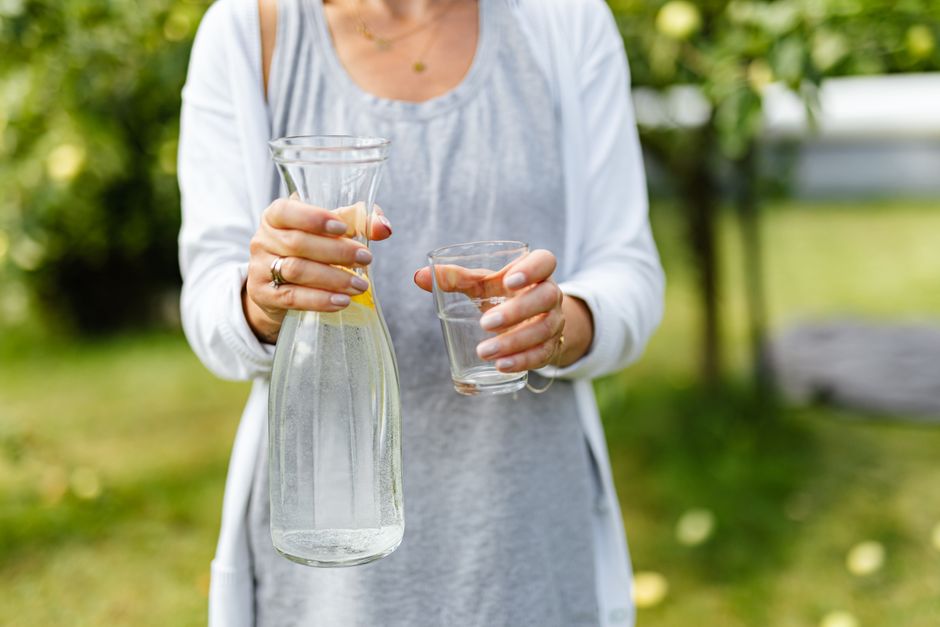
Your body needs water to regulate temperature, move nutrients, and keep organs working. A common starting point for healthy adults is about 30 to 35 milliliters of fluid per kilogram of body weight per day. For a 70 kg (154 lb) adult, that works out to roughly 2.1 to 2.5 liters (about 9 to 10.5 cups) daily. Age matters because kidney function, body water percentage, and thirst response all change across the lifespan.
How To Calculate Your Fluid Needs By Weight And Age
The weight-based formula is simple. Multiply your body weight in kilograms by 30 to 35 milliliters. If you weigh 60 kg (132 lb), that gives you 1,800 to 2,100 milliliters, or about 1.8 to 2.1 liters per day. If you weigh 90 kg (198 lb), it gives you 2,700 to 3,150 milliliters, or about 2.7 to 3.15 liters.
To convert pounds to kilograms, divide your weight in pounds by 2.2. A 160 lb person weighs about 73 kg.
This formula estimates total fluid from all sources, not just plain water. It includes water from food, coffee, tea, juice, and other beverages. Food typically provides about 20 percent of total daily fluid intake, according to the National Academies of Sciences, Engineering, and Medicine.
Age adjusts the formula in practical ways:
- Adults 19 to 50: The 30 to 35 mL/kg range fits most healthy people with normal kidney function.
- Adults over 50: Thirst sensation tends to decline. The formula stays the same, but relying on thirst alone becomes less reliable.
- Adults over 65: Kidney concentrating ability decreases. Some clinicians suggest aiming toward the higher end of the range, but individual medical conditions matter more than age alone.
- Children: Weight-based formulas exist but differ by age group. No single formula covers all pediatric ages safely without pediatric guidance.
The National Academies set general daily fluid intake recommendations of about 3.7 liters for men and 2.7 liters for women, including fluid from food. These are population averages, not individual prescriptions. Your actual need depends on your weight, activity level, climate, and health status.
Why Does Body Weight Change How Much Water You Need?
Water makes up roughly 60 percent of body weight in adult men and about 55 percent in adult women. A larger body holds more water and loses more through normal metabolism, breathing, and waste removal. The relationship is roughly proportional.
Fat tissue holds less water than muscle. This means two people at the same weight can have different fluid needs if their body composition differs. A person with more muscle mass will generally need more fluid than a person with more fat at the same body weight. This is one reason the 30 to 35 mL/kg formula is a starting estimate, not a precise measurement.
Baseline losses happen constantly. Breathing alone eliminates water vapor with every exhale. Skin loses water through sweating and through insensible perspiration, the moisture that evaporates without you noticing. The kidneys filter and excrete water to remove waste products. These losses add up to roughly 2 to 3 liters per day in a typical adult, which is why intake has to match output.
How Does Age Affect Fluid Needs?
Age changes how the body handles water in three key ways. First, total body water percentage decreases with age. A newborn is about 75 percent water. By older adulthood, that can drop to around 50 percent. Second, the kidneys become less efficient at concentrating urine, so more water is lost to produce the same amount of waste clearance. Third, the thirst mechanism weakens.
That last point matters most. Thirst is the body’s primary signal for drinking. In younger adults, thirst triggers well before dehydration becomes dangerous. In older adults, that signal can be delayed or blunted. Research on aging and hydration consistently shows that older adults may not feel thirsty until they are already mildly dehydrated.
This does not mean older adults need dramatically more water. It means they may need to drink on a schedule rather than waiting for thirst. Some clinicians recommend keeping a water bottle visible and sipping throughout the day. That is practical advice, not a formal guideline.
Children have different considerations entirely. Their bodies have a higher water percentage, and their kidneys are not fully mature. They also lose fluid faster through sweating relative to their size. No single weight-based formula applies across all pediatric ages. The American Academy of Pediatrics provides guidance for specific situations like illness and sports, but general daily fluid needs for children should be discussed with a pediatrician.




What Other Factors Change Your Fluid Needs?
Weight and age are starting points. Several other factors can push your needs up or down.
- Physical activity: Exercise increases fluid loss through sweat. The American College of Sports Medicine recommends drinking before, during, and after exercise, but individual sweat rates vary widely.
- Climate: Hot and humid weather increases sweat losses. High altitude also increases fluid loss through faster breathing and increased urine output.
- Pregnancy and breastfeeding: Fluid needs increase substantially. The National Academies recommend about 3.0 liters daily during pregnancy and about 3.8 liters during breastfeeding. These are general recommendations, not personalized prescriptions.
- Illness: Fever, vomiting, and diarrhea all increase fluid loss. Oral rehydration solutions are the standard for significant fluid loss from diarrhea, not plain water alone.
- Medications: Diuretics increase urine output. Some medications affect thirst or kidney function. Your prescriber should tell you if a medication changes your fluid needs.
- Medical conditions: Heart failure, kidney disease, and liver disease often require fluid restriction. In these cases, the weight-based formula does not apply. Follow your doctor’s instructions instead.
The formula is a baseline for healthy adults. It is not a target for people with conditions that affect fluid balance.
Can You Drink Too Much Water?
Yes. Drinking more water than your kidneys can excrete leads to a condition called hyponatremia, where sodium levels in the blood drop dangerously low. This is rare in normal daily life but can happen during endurance events, extreme water-drinking challenges, or when someone forces fluids beyond thirst.
The kidneys can typically excrete about 0.8 to 1.0 liters of water per hour. Drinking faster than that for an extended period can overwhelm them. Symptoms of hyponatremia include headache, nausea, confusion, and in severe cases, seizures and coma. It is a medical emergency.
This is why “drink as much water as possible” is not good advice. The goal is balance, not maximum intake. For most healthy adults eating regular meals, drinking to thirst and staying roughly within the weight-based range works well.
How Can You Tell If You Are Drinking Enough?
Urine color is a practical gauge. Pale yellow or straw-colored urine generally suggests adequate hydration. Dark yellow or amber urine suggests you may need more fluid. Clear, colorless urine throughout the day may mean you are drinking more than you need.
Other signs of dehydration include dry mouth, fatigue, dizziness, and infrequent urination. Thirst is a reliable signal for most healthy younger adults. For older adults, it is less reliable, which is why scheduled drinking can help.
Body weight changes can also indicate fluid status. Losing 1 to 2 percent of body weight during exercise without replacing fluids signals mild dehydration. That is a well-established measure in sports medicine.
The weight-and-age formula gives you a reasonable daily target. Urine color and how you feel give you real-time feedback. Together, they are more useful than either one alone.
Do Coffee, Tea, and Other Drinks Count Toward Fluid Needs?
Yes. All beverages contribute to daily fluid intake. This includes coffee, tea, juice, milk, and soft drinks. The idea that caffeinated drinks dehydrate you is largely a myth for moderate consumption. Research published in the Journal of Human Nutrition and Dietetics found that moderate coffee and tea intake contributes to daily fluid needs similarly to water.
Alcohol is different. It has a diuretic effect, meaning it increases urine output. Drinks with alcohol do not hydrate as effectively as water or other non-alcoholic beverages. This does not mean you need to avoid alcohol entirely, but it does mean you should not count alcoholic drinks toward your fluid goal.
Food also counts. Fruits, vegetables, soups, and yogurt have high water content. Foods like watermelon, cucumber, and lettuce are over 90 percent water by weight. A diet rich in produce can provide a meaningful portion of daily fluid needs.
Sugary drinks and sports drinks add fluid but also add sugar and calories. For everyday hydration, water and unsweetened beverages are the simplest choice. Sports drinks are useful during prolonged intense exercise when you also need electrolytes, but they are not necessary for general hydration.
When Should You Talk to a Doctor About Fluid Intake?
Talk to your doctor if you have heart failure, kidney disease, liver disease, or any condition that affects fluid balance. These conditions often require specific fluid targets that differ from the general formula.
Also talk to your doctor if you notice persistent changes in thirst, urination, or urine color that do not match your fluid intake. Excessive thirst and frequent urination can be signs of diabetes. Dark urine that does not lighten with increased drinking can signal a kidney or liver problem.
If you take diuretics or other medications that affect fluid balance, ask your prescriber whether your fluid intake needs adjustment. Do not change your fluid intake based on a formula if you have a medical condition without checking with your doctor first.
Frequently Asked Questions
How many ounces of water should I drink per day?
For a 70 kg (154 lb) adult, the weight-based formula gives roughly 2.1 to 2.5 liters, or about 70 to 85 ounces, of total fluid per day. This includes water from food and other beverages, not just plain water.
Does age change how much water I need?
Age affects how the body handles water more than it changes the total amount needed. Older adults have a weaker thirst signal and less efficient kidneys, so they may need to drink on a schedule rather than waiting for thirst.
Can I drink too much water?
Yes, drinking more than your kidneys can excrete can cause hyponatremia, a dangerous drop in blood sodium. This is rare in normal daily life but can happen during endurance events or extreme water-drinking challenges.
Do coffee and tea count toward my daily fluid intake?
Yes, moderate coffee and tea intake contributes to daily fluid needs. Research indicates that caffeinated beverages do not dehydrate you when consumed in normal amounts.
