
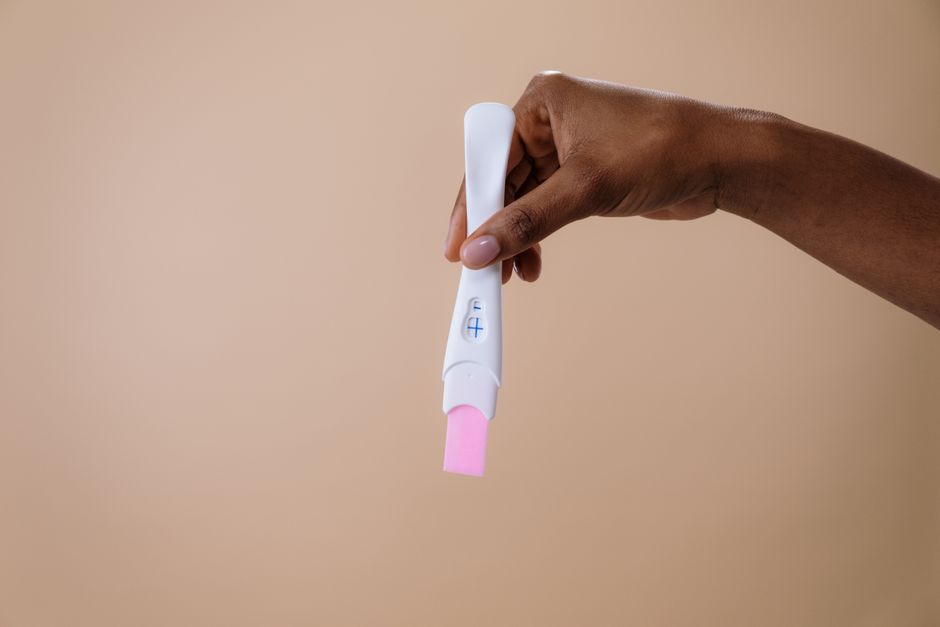
DPO stands for days past ovulation. You calculate it by counting forward from the day after ovulation, with the day after ovulation counted as 1 DPO. Most home pregnancy tests give reliable results around the time of a missed period, which typically falls somewhere between 12 and 16 DPO depending on your cycle length.
That simple counting method is the backbone of fertility tracking. But the numbers around it get muddled fast, because ovulation timing is rarely as precise as an app suggests. Here is what the count actually means, what it does not mean, and when testing makes sense.
How To Calculate Dpo In Pregnancy And When To Test
DPO is a count of days, not a measurement of anything happening inside your body. The day you ovulate is day zero. The next day is 1 DPO. You keep counting until your period starts or a test turns positive.
If you know your ovulation date, the math is trivial. The difficulty is knowing the ovulation date in the first place. Ovulation is not a single instant. It is a process that unfolds over roughly a day, and the egg itself survives only about 12 to 24 hours after release.
Here is how people estimate ovulation in practice:
- Ovulation predictor kits detect a surge in luteinizing hormone (LH) in urine. Ovulation usually follows the start of that surge within about 24 to 36 hours, though the range varies. Many kits tell you to count the day after a positive result as ovulation day, but this is an estimate, not a certainty.
- Basal body temperature rises slightly after ovulation because of progesterone. The problem is that the rise confirms ovulation after the fact. It cannot tell you ovulation is about to happen.
- Cervical mucus changes — becoming clear and stretchy — suggest the fertile window is open. This is a sign, not a timestamp.
- Cycle apps predict ovulation from past cycle lengths. They are guesses based on patterns, and they can be wrong, especially if your cycles vary.
This is where a lot of frustration starts. A woman may believe she is 10 DPO when she is actually 7 DPO, or 13 DPO. The count is only as good as the ovulation estimate underneath it.
One clarification worth making: DPO counts are used for two different things. They help time pregnancy testing, and they help estimate gestational age before an ultrasound. Those are related but not identical uses, and the second one is a clinical estimate that a doctor or sonographer will confirm.
What Happens Inside Your Body During The Two-Week Wait?
After ovulation, the empty follicle that released the egg becomes a structure called the corpus luteum. It produces progesterone, which prepares the lining of the uterus for a possible pregnancy.
If fertilization happens, the developing embryo travels down the fallopian tube and implants in the uterine lining. Implantation typically occurs somewhere around 6 to 12 days after ovulation, though the timing varies. Once implanted, the embryo begins producing human chorionic gonadotropin (hCG), the hormone pregnancy tests detect.
If fertilization does not happen, the corpus luteum breaks down, progesterone falls, and the uterine lining sheds as a period. This phase, from ovulation to the start of the next period, is called the luteal phase. It is usually fairly consistent from cycle to cycle in the same person, commonly around 12 to 14 days, but normal variation exists.
That consistency matters. It means the gap between ovulation and a missed period is roughly predictable for most people, which is why testing guidance centers on the missed period rather than on a specific DPO number.
When Should You Take A Pregnancy Test?
The most reliable time to test is after a missed period. That is the guidance most test manufacturers and clinicians give, and it exists for a practical reason: testing too early raises the chance of a false negative.
Here is the logic. A test can only turn positive after implantation has occurred and enough hCG has built up in urine to be detected. If you test at 8 DPO, implantation may not have happened yet. The test is negative not because you are not pregnant, but because the hormone is not there yet.
Early-result tests are marketed as sensitive enough to detect pregnancy before a missed period. Some can detect lower levels of hCG than standard tests. Even so, no test can detect a hormone that has not been produced yet, and implantation timing varies from person to person. Testing a few days before a missed period may work for some people and produce a false negative for others.
A reasonable approach many clinicians suggest is to wait until the day of the expected period. If the result is negative and the period still does not come, retest a few days later. First-morning urine is often recommended because it tends to be more concentrated.
If you are tracking DPO and want a rough frame: testing before roughly 10 to 12 DPO carries a meaningful risk of a false negative simply because implantation may not have finished. Testing at or after the expected period date is more dependable.
Why Does The DPO Count Sometimes Not Match Reality?
The count is only as accurate as the ovulation estimate. Several things can throw it off.
An LH surge does not always lead to ovulation on a predictable schedule. Some cycles produce a surge without releasing an egg. Others release the egg later than expected. Basal body temperature confirms ovulation happened but cannot pinpoint the day precisely.
Cycle length also matters. A person with a 28-day cycle who ovulates around day 14 has a different DPO timeline than someone with a 35-day cycle who ovulates around day 21. Apps that assume a standard 14-day ovulation can be off by a week or more for people with longer or irregular cycles.
There is also the matter of what DPO is used for. In a clinical setting, gestational age is usually calculated from the first day of the last menstrual period, not from DPO. Early ultrasound is the most accurate way to date a pregnancy when the last period date is uncertain. DPO can inform the conversation, but it does not replace clinical dating.
What Symptoms Should You Expect At Different DPO Counts?
This is a place where honest information is hard to find, because early pregnancy symptoms and premenstrual symptoms overlap heavily. Both involve rising progesterone in the second half of the cycle.
Breast tenderness, bloating, fatigue, and mild cramping can occur in the luteal phase whether or not pregnancy has happened. That means a symptom at 7 DPO is not a reliable sign of anything. It is a normal hormonal response.
Implantation bleeding, when it occurs, is often described as light spotting, and it can happen around the time of implantation. But many pregnant women never experience it, and many non-pregnant women have mid-cycle spotting for unrelated reasons. It is not a dependable indicator.
The short version: symptom-spotting during the two-week wait is common and understandable, but it is not diagnostic. The only way to know is a test after enough time has passed.
Does Testing Earlier Ever Make Sense?
For most people, no. Testing before a missed period mainly produces ambiguous results and repeat testing.
There is one situation where earlier testing may be discussed with a clinician: if you are undergoing fertility treatment, such as IVF, your clinic will give you a specific test date based on the protocol. That date is set for a reason and should be followed rather than replaced with a home calculation.
If you have irregular cycles or a condition that affects ovulation, a doctor can help interpret timing and testing. Home tracking tools are useful, but they are not a substitute for clinical guidance when cycles are unpredictable.
Frequently Asked Questions
How do you calculate DPO after ovulation?
Count the day after ovulation as 1 DPO and add one each day. The day of ovulation itself is day zero.
Can you get a positive pregnancy test at 8 DPO?
It is possible but unreliable, because implantation may not have occurred yet. Testing after a missed period gives a more dependable result.
What is the best DPO to take a pregnancy test?
Testing at or after the expected period date is most reliable. That usually falls around 12 to 16 DPO, depending on your luteal phase length.
Does a negative test at 10 DPO mean you are not pregnant?
No. A negative result at 10 DPO can be a false negative if implantation happened late or hCG levels are still low, so retesting after a missed period is recommended.
