
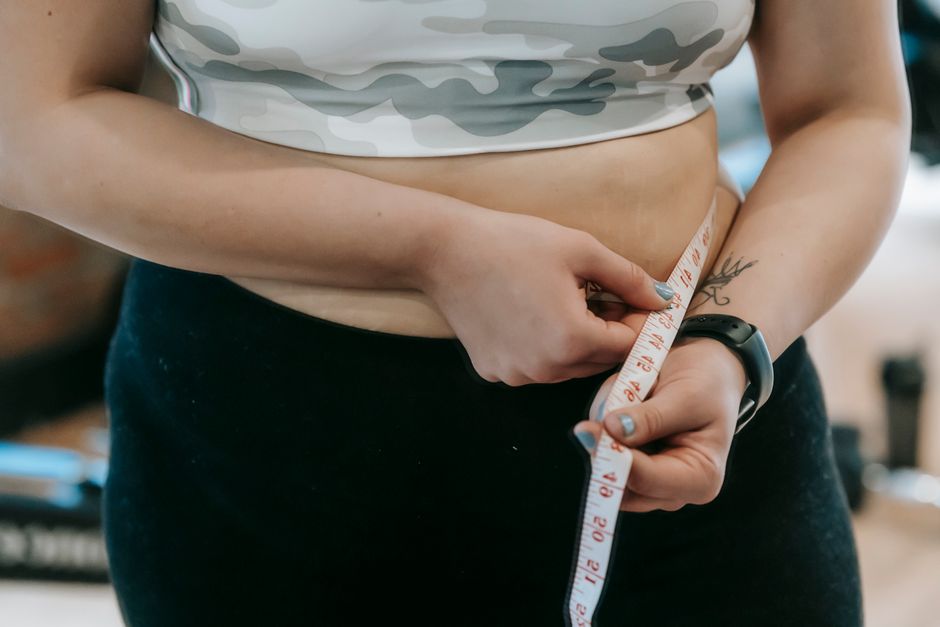
You cannot target belly fat with a spot exercise, and you cannot target it by avoiding exercise either. What actually reduces belly fat is a sustained calorie deficit, and diet is the main lever most people can control. Exercise helps, but it is not required to lose fat. The tips below focus on food, sleep, stress, and daily movement — the factors that drive belly fat most directly.
Why Does Belly Fat Form in the First Place?
Belly fat is not one thing. It is two different fat deposits with different behavior, and understanding the difference explains why some people lose it easily and others do not.
Subcutaneous fat sits just under the skin. You can pinch it. It is the soft fat around the waist and hips. Visceral fat sits deeper, packed around the organs in the abdomen. You cannot pinch it, and it is the type more strongly linked to health problems like insulin resistance and cardiovascular disease.
Where fat lands is influenced by genetics, sex, age, and hormones. Men tend to store more fat in the abdomen earlier in life. Women often store more in the hips and thighs until menopause, when shifts in estrogen are associated with more abdominal fat. Cortisol, the stress hormone, is associated with visceral fat storage, though the relationship is complex and not fully understood.
One clarification worth knowing: you cannot choose where fat comes off. The body mobilizes fat from stores across the body based on genetics and hormones, not based on which muscle you work or which food you skip. Abdominal fat often comes off later than fat elsewhere. That is frustrating but normal.
How Can You Burn Belly Fat Without Exercise?
Fat loss requires a calorie deficit. That is the physiological bottom line. If you take in fewer calories than you burn over time, the body draws on stored fat for energy, and belly fat is part of that draw. Exercise is one way to increase the “burn” side of the equation. Diet is the other, and for many people it is the more practical lever.
Research consistently shows that diet quality and total calorie intake drive fat loss more than any single food or supplement. Some studies suggest that reducing added sugar and refined carbohydrates has a particular effect on visceral fat, though the evidence is not uniform across all trials.
Here is what the evidence supports:
- Eat protein at every meal. Protein is more satiating than fat or carbohydrate, meaning it helps you feel full on fewer calories. It also helps preserve muscle mass during weight loss, which matters because muscle burns more calories at rest than fat.
- Choose fiber-rich foods. Vegetables, legumes, whole grains, and fruit slow digestion and increase fullness. Fiber intake is consistently associated with lower body weight in observational studies.
- Cut liquid calories. Sugary drinks, specialty coffees, and alcohol add calories without much satiety. Swapping them for water or unsweetened drinks is one of the simplest changes with the biggest impact.
- Do not skip meals to compensate. Skipping meals often leads to overeating later. A consistent eating pattern you can sustain matters more than any specific timing strategy.
No food burns fat. Green tea, apple cider vinegar, cayenne pepper, and similar claims have been studied, but the effects in human trials are small or inconsistent. No clinical evidence currently confirms that any single food meaningfully increases fat burning on its own.
Does Sleep Affect Belly Fat?
Yes, and the effect is larger than most people expect. Short sleep is associated with higher body weight and more abdominal fat in multiple large studies. The mechanism involves appetite hormones: insufficient sleep raises ghrelin, which increases hunger, and lowers leptin, which signals fullness. You wake up hungrier and less satisfied by food.
Poor sleep also raises cortisol and impairs insulin sensitivity, both of which are linked to visceral fat storage. The relationship is bidirectional — belly fat can worsen sleep quality, which can worsen belly fat — but the practical takeaway is straightforward: protecting sleep is a fat-loss strategy, not a luxury.
Most adults need seven to nine hours. If you are consistently getting less, that is a lever worth pulling before you change anything else about your diet. No clinical guidelines specify a sleep duration for fat loss specifically, but the general adult recommendation from sleep medicine organizations is seven or more hours per night.
Can Stress Cause Belly Fat?
Chronic stress is associated with visceral fat accumulation. The pathway runs through cortisol, which promotes fat storage in the abdomen and increases appetite for high-calorie foods. Acute stress is not the problem. The problem is stress that never turns off.
What helps is not dramatic. Regular physical activity, even walking, reduces cortisol. So does spending time outdoors, breathing exercises, and social connection. None of these are proven fat-loss interventions on their own, but they address a driver that diet alone does not touch.
Some clinicians recommend stress management as part of a weight management plan. The evidence for stress reduction directly causing fat loss is limited, but the evidence for chronic stress contributing to weight gain is reasonably consistent.
What About Intermittent Fasting and Other Eating Patterns?
Intermittent fasting works for fat loss, but not because of the fasting itself. Controlled trials comparing intermittent fasting to standard calorie restriction find similar fat loss when total calorie intake is matched. The advantage is adherence: some people find it easier to skip breakfast than to count calories. If that describes you, it is a reasonable approach. If it makes you overeat later, it is not.
The same logic applies to low-carbohydrate diets, ketogenic diets, and higher-protein diets. Any of them can produce fat loss if they create a calorie deficit you can maintain. The best eating pattern is the one you can stick to for months, not weeks.
What does not work is the idea of “eating clean” without regard to quantity. Olive oil, nuts, and avocado are healthy foods, but they are calorie-dense. Fat loss still comes down to total intake.
What Non-Exercise Habits Actually Make a Difference?
Daily movement outside formal exercise — sometimes called non-exercise activity thermogenesis, or NEAT — can be a meaningful part of energy expenditure. Fidgeting, standing, walking to the store, taking stairs, and doing household tasks all add up. Some research suggests NEAT varies widely between individuals and can account for a substantial portion of daily calorie burn.
This is not exercise. It is the movement you do without thinking about it. Increasing it is one of the few ways to raise calorie burn without a workout routine.
Other habits worth considering:
- Track what you eat for a week. Not forever. Just long enough to see where calories actually come from. Most people underestimate intake by a meaningful margin.
- Eat slowly. Faster eating is associated with higher body weight in observational studies. Slowing down gives fullness signals time to register.
- Keep high-calorie snacks out of sight. Visibility drives snacking behavior more than hunger does.
- Weigh yourself weekly, not daily. Daily fluctuations from water and food volume obscure the trend. Weekly averages are more informative.
What Does Not Work for Belly Fat?
Fat-burning supplements are a large market with weak evidence. The majority of products sold for weight loss have not been shown to produce clinically meaningful fat loss in rigorous trials, and some have been associated with adverse effects. No supplement replaces a calorie deficit.
Waist trainers, body wraps, and sweat belts do not reduce fat. They reduce water temporarily. The fat returns as soon as you rehydrate.
Detox teas and cleanses do not target fat. The body detoxifies itself through the liver and kidneys. No product accelerates this in a way that affects body fat.
Spot reduction — doing hundreds of crunches to lose belly fat — does not work. Crunches strengthen abdominal muscles, but they do not burn fat from the abdomen specifically. The muscle grows under the fat, which can make the belly look larger, not smaller.
How Long Does It Take to See Results?
Fat loss is gradual. A reasonable and sustainable rate is roughly half a pound to one pound per week for most adults, though this varies with starting weight, calorie deficit, and individual metabolism. Faster loss is possible but harder to sustain and carries more risk of muscle loss.
Belly fat specifically may be the last to go. Visceral fat often responds to calorie restriction relatively quickly, but subcutaneous belly fat can lag behind fat in other areas. This is normal and not a sign that your approach is failing.
Expect to need several weeks before changes are visible in the mirror or on a tape measure. Scale weight can fluctuate by several pounds in a single day due to water, sodium, and food volume. Judge progress over months, not days.
Frequently Asked Questions
Can you lose belly fat without any exercise at all?
Yes. Fat loss requires a calorie deficit, and diet alone can create one. Exercise improves health and helps preserve muscle, but it is not required for fat loss.
What is the fastest way to reduce belly fat without exercise?
There is no fast method that is also safe and sustainable. The most reliable approach is a modest calorie deficit built from protein, fiber, and fewer liquid calories, combined with adequate sleep.
Do fat-burning supplements help with belly fat?
No clinical evidence currently confirms that any over-the-counter fat-burning supplement produces meaningful belly fat loss. Some have been linked to adverse effects.
Why is belly fat the last to go?
Fat is mobilized according to genetics and hormones, not preference. Abdominal fat often comes off later than fat in other areas, and this pattern is normal.
