
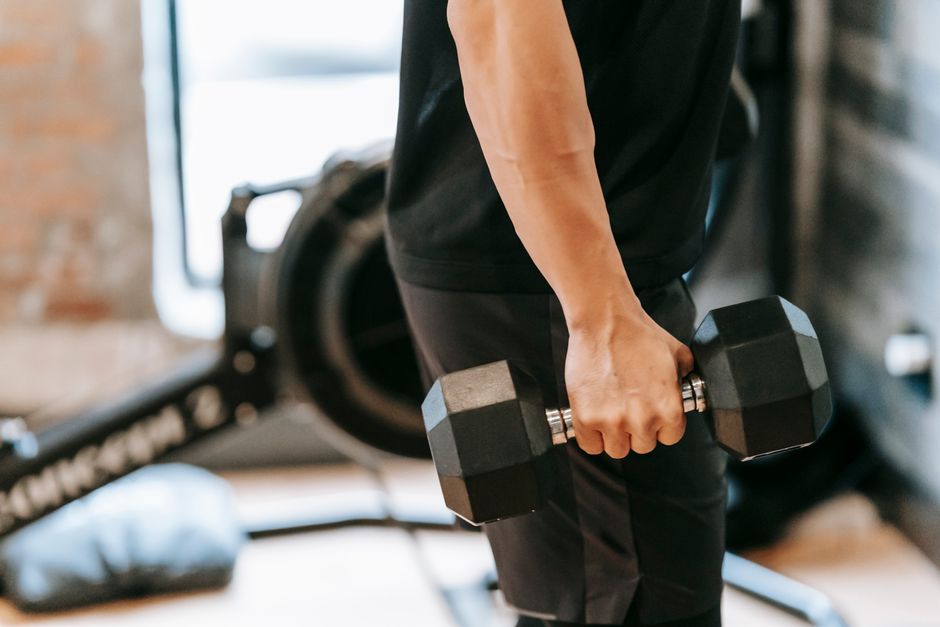
You can build muscle after 50. The biology that adds muscle to a body — a process called hypertrophy — still works in your fifties, sixties, and beyond. What changes is the cost. You need more protein than you did at 30, more recovery time between hard sessions, and more attention to sleep and stress. Strength training, adequate protein, and genuine recovery are the three levers that matter most. Get those right and progress is realistic. Skip them and you will train hard and stay the same.
How To Build Muscle After 50 Strength Protein Recovery?
Muscle growth after 50 comes down to three inputs working together: progressive resistance training, enough daily protein, and enough recovery for repair to finish before you train again.
None of these works well alone. Lift heavy things but eat too little protein and you rebuild poorly. Eat plenty of protein but never challenge the muscle and there is no signal to grow. Train and eat well but sleep five hours a night and the repair process gets cut short.
The physiology is well established. Lifting against resistance creates mechanical tension and small amounts of muscle damage. That triggers a repair response, and with adequate amino acids available, the muscle rebuilds slightly larger and stronger. This is called muscle protein synthesis, and it is the cellular event that underlies all muscle growth at any age.
What shifts after 50 is the sensitivity of that response. A younger muscle turns on protein synthesis readily after a meal and after a workout. An older muscle responds less strongly to the same stimulus — a phenomenon researchers call anabolic resistance. You can overcome it. It just takes a bigger signal: more tension from training, more protein per meal, and more recovery time.
Why Does Building Muscle Get Harder After 50?
Adults lose muscle mass steadily from around age 30 onward, and the rate tends to accelerate in the fifties and sixties. This age-related loss is called sarcopenia. It is not a disease you catch. It is a gradual shift in how the body handles protein and responds to load.
Several things drive it. Muscle fibers — particularly the fast-twitch fibers that produce power — shrink and drop in number. The nervous system’s connection to muscle becomes less efficient, so you recruit fewer fibers for the same effort. Hormonal changes play a role, though the effect is smaller than often assumed. And older muscle is simply less responsive to protein, meaning you need more of it to trigger the same repair response.
There is a second factor that gets less attention: disuse. A large share of muscle loss attributed to aging is actually caused by inactivity. When researchers study older adults who remain physically active, the decline is slower. When they study people confined to bed rest, muscle disappears fast regardless of age. The distinction matters because age-related decline feels inevitable while disuse is something you can change.
Inflammation and chronic disease also affect muscle maintenance, which is one reason managing overall health is part of the picture, not separate from it.
What Kind of Strength Training Actually Builds Muscle After 50?
Resistance training is the only reliable way to signal muscle to grow. Cardio and walking are excellent for your heart and for overall health, but they do not build meaningful muscle mass on their own.
The training principle that matters most is progressive overload — gradually asking the muscle to do more than it is used to. That can mean more weight, more repetitions, or more sets over time. Without progression, the body has no reason to change.
For most people over 50, a practical approach looks like this:
- Train each major muscle group two to three times per week, with at least one full rest day between sessions for the same muscle group
- Use a resistance heavy enough that the last few repetitions of a set are genuinely difficult
- Work in a rep range somewhere between roughly 8 and 15 per set, adjusting weight so the final reps are hard but form holds
- Prioritize compound movements — squats, presses, rows, hinges, and carries — because they load multiple muscle groups at once
- Add weight or reps slowly, only when the current load feels manageable
Machines are fine. Free weights are fine. Resistance bands and bodyweight work can build muscle too, provided the effort is high enough. The tool matters far less than whether you are progressively challenging the muscle and recovering between sessions.
One clarification worth making: light weights lifted for very high repetitions with little effort do not build much muscle. The muscle needs a real challenge. This is why the “toning” approach many people associate with older-adult exercise often produces little change.
How Much Protein Do You Need to Build Muscle After 50?
Older adults generally need more protein than the standard minimum, and the gap widens when you are actively trying to build muscle. The widely cited general adult minimum is 0.8 grams per kilogram of body weight per day — that figure is set to prevent deficiency, not to support muscle growth.
For adults over 50 who are training, many researchers and clinicians point to a higher range, commonly cited as roughly 1.0 to 1.2 grams per kilogram per day for general health, and up to around 1.2 to 1.6 grams per kilogram per day when actively building muscle. Some sources suggest higher still for certain individuals. These are general ranges from the research literature, not a prescription for any one person, and people with kidney disease or other conditions should get individual guidance from their clinician before increasing protein intake substantially.
Two details matter as much as the total amount:
Spread it across the day. Muscle protein synthesis responds to each protein-containing meal. Eating most of your protein at dinner leaves the rest of the day under-supplied. Aim for a meaningful protein source at each meal rather than one large hit.
Choose quality sources. Protein from animal foods — eggs, dairy, fish, poultry, meat — contains all essential amino acids in the right proportions. Plant proteins can absolutely support muscle growth, but they generally require eating a wider variety across the day to cover all the amino acids, and plant proteins are often slightly less digestible. Soy is a notable exception with a strong amino acid profile.
There is a practical ceiling worth knowing. Very large single doses of protein do not produce proportionally larger muscle-building responses. Beyond a certain amount in one sitting, the excess is largely used for energy or other purposes rather than muscle repair. Spreading intake is more effective than loading up.
Why Recovery Matters More After 50
Recovery is where muscle is actually built. Training creates the signal; sleep, protein, and rest do the construction. After 50, that construction phase takes longer and is easier to disrupt.
Muscle repair happens largely during sleep. Growth hormone release, tissue repair, and the consolidation of training adaptations all cluster around deep sleep. Short or fragmented sleep blunts the muscle-building response to both training and protein. This is not a minor factor — it is one of the more consistent findings in the exercise science literature.
Practical recovery priorities for this age group:
- Give each muscle group at least 48 hours between hard sessions
- Protect sleep — most adults need seven to nine hours, and the need does not drop with age even though sleep often becomes lighter
- Take deload weeks periodically, reducing volume or weight for a week to let accumulated fatigue clear
- Manage stress where you can, since chronic stress interferes with recovery and appetite
- Stay hydrated and eat enough total calories — under-eating undermines muscle growth no matter how well you train
One point that often gets lost: doing more is not the same as progressing. Many people over 50 who fail to build muscle are simply training too often and recovering too little. Adding rest is sometimes the change that produces results.
Can You Build Muscle After 50 Without Lifting Weights?
You can build some muscle without a gym, but the effort has to be genuinely hard. Bodyweight exercises — push-ups, squats, step-ups, rows using a sturdy table or bar — can build muscle if you progress them by changing leverage, adding reps, or slowing the movement.
Resistance bands are a legitimate option and are often easier on joints. They provide real tension, and tension is what the muscle responds to. The limitation is that bands are harder to load progressively at heavy weights, so you need to be deliberate about increasing difficulty.
What does not build much muscle is low-effort activity. Walking, gardening, and light stretching support health but do not provide enough tension to drive hypertrophy. That is not a criticism of those activities — they matter for other reasons — but they are not a substitute for resistance work if muscle growth is the goal.
For people with joint pain, arthritis, or prior injuries, working with a physical therapist or a qualified trainer to find movements that load the muscle without aggravating the joint is a reasonable step. Some discomfort during effort is normal. Sharp pain is not, and it is worth getting checked rather than training through it.
How Long Does It Take to See Results?
Strength gains often show up within a few weeks, largely from the nervous system learning to recruit muscle more effectively. Visible muscle size changes typically take longer — commonly several weeks to a few months of consistent training and adequate nutrition before changes become noticeable.
Progress after 50 is real but usually slower than it was at 25. That is a normal expectation, not a sign of failure. The people who build the most muscle in this age group tend to be the ones who train consistently for months and years rather than chasing fast results.
Tracking helps. Recording the weights and reps you use makes progressive overload visible and prevents the slow drift into doing the same thing indefinitely. Small, steady increases over time add up.
Frequently Asked Questions
How much protein should a 50-year-old woman eat to build muscle?
General research ranges for adults over 50 who train point to roughly 1.2 to 1.6 grams of protein per kilogram of body weight per day, spread across meals. Individual needs vary, and anyone with kidney disease should get guidance from their clinician first.
Is it too late to build muscle at 55?
No. Muscle responds to resistance training and adequate protein at 55 and well beyond, and studies in older adults consistently show strength and muscle gains with training. Progress tends to be slower than in younger adults but is clearly achievable.
Should I do cardio or weights first to build muscle after 50?
Do resistance training first when muscle growth is the priority, or separate the two by several hours. Hard cardio immediately before lifting can reduce the quality of your strength work.
How many rest days do I need between strength sessions after 50?
At least one full rest day between hard sessions for the same muscle group is a reasonable baseline, which typically means training each group two to three times per week. Some people need more, especially when starting out.
