
Building stronger glutes is about more than looks. Your gluteal muscles are the largest muscle group in your body, and they power everyday movements like climbing stairs, standing up from a chair, and walking. Training them properly can improve posture, reduce lower back pain, and boost athletic performance. The most effective approach combines heavy compound lifts, targeted isolation work, progressive overload, and adequate protein.
What Muscles Make Up the Glutes?
Your glutes are actually three distinct muscles. Each one has a different job, and all three need attention for balanced development.
The gluteus maximus is the largest. It extends the hip — think of pushing your leg backward or driving your body upward from a squat. This muscle gives the glutes their shape and size.
The gluteus medius sits on the outer edge of the hip. It lifts your leg to the side and stabilizes your pelvis when you stand on one leg. A weak medius can cause hip drop during walking and contribute to knee problems.
The gluteus minimus lies beneath the medius. It also abducts the hip and helps with internal rotation. Together, the medius and minimus keep your hips stable during running, walking, and single-leg movements.
Why Do Many People Struggle to Activate Their Glutes?
The glutes are strong, but they are often lazy. Many people sit for hours each day. Prolonged sitting puts the glute muscles in a shortened, inactive position. Over time, the brain learns to rely on other muscles — like the lower back, hamstrings, and hip flexors — to do movements the glutes should handle.
This is called gluteal amnesia. The muscles are not weak in the traditional sense. They simply do not fire properly during exercise. If you do squats and feel your quads burning but nothing in your glutes, this is likely your problem.
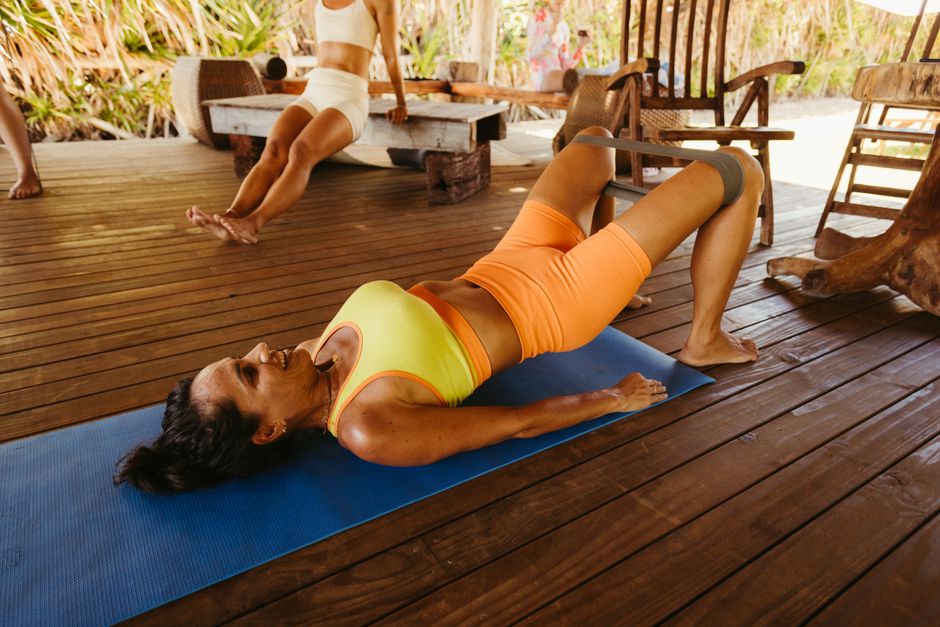
The fix is not necessarily heavier weights. It is teaching the muscle to activate. Bodyweight glute bridges, clamshells, and banded lateral walks can help re-establish the mind-muscle connection before you load up heavy squats.
What Are the Best Exercises for Building Glutes?
Research consistently shows that the best glute exercises fall into two categories: hip extension and hip abduction. You need both.
Hip extension exercises target the gluteus maximus. These include:
- Barbell hip thrusts
- Romanian deadlifts
- Glute bridges
- Kickbacks
Hip abduction exercises target the gluteus medius and minimus. These include:
- Side-lying leg raises
- Banded lateral walks
- Cable hip abductions
- Clamshells
Research published in the Journal of Strength and Conditioning Research found that barbell hip thrusts and back squats produce the highest gluteus maximus activation among common exercises. The hip thrust is particularly effective because it places the glutes in a lengthened position under heavy load.
Squats and deadlifts are excellent compound movements, but they are not enough on their own. Many people find that their quads and lower back take over during these lifts. Adding dedicated hip thrusts ensures the glutes get direct, focused work.



How Often Should You Train Your Glutes?
Frequency matters more than most people realize. The glutes recover quickly because they are a large, resilient muscle group. Training them two to three times per week produces better results than a single marathon session.
A common split might look like this:
- Day 1: Heavy hip thrusts, Romanian deadlifts, and banded lateral walks
- Day 2: Back squats, Bulgarian split squats, and cable kickbacks
- Day 3: Glute bridges, hip abductions, and lunges
Each session should include both a compound hip extension movement and an abduction exercise. Keep the volume moderate — around 10 to 20 working sets per week for the glutes is a reasonable target for most people.
Rest days between sessions are still important. Muscles grow during recovery, not during the workout itself. If you train glutes hard on Monday, a lighter session on Tuesday may not give them enough time to rebuild.
How Important Is Progressive Overload?
Progressive overload is the single most important principle for building any muscle, including the glutes. It means gradually increasing the demand placed on the muscle over time.
This does not mean adding weight every single week. You can increase the number of repetitions, add more sets, slow down the tempo, or reduce rest time between sets. Any of these changes forces the muscle to adapt and grow.
A practical approach: pick an exercise like the hip thrust. Find a weight you can lift for 8 to 12 repetitions with good form. Each week, try to add one more rep or a small amount of weight. When you can comfortably complete 12 reps with perfect form, increase the load by 5 percent.
Track your workouts. Write down the exercise, weight, sets, and reps. This removes guesswork and ensures you are actually progressing rather than just going through the motions.
How Much Protein Do You Need for Glute Growth?
Muscle cannot grow without adequate protein. The glutes are skeletal muscle, and like all muscle tissue, they require amino acids to repair and rebuild after training.
Research consistently shows that consuming 1.6 to 2.2 grams of protein per kilogram of body weight per day supports muscle growth in healthy adults. For a 150-pound person, that is roughly 110 to 150 grams of protein daily. For a 200-pound person, it is about 145 to 200 grams.
Spread your protein intake across the day. Aim for 20 to 40 grams per meal. Good sources include chicken, fish, eggs, Greek yogurt, lean beef, tofu, and legumes.
Protein alone will not build glutes. You still need the training stimulus. But without sufficient protein, your body cannot build new muscle tissue no matter how hard you train.
Do You Need to Gain Weight to See Results?
This depends on your starting point. Muscle mass requires a calorie surplus — you need to consume more energy than you burn to build new tissue.
If you are at a healthy weight and want significant glute growth, you will likely need to eat slightly above maintenance calories. A surplus of 200 to 300 calories per day is usually enough to support muscle gain without excessive fat storage.
If you are trying to lose fat while building glutes, the process is slower. You can build some muscle in a calorie deficit, especially if you are new to training. But the gains will be modest compared to what is possible in a surplus.
Body recomposition — losing fat and gaining muscle simultaneously — is possible but requires careful nutrition. High protein intake and consistent training are the two most important factors.
What Role Does Cardio Play in Glute Development?
Cardio can help or hurt your glute goals depending on the type and intensity.
Steady-state cardio like jogging on flat ground primarily works the calves and quads. It does little for glute development and can actually interfere with recovery if done excessively.
Incline walking, stair climbing, and cycling are better options because they involve significant hip extension. Walking on a treadmill at a 10 to 15 percent incline engages the glutes much more than flat walking.
Sprinting and hill sprints are excellent glute builders. They require powerful hip extension and recruit the gluteus maximus heavily. However, they are high-impact and should be introduced gradually.
If your goal is glute growth, prioritize resistance training. Use cardio as a supplement for heart health and fat loss, not as your primary glute stimulus.
How Long Does It Take to See Glute Growth?
Realistic expectations matter. Visible changes in glute size typically take 8 to 12 weeks of consistent training and proper nutrition.
Strength gains come faster. Most beginners see noticeable strength improvements within the first month because the nervous system learns to recruit muscle fibers more efficiently. This is called neural adaptation, and it happens before actual muscle growth occurs.
Actual muscle hypertrophy — an increase in muscle fiber size — is a slower process. Research suggests that beginners can gain roughly 1 to 2 pounds of muscle per month under optimal conditions. Intermediates gain less, often 0.5 to 1 pound per month.
Genetics play a role. Some people carry more glute muscle naturally. Others have a different muscle fiber distribution or attachment points that make growth slower or faster. You cannot change your genetics, but you can maximize what you have.
Consistency is the deciding factor. A well-designed program followed for a year will produce dramatic changes. A perfect program followed for three weeks will not.
Frequently Asked Questions
Can I build glutes without weights?
Yes, but progress will be slower. Bodyweight exercises like glute bridges, single-leg squats, and hip thrusts can build muscle, especially for beginners. You will eventually need added resistance to continue growing.
Are squats or hip thrusts better for glutes?
Hip thrusts target the glutes more directly than squats. Squats are excellent compound lifts, but they involve the quads heavily. For maximal glute activation, hip thrusts are the superior choice.
How many days a week should I train glutes?
Two to three days per week is ideal for most people. This frequency allows enough training volume for growth while providing adequate recovery time between sessions.
Why do I feel squats in my quads but not my glutes?
This is likely a glute activation problem. Your quads are compensating for inactive glute muscles. Start with bodyweight glute bridges and banded exercises to re-establish the mind-muscle connection before doing heavy squats.
