
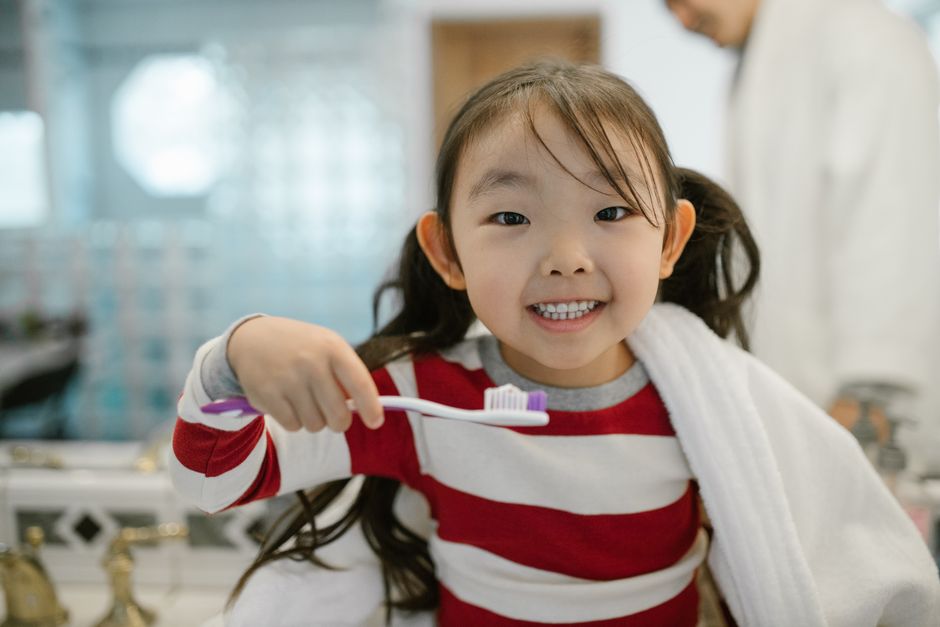
Brushing a 1-year-old’s teeth without a fight comes down to three things: timing, position, and letting the child feel some control. Start before the child is overtired or hungry. Sit or stand behind them with their head resting back against you. Give them a toothbrush to hold while you use a second one. Expect protest. It is normal at this age and does not mean you are doing it wrong.
Most parents lose the battle because they try to brush face-to-face, which gives a toddler a clear view of the hand coming at their mouth and two free arms to push it away. Changing your position solves more fights than any distraction trick.
Why does my 1 year old fight tooth brushing?
A 1-year-old is not being difficult on purpose. At this age, children are developing autonomy and testing what they can control. A hand coming toward the mouth feels like an intrusion, and pushing it away is a normal developmental response.
There is also a physical factor. The gums are often tender during teething, and a toothbrush pressed onto sore tissue hurts. If your child suddenly resists brushing after weeks of accepting it, check for new teeth coming through before assuming it is a behavior problem.
Some children have a strong gag reflex or sensory sensitivity around the mouth. These children may need a slower approach and a softer brush. This is not a discipline issue.
What is the best position to brush a toddler’s teeth?
The most effective position is standing or sitting behind your child with their head tilted back against your body. This gives you a clear view of the upper and lower teeth and limits how much they can turn their head away.
Two positions work well:
- Standing behind: Your child stands in front of you facing a mirror. You stand behind, gently tilt their head back against your stomach, and brush from above.
- Sitting on the floor: You sit cross-legged with your child leaning back between your legs, head resting on your thigh. This works well for younger or less steady children.
Both positions give you the same advantage. Your child cannot see your hand approaching from the front, and their arms have less leverage to push you away. Many parents find the fight drops significantly just from this change alone.
When should I brush a 1 year old’s teeth?
Brush twice a day, once in the morning and once before bed. The bedtime brush matters most because saliva flow drops during sleep, which gives bacteria on the teeth more time to cause damage overnight.
Timing around meals and mood matters as much as frequency. Avoid brushing right after your child has eaten acidic foods, because enamel is temporarily softened and brushing immediately can wear it. Wait about 30 minutes.
Do not brush when your child is hungry, overtired, or mid-tantrum about something else. A child already at their limit will not cooperate with a toothbrush. Pick a calm window, even if it is not the ideal time on the clock.
How do I actually get the brush into their mouth?
Use two toothbrushes. Give your child one to hold and chew on while you use the second to brush their teeth. This satisfies their need to control something and often keeps their hands busy.
Brush in short bursts rather than trying to do a full clean in one pass. A few seconds on the top teeth, a pause, then a few seconds on the bottom. If your child clamps their mouth shut, do not force it open with your fingers. Wait a few seconds and try again.
Singing or counting gives a predictable structure. A child who knows the song ends soon is often more willing to tolerate it. Keep the same song every time so the routine becomes familiar.
Let your child “brush” your teeth first, or brush a doll’s teeth. Toddlers learn through imitation, and letting them be the one holding the brush for a moment can reduce resistance.
What toothpaste should I use for a 1 year old?
Use a small smear of fluoride toothpaste, no larger than a grain of rice, from the first tooth onward. This is the standard guidance from pediatric dental organizations in the United States. The amount is deliberately tiny because a 1-year-old cannot spit and will swallow most of it.
Fluoride toothpaste at this amount is considered safe and is recommended specifically because it prevents decay. Do not switch to a fluoride-free “training” toothpaste unless a dentist has told you to for a specific reason. Fluoride-free toothpaste does not prevent cavities the same way.
If you are unsure about the amount or your child has specific dental needs, ask your child’s dentist. Guidance can vary slightly based on individual risk.
What if my child still refuses?
Some children resist no matter what you try. In that case, the goal shifts from a perfect brush to a consistent, brief one. Ten seconds of actual brushing done twice a day beats a five-minute battle that ends in tears and no clean teeth.
Try brushing while your child is distracted by a video or a favorite toy. This is not a failure of parenting. It is a practical tool that many pediatric dentists suggest for children who resist.
If your child has never tolerated brushing and shows signs of mouth sensitivity, gagging, or feeding difficulties, mention it at their next well-child visit. Some children benefit from a referral to a pediatric dentist earlier than the standard first visit.
When should a 1 year old first see a dentist?
The general recommendation is that a child should see a dentist by their first birthday or within six months of getting their first tooth, whichever comes first. This first visit is usually short and focused on checking development and giving parents guidance.
If your child already has visible white spots on their teeth, brown marks, or you notice any decay, book an appointment sooner rather than waiting for the one-year mark. Early decay in baby teeth can progress quickly.
Baby teeth matter. They hold space for adult teeth, help with speech and chewing, and infection in a baby tooth can affect the developing tooth underneath. This is why brushing a 1-year-old’s teeth is not optional, even though those teeth will eventually fall out.
Frequently Asked Questions
How do I brush my 1 year old’s teeth if they clamp their mouth shut?
Do not force their mouth open with your fingers. Wait a few seconds, try a different position such as standing behind them, and use a second toothbrush for them to hold. Brief attempts repeated calmly work better than one long struggle.
Can I use fluoride toothpaste on a 1 year old?
Yes, a tiny smear no larger than a grain of rice is the standard recommendation from the first tooth onward. At that amount, swallowing is not a concern, and fluoride is what prevents decay.
How long should brushing take for a toddler?
Aim for about two minutes twice a day, but do not expect a 1-year-old to tolerate that at first. Short bursts that add up to a reasonable clean are realistic at this age.
Why does my 1 year old suddenly hate tooth brushing?
A sudden change often lines up with teething, a new molar coming through, or a developmental stage where your child is testing control. Check the gums for soreness and adjust your grip and position before assuming it is behavioral.
