
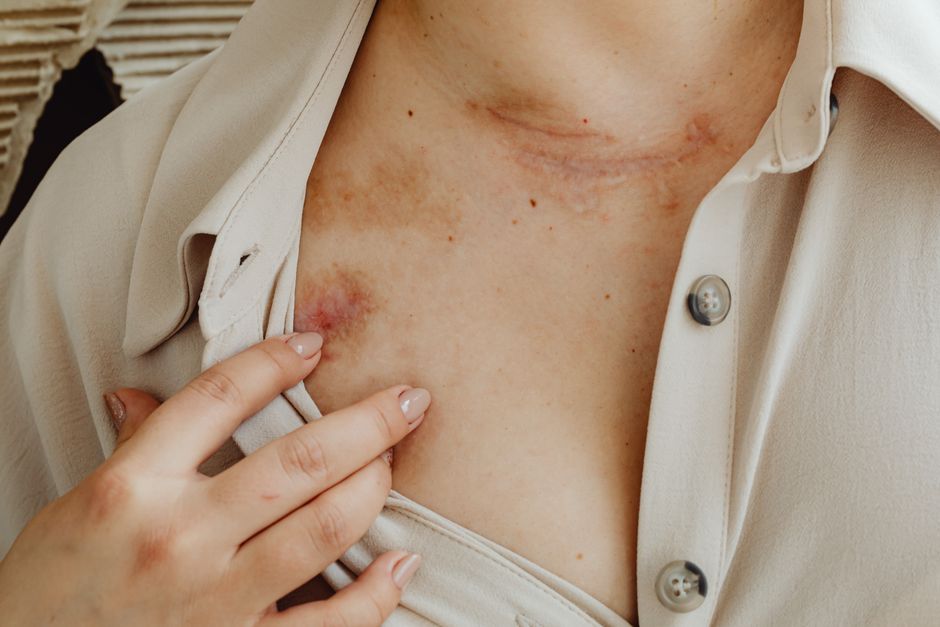
Scar tissue in the breast can form after surgery, injury, or radiation. It often feels like a hard lump or tight band under the skin. Breaking it up is possible, but not with quick fixes or internet tricks. The real solutions involve manual therapy, movement, and time. Research shows that gentle, consistent techniques are more effective than aggressive treatments. This guide covers what works, what does not, and what the evidence actually says.
What Causes Scar Tissue in the Breast?
Scar tissue forms when the body repairs damaged tissue. It lays down collagen fibers quickly to close the wound. Sometimes those fibers stay dense and disorganized instead of remodeling into normal tissue. The result is a firm area that can feel different from the surrounding breast.
Common causes include breast surgery. Lumpectomy, mastectomy, and breast reconstruction all cut through tissue. The body’s natural healing process creates scar tissue along the incision lines. Radiation therapy also causes fibrosis, a type of scar tissue that spreads beyond the surgical site. The American Cancer Society notes that radiation can thicken breast tissue months or years after treatment ends.
Breast implants can also trigger scar tissue formation. The body forms a capsule around any foreign object. In some cases, that capsule tightens and hardens. This is called capsular contracture. It is not the same as internal scar tissue from surgery, but it feels similar and requires different treatment approaches.
Does Manual Massage Break Up Scar Tissue?
Manual massage is one of the most common recommendations for breaking up scar tissue. The idea is that physical pressure can break the collagen bonds and soften the tissue. Research published in the journal Physical Therapy found that specific scar massage techniques can improve tissue mobility and reduce pain.
But not all massage works the same way. Gentle, sustained pressure over time is more effective than aggressive kneading. Deep friction massage, where a therapist applies focused pressure across the scar, can help realign collagen fibers. The key is consistency. A single session will not undo months of healing. Most therapists recommend daily massage for several weeks to see noticeable change.
Self-massage is possible but requires proper instruction. A physical therapist or certified lymphedema therapist can show you the correct technique. Doing it wrong can irritate the tissue or cause more inflammation. The goal is to soften the scar, not to tear it apart. Scar tissue does not actually “break” like a bone. It remodels over time with gentle, repeated pressure.
How To Break Up Scar Tissue In The Breast With Stretching
Stretching is one of the most effective methods for breaking up scar tissue in the breast. The scar tissue connects to surrounding muscles and fascia. When you stretch the chest wall, you pull on those connections. Over time, this helps the collagen fibers realign and lengthen.
Research from the Journal of Cancer Survivorship found that women who did daily chest stretches after breast surgery had less scar tissue tightness than those who did not. The stretches included doorway stretches, arm raises, and shoulder rolls. The key was doing them gently and consistently. No bouncing or forcing.
Stretching works because it applies low, sustained tension to the scar. This signals the body to remodel the tissue. The process takes weeks to months. But it is one of the safest and most studied methods available. Most physical therapists include stretching as part of a scar management program.




What Tools and Devices Actually Help?
Several tools claim to break up scar tissue. Some have real evidence behind them. Others are overhyped with little to no proof. Here is what the research shows.
| Tool / Device | What It Does | Evidence Level |
|---|---|---|
| Foam roller | Applies broad pressure to chest and surrounding muscles | Moderate for muscle tension; limited for direct scar tissue |
| Massage balls | Target specific tight spots near the scar | Weak; mostly anecdotal reports |
| Gua sha tools | Scraping motion to break adhesions | Weak; no clinical trials on breast scar tissue |
| Ultrasound therapy | Deep heat to increase blood flow and collagen remodeling | Moderate; used in physical therapy settings |
| Laser therapy | Low-level light to reduce inflammation and promote healing | Moderate; some studies show improved scar appearance |
| Silicone sheets | Hydrate and flatten surface scars | Strong for surface scars; limited for deep internal tissue |
Ultrasound therapy is one of the few tools with direct clinical use for breast scar tissue. Physical therapists apply it during sessions. The sound waves create deep heat that increases blood flow and collagen flexibility. A 2019 study in Lasers in Medical Science found that low-level laser therapy improved scar pliability and reduced pain in women after breast cancer surgery.
Foam rollers and massage balls can help with the surrounding muscles but are unlikely to reach deep scar tissue inside the breast. They are better for overall chest mobility than for direct scar breakdown.
What Role Does Hydration and Nutrition Play?
Scar tissue is made of collagen. Collagen needs certain nutrients to remodel properly. Vitamin C is essential for collagen synthesis. A deficiency can slow healing and make scars more rigid. The National Institutes of Health notes that adults need 75 to 90 milligrams of vitamin C daily. Most people get enough from food, but some may benefit from a supplement after surgery.
Zinc is another key nutrient. It helps with wound healing and collagen production. Oysters, beef, and pumpkin seeds are good sources. Protein intake also matters. Scar tissue is protein-based. Without enough protein, the body struggles to rebuild tissue correctly.
Hydration is often overlooked but important. Dehydrated tissue is less flexible. Scar tissue in a dehydrated environment stays stiff longer. Drinking enough water will not break up existing scar tissue, but it supports the conditions needed for remodeling. There is no special diet that dissolves scar tissue. Eating a balanced diet with adequate protein, vitamin C, and zinc gives your body the tools it needs to do the work.
What Treatments Should You Avoid?
Some popular treatments for scar tissue have little evidence or can cause harm. It is worth knowing what to skip.
- Aggressive massage – Pressing too hard on a fresh or mature scar can cause more inflammation. This can actually make the scar worse. Gentle pressure over time is better.
- Essential oils – Some people claim that certain oils break up scar tissue. There is no clinical evidence for this. Oils can irritate the skin, especially after radiation.
- Vibration devices – Handheld vibrators and massage guns are popular on social media. No studies show they break up internal breast scar tissue. They may help muscle tension but not deep adhesions.
- Cupping – Cupping creates suction on the skin. It is sometimes used for scar tissue. Evidence is limited to case reports. The suction can cause bruising and skin damage on delicate breast tissue.
- Unsupervised stretching – Stretching is good, but doing it wrong can strain the surgical site. Always learn proper form from a professional first.
The internet is full of quick fixes for scar tissue. Most do not work. The ones that do work require patience and consistency. If a treatment sounds too easy or too dramatic, it probably is not backed by real evidence.
When Should You See a Professional?
Not all scar tissue needs professional treatment. But some situations do. If the scar tissue causes pain that limits daily activities, a physical therapist can help. If the breast feels hard and changes shape, that may be capsular contracture. A plastic surgeon or breast specialist should evaluate that.
Physical therapists trained in oncology rehabilitation are the best resource for breast scar tissue. They use techniques like myofascial release, instrument-assisted soft tissue mobilization, and therapeutic ultrasound. These are not available at home. A therapist can also teach you a home program that is safe and effective for your specific scar.
If you have had radiation, scar tissue can continue to develop for years. Regular check-ins with a therapist can catch tightness early. The earlier you address it, the easier it is to manage. Waiting until the tissue is fully hardened makes treatment harder and less effective.
One non-obvious insight: scar tissue can affect more than just the breast. It can pull on the shoulder, neck, and arm. Many women with breast scar tissue develop shoulder stiffness or posture changes. A therapist can address the whole area, not just the scar itself.
Common Misconceptions About Breaking Up Scar Tissue
A common belief is that scar tissue must be broken up aggressively to go away. That is not true. Scar tissue does not disappear. It remodels. The collagen fibers reorganize into a more flexible arrangement. The scar becomes softer and less noticeable, but it does not vanish. Accepting this can prevent frustration.
Another misconception is that surgery to remove scar tissue is the best option. Surgery creates new scar tissue. In some cases, it can make the problem worse. Surgery is reserved for severe cases like capsular contracture that does not respond to other treatments. Most scar tissue can be managed without another operation.
Some people believe that scar tissue is permanent and untreatable. That is also not true. While it does not go away completely, it can improve significantly. Studies show that consistent manual therapy and stretching improve scar mobility in 70 to 80 percent of people. The key is realistic expectations and consistent effort.
Frequently Asked Questions
Can you break up scar tissue in the breast on your own?
Yes, with proper instruction from a physical therapist. Self-massage and stretching done correctly can help remodel scar tissue over weeks to months.
How long does it take to break up breast scar tissue?
Most people see improvement within 4 to 8 weeks of consistent daily treatment. Full remodeling can take 6 to 12 months.
Does heat or ice help break up scar tissue?
Heat increases blood flow and tissue flexibility before massage or stretching. Ice reduces inflammation but does not help break up scar tissue directly.
Is it safe to massage scar tissue after breast cancer surgery?
Yes, but only after your surgeon clears you usually 4 to 6 weeks after surgery. Always check with your doctor before starting any scar treatment.
