
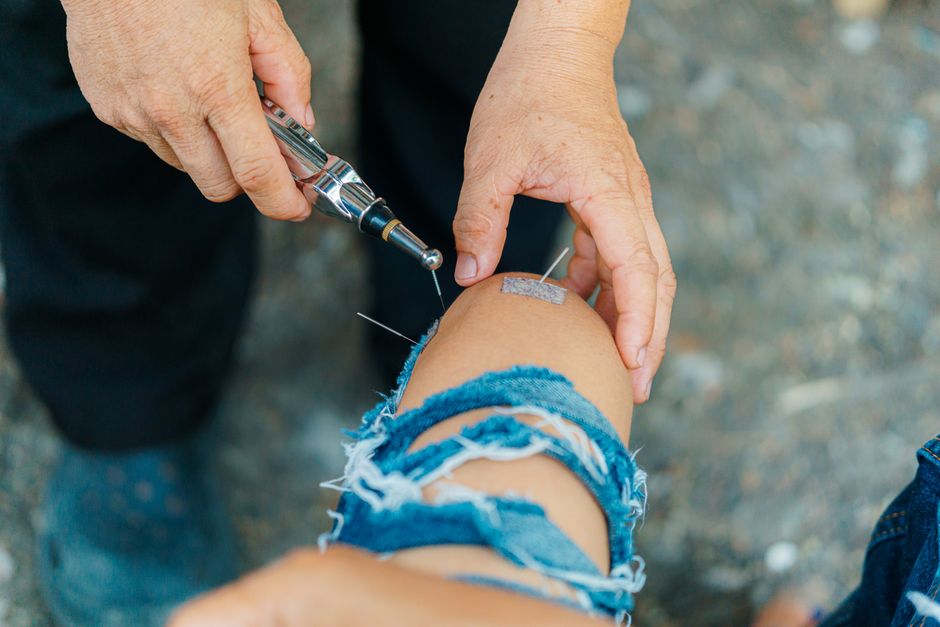
Scar tissue after knee surgery or injury is normal. It is part of how the body repairs itself. The problem starts when that tissue becomes thick, tight, or stuck to nearby structures. It can restrict how far the knee bends or straightens, and it can make everyday movement feel stiff or painful.
Breaking up knee scar tissue means restoring glide between the layers of tissue around the joint. This is done mainly through graded movement, stretching, and hands-on techniques guided by a physical therapist. Surgery to remove scar tissue is an option in some cases, but it is not the first step. Most people regain mobility with consistent, progressive rehabilitation.
What Is Knee Scar Tissue And Why Does It Form?
Scar tissue is collagen laid down by the body to close a wound. After knee surgery or a significant injury, this repair process produces tissue that is different from normal tissue. It is denser, less elastic, and less organized.
This is not a flaw. It is the body’s standard response to damage. The same process closes a cut on your hand. In a knee, though, the stakes are higher because the joint needs to slide, roll, and bend smoothly. Scar tissue that forms around the joint capsule, the tendons, or the surgical site can act like a stiff patch of fabric glued between moving parts.
Two things make scar tissue more likely to limit movement. The first is prolonged immobility. Tissue that is not moved during healing tends to organize in a shortened position. The second is excessive inflammation during recovery. Some scarring is unavoidable, but how the knee is managed in the weeks after surgery or injury strongly influences how much restriction develops.
One point often misunderstood: scar tissue and adhesions are related but not identical. Scar tissue is the material itself. Adhesions are bands of that material that bind surfaces together that should slide past each other. Adhesions are what usually cause the feeling of a knee that “won’t go” past a certain point.
How To Break Up Knee Scar Tissue And Regain Mobility
The core approach is simple to describe and takes patience to carry out. You apply controlled stress to the tissue over time so it gradually remodels and lengthens. Tissue does not break apart in a single session. It adapts to repeated, progressive demand.
A physical therapist typically guides this process. The specific techniques depend on where the restriction is and how far along healing is. Common approaches include:
- Range-of-motion exercise. Active and passive bending and straightening of the knee, done within a safe range and progressed over weeks.
- Stretching. Sustained holds that put gentle tension on tight tissue. Consistency matters more than intensity.
- Soft tissue mobilization. Hands-on work by a therapist to move and stretch scar tissue and surrounding muscles.
- Joint mobilization. Skilled movement of the kneecap and joint to restore normal glide.
- Strengthening. Building the muscles around the knee so the joint is supported and can tolerate more movement.
Timing matters. Tissue that is still actively healing should not be aggressively stretched. A therapist will judge when the tissue is ready for more load. Pushing too hard too early can increase inflammation and, in some cases, add to scarring rather than reduce it.
There is no single technique proven to be best. The evidence supports progressive rehabilitation as a whole rather than one specific method. Some clinicians use instrument-assisted techniques, and some use dry needling or other approaches. Evidence for these individual methods is limited and mixed. They are reasonable additions in some cases, not established requirements.
When Should You Start Working On Scar Tissue?
Rehabilitation usually begins soon after surgery, often within days, under a therapist’s direction. Early movement does not mean aggressive stretching. It means gentle, controlled motion that keeps tissue from stiffening in a shortened position.
The window that matters most is the first several weeks after surgery. This is when tissue is actively remodeling and most responsive to guided movement. Waiting until the knee feels completely stiff before starting makes the problem harder to reverse.
If you had an injury rather than surgery, the timing depends on what was injured. A sprain or strain needs enough healing before stretching begins. A therapist or doctor can advise on when to start. For anyone recovering from knee surgery, following the surgeon’s specific protocol is essential because different procedures have different restrictions.
What Does Recovery Actually Look Like?
Recovery is gradual and rarely linear. Most people see steady improvement over weeks to months with consistent effort. Progress can stall, and some days feel worse than others. That pattern is normal.
The single most reliable predictor of outcome is consistency. Short daily sessions of movement usually work better than occasional intense ones. Skipping days because of mild soreness tends to slow progress.
Mild discomfort during stretching is expected. Sharp pain, new swelling, or a knee that feels worse for more than a day afterward are signals to ease back and check with a therapist. These are general signs, not a diagnosis.
Full range of motion is not always achieved. Some people end up with a small permanent limitation, especially after major surgery or severe injury. That is an honest part of the picture. Many people still function well with a minor restriction.
Can You Break Up Scar Tissue At Home?
Yes, in many cases, with the right guidance. Home exercise is a central part of most rehabilitation programs. A therapist typically teaches specific movements and stretches to continue between visits.
What home work cannot reliably do is replace skilled assessment. If you do not know where the restriction is or how much load the tissue can take, you can stretch the wrong thing or push too hard. Self-massage and foam rolling around the knee can help surrounding muscles, but they are not proven to break up deep adhesions inside the joint.
Simple, safe home habits include:
- Doing prescribed range-of-motion exercises daily.
- Keeping the knee moving gently rather than resting it completely.
- Using ice or elevation for swelling as advised.
- Avoiding long periods with the knee held in one position.
If you are not sure whether a movement is safe, ask before doing it. Guessing with a healing joint is not worth the risk.
When Is Surgery Needed For Knee Scar Tissue?
Surgery is considered when scar tissue severely limits motion and does not respond to months of rehabilitation. The medical term for this is arthrofibrosis, a condition where excessive scar tissue forms inside the joint and restricts movement.
Arthrofibrosis is uncommon but serious. It is more likely after certain knee surgeries and in people who develop prolonged inflammation during recovery. The exact reasons some people develop it and others do not are not fully understood.
When surgery is done, a surgeon removes the restricting tissue, often through arthroscopy. This is followed by intensive rehabilitation to keep the tissue from reforming. Even after surgery, results vary, and some people need ongoing therapy. Some clinicians use additional measures to manage inflammation during recovery, but evidence for these approaches is limited and practice varies.
Surgery is not a shortcut. It is a step reserved for cases where conservative treatment has not worked.
What Slows Recovery Down?
Several factors can work against you. Prolonged immobilization is the biggest. A knee kept still for too long tends to stiffen, and reversing that takes more effort than preventing it.
Pushing too aggressively too early is another. Overstretching healing tissue can increase swelling and inflammation, which may feed the scarring process rather than reduce it. The right amount of stress is enough to encourage adaptation without overwhelming the tissue.
Ignoring swelling matters too. A knee that stays swollen has a harder time regaining motion. Managing swelling with elevation, compression, and activity adjustment as advised helps keep progress moving.
Finally, inconsistency is a common setback. Rehabilitation is a daily practice, not a weekly event. Small, regular effort adds up more than sporadic intensity.
Frequently Asked Questions
How long does it take to break up knee scar tissue?
Most people see gradual improvement over weeks to months with consistent rehabilitation. There is no fixed timeline, and progress depends on the surgery or injury, how early movement began, and how consistently exercises are done.
Can you break up scar tissue by massaging it yourself?
Self-massage can help surrounding muscles, but there is no good evidence it breaks up deep adhesions inside the knee joint. Skilled hands-on work from a therapist, combined with exercise, is the more reliable approach.
Does stretching break up scar tissue?
Stretching applies controlled tension that helps tissue remodel and lengthen over time. It does not break tissue apart in one session, and timing matters because stretching a still-healing knee too hard can increase inflammation.
Can knee scar tissue go away on its own?
Some stiffness improves naturally as healing progresses and you move the knee normally. Significant restriction from adhesions usually needs guided rehabilitation to resolve, and in severe cases surgery may be considered.
