
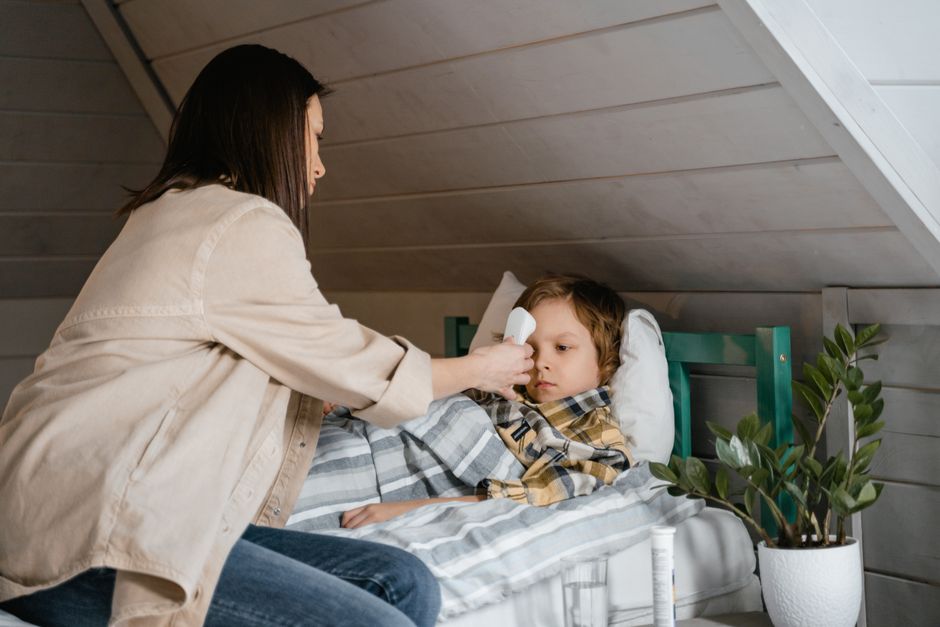
A fever in a toddler is one of the most common reasons parents call a doctor or search the internet at 2 a.m. Here is the honest answer: the goal is not to break the fever at all. The goal is to keep your child comfortable and watch for signs that something more serious is going on. Fever is a normal immune response, not a disease, and most fevers in toddlers do not need to be forced down to a normal number.
What actually works is simple. Give the right dose of a fever reducer if your child is uncomfortable, offer fluids often, dress them lightly, and watch their behavior more than the thermometer. What does not work — and can be dangerous — includes cold baths, alcohol rubs, and waking a sleeping child just to check a temperature.
What Is A Fever In A Toddler And What Temperature Counts?
A fever is a body temperature that is higher than normal, and in toddlers the number that matters depends on how you measure it. A rectal temperature of 100.4°F (38°C) or higher is generally considered a fever. That threshold is well established and is the one doctors use for young children.
How you take the temperature changes the reading. Rectal temperatures are the most accurate for toddlers. Forehead and ear thermometers are convenient but can be less reliable, especially in children under 3. If you get an unusual reading from one of those, confirm it with a rectal measurement if you can.
Normal body temperature sits around 98.6°F (37°C), but it moves throughout the day. It tends to be lower in the early morning and higher in the late afternoon and evening. A slightly elevated reading in a playful, drinking, comfortable toddler is usually not a concern.
Fever itself is not the enemy. When the immune system detects an infection, it releases chemicals that raise the body’s internal thermostat. Many bacteria and viruses reproduce less efficiently at higher temperatures, and some immune cells work better when it is warm. This is why pediatricians generally care more about how a child looks and acts than about the exact number on the thermometer.
How To Break A Fever In A Toddler What Actually Works
What works is treating the child, not the number. If your toddler is uncomfortable, fussy, or having trouble resting, a fever reducer can help them feel better. If they are drinking, playing, and sleeping normally, you may not need to give anything at all.
When you do give medication, dosing matters more than anything else. Fever reducers for toddlers are dosed by weight, not age. The correct dose is printed on the package or available from your child’s doctor or a pharmacist. Guessing based on age alone is one of the most common medication mistakes parents make.
Two medications are commonly used in toddlers:
- Acetaminophen — can be given every 4 to 6 hours as directed.
- Ibuprofen — can be given every 6 to 8 hours as directed, and is generally only used in children 6 months and older.
Never give aspirin to a child or teenager. Aspirin use during a viral illness in children has been linked to Reye syndrome, a rare but serious condition affecting the liver and brain.
Alternating the two medications is a practice some clinicians recommend for stubborn fevers, but the evidence that it works better than one medication used correctly is limited. It also raises the risk of dosing errors. If you are considering it, talk to your child’s doctor first and write down every dose and time so nothing gets doubled up.
Beyond medication, the basics matter:
- Offer fluids often — water, milk, or an oral rehydration solution. Dehydration is the real risk with fever, not the temperature itself.
- Dress your child in light clothing and keep the room comfortable. Overbundling traps heat.
- Let them rest. Sleep is fine. Do not wake a sleeping child just to give medicine or take a temperature.
- Offer bland, easy foods if they are hungry. Do not force eating.
A lukewarm sponge bath can be used if a child is very uncomfortable, but it should never involve cold water. Cold water causes shivering, which raises the body’s core temperature and makes things worse. Never use rubbing alcohol on a child’s skin. It can be absorbed and cause serious harm.
When Should You Call A Doctor About A Toddler’s Fever?
Age is the single most important factor. A fever of 100.4°F (38°C) or higher in a baby under 3 months old is a medical emergency. Call your doctor or go to the emergency room right away, even if the baby seems fine otherwise. Infants that young can have serious infections without showing obvious signs.
For toddlers, the behavior matters more than the number. Call your child’s doctor if you notice:
- A fever that lasts more than a few days, or one that keeps coming back after going away.
- Refusing to drink, or signs of dehydration such as fewer wet diapers, no tears when crying, or a dry mouth.
- Extreme fussiness, inconsolable crying, or a child who is very hard to wake.
- Trouble breathing, a stiff neck, a rash that does not fade when you press on it, or a seizure.
- A fever that goes away and then returns, especially if your child seems sicker the second time.
Trust your instincts. Parents often sense when something is wrong even when the numbers look manageable. If you are worried, call. That is what the call is for.




What Actually Does Not Work To Break A Fever
Several popular remedies do not help and some are genuinely dangerous. Cold baths, ice packs, and alcohol rubs are the main ones to avoid. They can cause shivering, raise the core temperature, and in the case of alcohol, cause poisoning through the skin.
Another common mistake is giving too much medication. Fever reducers have a ceiling. Doubling up, giving doses too close together, or combining products that contain the same ingredient can lead to overdose. Many cold and flu syrups for children already contain acetaminophen, so read every label before combining anything.
There is also no evidence that teething causes high fevers. Teething can cause a slight rise in temperature, but a true fever in a toddler is almost always a sign of infection. Attributing a real fever to teething can delay care for something that needs attention.
Finally, fever-reducing medicine does not treat the infection. It lowers the temperature and eases discomfort. The underlying illness still has to run its course, which is why comfort and fluids matter as much as the medicine itself.
How Long Does A Toddler Fever Usually Last?
Most viral fevers in toddlers last two to three days, though some can run longer. A fever that lasts more than three days, or one that disappears and then returns, is worth a call to your doctor. The pattern can matter as much as the peak number.
How high a fever gets does not reliably tell you how serious the illness is. A toddler with a temperature of 103°F who is drinking and playing may be less concerning than a toddler with 101°F who is listless and refusing fluids. This is why pediatricians ask about behavior first.
You do not need to keep checking the temperature around the clock. Once you know your child has a fever, watch how they look, how much they drink, and how many wet diapers they produce. Those signals tell you more than repeated thermometer readings.
Frequently Asked Questions
At what temperature should I give my toddler fever medicine?
Give medicine based on comfort, not a specific number. If your toddler is uncomfortable, fussy, or unable to rest, a fever reducer dosed by weight can help, even at a lower temperature.
Can I alternate acetaminophen and ibuprofen for my toddler?
Some clinicians recommend alternating them, but the evidence that it works better than one medication used correctly is limited. It also increases the risk of dosing errors, so talk to your child’s doctor first.
Should I put my toddler in a cold bath to bring down a fever?
No. Cold water causes shivering, which can raise the core temperature and make your child more uncomfortable. A lukewarm sponge bath is only for comfort, never cold water or alcohol.
When is a toddler fever an emergency?
Any fever of 100.4°F (38°C) or higher in a baby under 3 months old is an emergency. In toddlers, seek care for trouble breathing, a stiff neck, a non-fading rash, a seizure, or signs of dehydration.
