
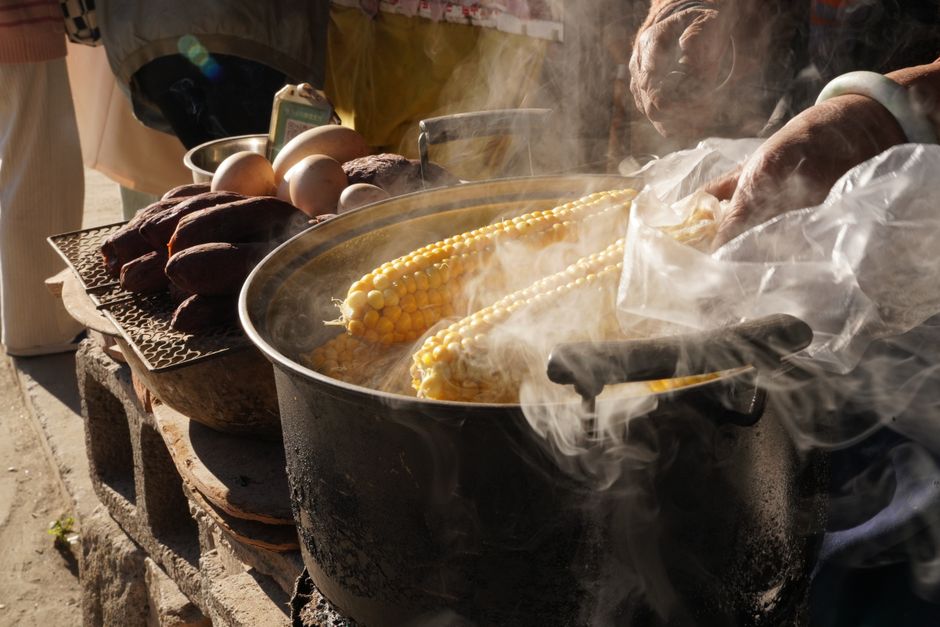
Boiling corn on the cob is one of the simplest ways to cook fresh corn. You shuck the ears, drop them into boiling water, and cook them for about 3 to 5 minutes. That short time is enough to heat the kernels through without turning them mushy. Many people grew up boiling corn for 10 minutes or longer, but modern sweet corn varieties are tender and lose their snap when overcooked.
How To Boil Corn On Cob Step By Step
Fresh sweet corn is mostly water and sugar. Heat firms up the proteins in the kernels and softens the starch slightly, but too much heat drives off moisture and turns the kernels tough and chewy. The goal is a quick cook that warms the corn all the way through while keeping that crisp pop when you bite in.
Here is the basic method.
- Fill a large pot with enough water to fully cover the corn. Leave a couple of inches of room at the top so it does not boil over.
- Bring the water to a rolling boil over high heat. Some cooks add a spoonful of sugar or a splash of milk to the water, but plain salted water works fine. There is no strong evidence that additives change the taste in a meaningful way.
- Shuck the corn and pull off the silk. Rinse off any stray strands under running water.
- Slide the ears into the boiling water. Do not crowd the pot. If you have more corn than fits comfortably, cook it in batches.
- Boil for about 3 to 5 minutes. Smaller, very fresh ears cook faster. Larger or older ears may need closer to 5 minutes.
- Pull the corn out with tongs right away. Do not let it sit in the hot water, or it will keep cooking and get soft.
- Serve with butter, salt, or whatever you like.
That is the whole process. The most common mistake is leaving the corn in too long. Sweet corn today is bred to be tender and sugary, and it does not need the long cooking times that older, starchier field corn required.
How Long Should You Actually Boil Corn On The Cob?
Three to five minutes is the sweet spot for most fresh sweet corn. That range covers nearly every ear you will buy at a grocery store or farmers market in season.
Here is how to think about the timing.
- Very fresh, small ears: 3 minutes is often enough.
- Standard grocery store ears: 4 to 5 minutes.
- Larger or thicker ears: up to 5 minutes, maybe a little more if the kernels are dense.
- Frozen corn on the cob: follow the package directions. Frozen ears are usually blanched before freezing, so they need only a few minutes to heat through.
If you are unsure, pull an ear out at 3 minutes and cut off a kernel to taste. You can always cook it a bit longer, but you cannot undo overcooking. Corn that has gone past its peak turns dull, chewy, and loses its sweetness.
Keep in mind that the exact time depends on the corn itself. Two ears from the same bin can cook differently. Freshness matters more than any precise minute count. Corn that was picked yesterday will taste better than corn that has been sitting in a cooler for a week, no matter how well you cook it.
Should You Add Sugar, Salt, Or Milk To The Water?
Adding sugar, salt, or milk to the boiling water is a common habit, but the evidence that it improves the corn is thin. Salt does not penetrate the kernels much during a short boil. Sugar in the water does not sweeten the corn in any meaningful way because the kernels are already sealed by their outer skin.
Milk is sometimes added to make the corn taste creamier. There is no solid research confirming this works. It does not hurt, but it also does not do much. The flavor of corn comes almost entirely from the corn itself, not from what is in the pot.
What actually makes a difference is freshness and cooking time. Buy corn as close to harvest as you can, cook it briefly, and eat it soon after. That matters far more than any secret ingredient in the water.
If you like the taste of salted water, add salt for your own preference. Just do not expect it to season the corn the way salting it after cooking does.





Boiling vs Grilling vs Microwaving Corn
Boiling is not the only way to cook corn, and it is not always the best. Each method gives a different result. Here is how they compare.
| Method | Time | What It Does |
|---|---|---|
| Boiling | 3 to 5 minutes | Heats evenly, keeps kernels moist, easy for large batches |
| Grilling | 10 to 15 minutes | Adds char and smoky flavor, kernels can dry out if overcooked |
| Microwaving (in husk) | 3 to 4 minutes per ear | Fast, steams in its own moisture, good for one or two ears |
| Roasting | 25 to 30 minutes | Concentrates sweetness, deeper flavor, takes longer |
Boiling is the most forgiving method for a crowd. You can cook a dozen ears at once and serve them all hot. Grilling and roasting bring out more flavor but require more attention. Microwaving is the fastest for a single ear and works surprisingly well because the husk traps steam.
There is no single best method. It depends on how much corn you are cooking and what flavor you want. For a plain, classic side dish, boiling is hard to beat.
How To Pick And Store Corn For Boiling
Good corn starts before it hits the water. The best corn is picked and eaten the same day. Once an ear is harvested, its sugars start converting to starch, and it loses sweetness over time. Refrigeration slows that process but does not stop it.
When you buy corn, look for these signs.
- Husks: green, tight, and slightly damp. Dry or brown husks mean older corn.
- Silk: brown and slightly sticky at the tip. Fresh silk is a good sign.
- Kernels: if the husk is pulled back, the kernels should be plump and milky, not shriveled or dented.
Store corn in the refrigerator, husk on, in a plastic bag. It keeps for a few days but loses quality fast. If you cannot eat it within a day or two, consider freezing it. Blanch the ears for a few minutes, cool them in ice water, cut the kernels off or leave the ears whole, and freeze.
One thing worth knowing: the old advice to add a pinch of sugar to the water comes from a time when corn was less sweet than it is today. Modern sweet corn varieties are bred to hold their sugar longer and taste sweeter at harvest. That is one reason short cooking times work so well now.
Common Mistakes When Boiling Corn
Most problems with boiled corn come down to a few simple errors. Fix these and your corn will be better.
- Overcooking: the biggest one. Anything past 5 minutes usually means soft, chewy kernels.
- Letting it sit in the water: pull it out as soon as it is done. Corn left in hot water keeps cooking.
- Salting too early in the pot: salt in the water does little for flavor. Salt after cooking instead.
- Crowding the pot: too many ears at once drops the water temperature and leads to uneven cooking.
- Using old corn: no cooking method fixes corn that has already lost its sugar.
If your corn turns out tough, the issue is almost always cooking time or freshness, not the recipe. If it turns out bland, the corn was likely old or out of season. There is not much you can do about that in the pot.
Frequently Asked Questions
How long do you boil corn on the cob?
Boil fresh sweet corn for about 3 to 5 minutes once the water is at a rolling boil. Smaller or very fresh ears need closer to 3 minutes, while larger ears may take up to 5.
Do you boil corn with the husk on or off?
For boiling, shuck the corn first and remove the silk. Boiling with the husk on is not standard and does not improve the result the way it can with grilling or microwaving.
Should you add sugar or salt to the water when boiling corn?
It is not necessary and there is little evidence it changes the taste. Salt does not soak into the kernels during a short boil, and the corn’s own sugar provides the sweetness.
Can you overcook corn on the cob?
Yes, and it is the most common mistake. Corn left in boiling water too long turns soft, chewy, and loses its sweetness, so pull it out as soon as it is done.
