
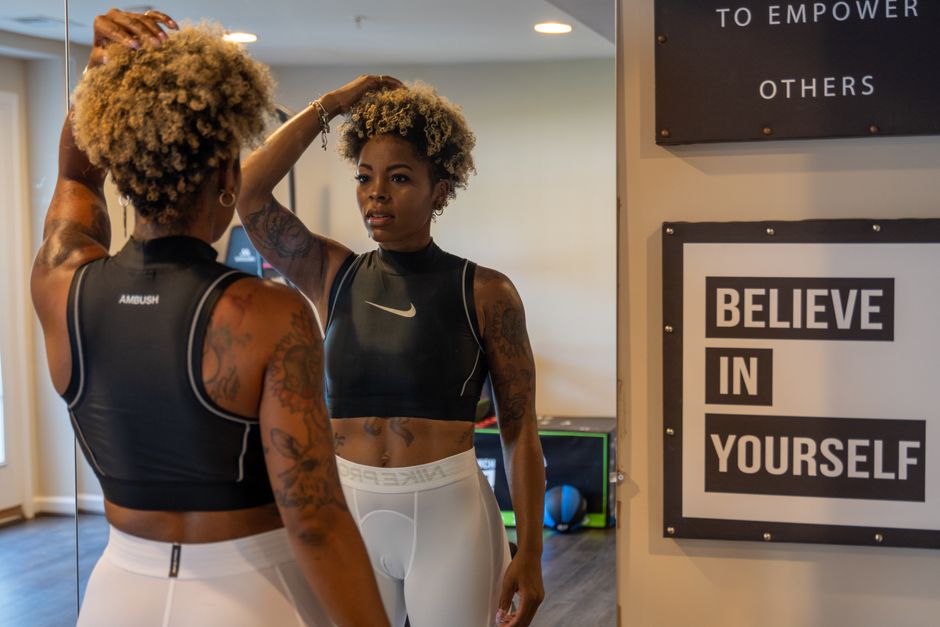
Believing in yourself is not a personality trait you are born with. It is a skill you can build, and the science of psychology has identified specific steps that actually work. Research consistently shows that self-efficacy — the technical term for self-belief — grows from four main sources: personal success, learning from others, verbal encouragement, and managing your emotional state. You can train each of these deliberately, and the steps below explain how.
What Does Science Actually Say About Self-Belief?
Psychologist Albert Bandura introduced the concept of self-efficacy in the 1970s. His work remains the foundation for how researchers understand self-belief today. Self-efficacy is not the same as self-esteem. Self-esteem is how you feel about yourself overall. Self-efficacy is how confident you are that you can complete a specific task or handle a specific situation.
This distinction matters. You can have low self-esteem in general but high self-efficacy for your job. Or you can feel good about yourself but doubt your ability to give a presentation. The research on self-efficacy is strong and consistent: people with higher self-efficacy set harder goals, persist longer, and recover faster from setbacks.
Bandura identified four sources that build self-efficacy. They are mastery experiences, vicarious learning, social persuasion, and emotional regulation. Every effective self-belief strategy traces back to one of these four sources.
How To Believe In Yourself Science Backed Steps: Start With Small Wins
Mastery experiences are the most powerful way to build self-belief. This simply means succeeding at something. Each time you complete a task you found difficult, your brain updates its estimate of what you can do.
The key is to start small. Do not begin with the biggest goal you can imagine. Begin with a task you are roughly 70 percent confident you can complete. Finish it. Then choose a slightly harder task. This creates a chain of successes that builds genuine confidence over time.
This is not positive thinking. It is evidence. Your brain records actual proof of your capability. Research shows that personal success changes how your brain predicts future performance. Each success makes the next attempt feel more manageable.
One common mistake is comparing your starting point to someone else’s middle point. That comparison undermines the evidence of your own progress. Track your own wins, no matter how small they seem.
Why Watching Others Succeed Helps You Believe In Yourself
Vicarious learning is the second source of self-efficacy. When you watch someone similar to you succeed at a task, your own belief in your ability to do the same task increases. This works because your brain uses social comparison to estimate your own capabilities.
The key word is similar. Watching an Olympic athlete does little for your confidence in running a 5K. Watching a friend who is the same age, fitness level, and experience as you complete that 5K changes your expectations. Their success signals that success is possible for you too.
This is why representation matters in workplaces, schools, and media. Seeing people like you succeed makes your own success feel more plausible. You can use this deliberately by finding mentors, joining groups of people working toward similar goals, or reading stories of people who started where you are now.





What Kind of Encouragement Actually Works
Social persuasion is the third source of self-efficacy. This is verbal feedback from others. But not all encouragement works equally well.
Vague praise like “you can do it” has little effect. Specific feedback works better. When someone points out exactly what you did well — “you handled that difficult customer calmly and clearly” — your brain has concrete evidence to store. Specific feedback is more believable than general reassurance.
There is a catch. Social persuasion is the weakest of the four sources. It works best when it comes from someone you respect and when it is paired with actual experience. Encouragement alone will not sustain belief in yourself if you never see your own progress.
You can also use self-talk this way. The research on self-talk is mixed, but one pattern is clear: asking yourself questions works better than telling yourself statements. Instead of saying “I can do this,” ask “How will I do this?” Questions engage your problem-solving brain. Statements often bounce off if you do not fully believe them.
How Your Body and Emotions Shape Self-Belief
The fourth source of self-efficacy is emotional and physiological state. How you feel physically affects how capable you feel mentally. A racing heart, sweaty palms, and shallow breathing can be interpreted as fear. The same physical symptoms can also be interpreted as excitement or readiness.
Research shows that how you label your physical arousal matters. People who reframe nervousness as excitement perform better than those who try to calm themselves down. This is called reappraisal. You are not eliminating the physical response. You are changing the story you tell yourself about it.
Sleep also matters here. Chronic sleep deprivation reduces emotional regulation and increases negative self-assessment. You cannot think your way to confidence when your body is running on empty. Basic physical health is a foundation for self-belief, not a luxury.
Why Failure Is Part of the Process
Failure can damage self-efficacy, but it does not have to. The research shows that how you interpret failure determines its effect on your self-belief.
People who see failure as information — “this approach did not work, what should I try next?” — maintain or even increase their self-efficacy. People who see failure as identity — “I failed, therefore I am a failure” — lose confidence quickly.
This is where the concept of a growth mindset, developed by psychologist Carol Dweck, connects to self-efficacy. When you believe abilities can be developed, setbacks become feedback rather than verdicts. When you believe abilities are fixed, every mistake feels like proof of your limits.
The evidence on growth mindset interventions is mixed in terms of long-term effects. But the underlying point is well supported: your interpretation of failure strongly predicts whether you persist or give up.
How To Build Self-Belief When You Feel Stuck
If you feel stuck in a cycle of self-doubt, start with the smallest possible action. The research is clear that action precedes confidence, not the other way around. You do not need to feel confident before you act. You act, and confidence follows the evidence of your action.
Here is a practical sequence based on the four sources of self-efficacy:
- Choose one task you can complete this week that is slightly hard but achievable.
- Complete it and write down what you did.
- Find one person who has succeeded at something similar and study how they did it.
- Ask someone you trust for specific feedback on a recent effort, not general praise.
- Notice your physical symptoms before a challenge and label them as energy rather than fear.
This sequence uses all four sources of self-efficacy in a single week. It is not a one-time fix. It is a practice you repeat.
What Does Not Work: Common Myths About Self-Belief
Several popular ideas about self-belief are not supported by evidence. Positive affirmations are the most common example. Repeating statements you do not believe can backfire. Research has found that people with low self-esteem feel worse after repeating positive statements they find untrue. The affirmation only works if you already believe it.
Visualizing success has a similar problem. Imagining yourself succeeding feels good, but it does not build the skills you need. Some research even suggests that visualizing the outcome can reduce motivation because your brain gets a small reward from the imagined success. Visualizing the process — the steps you will take — is more useful than visualizing the result.
Another myth is that self-belief requires eliminating doubt entirely. This is not true. Many high-performing people experience doubt regularly. The difference is that they act despite the doubt. Self-belief is not the absence of fear. It is the ability to move forward while feeling fear.
Frequently Asked Questions
Can self-belief be learned or is it fixed?
Self-belief can be learned at any age. It is built through repeated experiences of success, not determined by personality.
How long does it take to build self-confidence?
There is no fixed timeline, but noticeable changes typically require weeks of consistent practice. Small wins accumulated over several weeks create a more durable effect than a single breakthrough moment.
What is the difference between self-esteem and self-efficacy?
Self-esteem is how you feel about yourself overall, while self-efficacy is how confident you are in your ability to complete specific tasks. You can have high self-efficacy in one area and low self-esteem in general.
Do positive affirmations actually work?
Positive affirmations only help if you already believe the statement. For people with low self-belief, repeating statements they find untrue can actually make them feel worse.
