
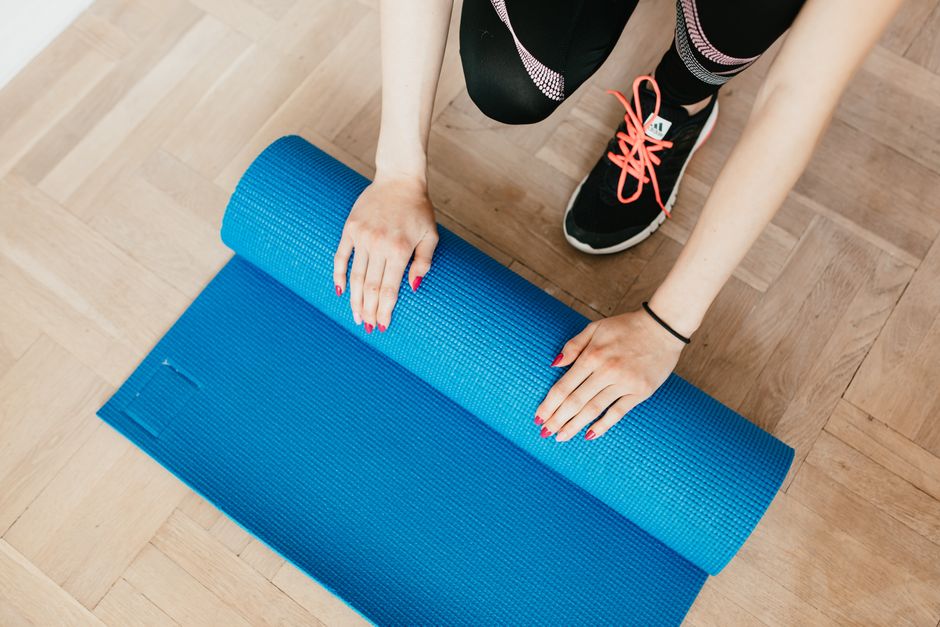
Starting to exercise and staying with it comes down to three things: begin smaller than feels impressive, attach the exercise to a fixed time and place, and expect to miss sessions without treating a missed session as failure. Most people who quit do so because they started too hard, too fast, or with no plan for the days when motivation disappears. The approach below is built around what actually predicts long-term adherence rather than what makes a good first week.
How To Begin Exercising And Actually Stick With It
The single strongest predictor of sticking with exercise is not willpower. It is how manageable the exercise feels on a bad day.
Behavior change research consistently finds that people who start with small, specific, low-friction routines are more likely to still be exercising months later than people who begin with ambitious plans. The ambitious plan feels motivating in week one. By week three it becomes a standard you cannot meet, and missing it becomes a reason to stop.
So the practical rule is this: choose a starting amount you could do on your worst day. Not your best day. If a 20-minute walk feels easy on a good day, start with 10 minutes. If three gym sessions a week sounds exciting, start with two. The goal in the first month is not fitness. It is showing up repeatedly enough that the behavior starts to feel normal.
This is not motivational language. It reflects how habits form. A behavior repeated in a consistent context becomes cue-driven over time — it starts to happen with less deliberate decision-making. That transition takes repetition, and repetition is easier when the barrier to starting is low.
What Should Your First Month of Exercise Actually Look Like?
The first month should be boring. That is the point.
Established physical activity guidance — including the U.S. Physical Activity Guidelines for Americans — recommends that adults aim for at least 150 minutes of moderate-intensity aerobic activity per week, plus muscle-strengthening activity on at least two days per week. That is the target for health benefits, not the starting line. Nobody needs to hit it in week one, and trying to is one of the most common reasons people stop.
A more realistic first month looks like this:
- Two to three sessions per week, scheduled on specific days
- Sessions short enough that you finish feeling like you could have done more
- Mostly walking, cycling, swimming, or another activity you do not dread
- One or two simple strength sessions using body weight or light weights
- No expectation of visible results yet
Notice what is absent: intensity targets, step counts, heart rate zones, and progress tracking. Those tools are useful later. In month one they add complexity, and complexity is what people abandon first.
There is a useful distinction here that gets lost. Exercising and training are different activities. Training is structured, progressive, and aimed at a specific outcome. Exercising is movement done for health and habit. Month one is exercising. Training can come once the habit holds.
Why Do So Many People Quit Exercise After a Few Weeks?
Most quitting happens for predictable reasons, and almost none of them are about laziness.
Starting too hard. A sudden jump in volume or intensity produces soreness, fatigue, and sometimes injury. The body adapts to gradual increases in load, not abrupt ones. When week one hurts, week two feels like a threat rather than a habit.
All-or-nothing thinking. People decide that a workout only counts if it meets a certain standard. Miss the standard, and the whole plan collapses. This pattern — sometimes called the abstinence violation effect in behavior research — turns one missed session into a full stop.
No fixed context. Exercise that has to be scheduled fresh each day competes with everything else in your life. Exercise tied to a consistent time and place — right after morning coffee, immediately after dropping the kids at school, every Tuesday and Thursday at 6 p.m. — requires far less decision-making.
Unrealistic timelines. Visible changes in body composition typically take longer than people expect. Early weight changes often reflect fluid shifts rather than fat loss. When the mirror does not cooperate by week four, motivation drops — even though the exercise is working exactly as it should.
Relying on motivation. Motivation fluctuates. It is a feeling, not a system. People who exercise for years generally do not feel more motivated than anyone else. They have made the behavior less dependent on how they feel.




How Do You Build an Exercise Habit That Survives a Bad Week?
Design the habit so that a bad week does not break it.
There is a concept worth borrowing from habit research: the minimum viable session. This is the smallest version of your workout that still counts — a 10-minute walk, five minutes of bodyweight squats and push-ups, a short stretch. On days when the full session is not happening, you do the minimum. The purpose is not fitness. It is protecting the identity of being someone who exercises.
A few other design choices help:
- Anchor to an existing routine. Attach exercise to something you already do reliably — after brushing your teeth, before your morning shower, right after lunch.
- Prepare the environment. Shoes by the door. Gym bag packed the night before. Workout clothes laid out. Each removed decision is a removed opportunity to skip.
- Have a backup plan for travel, illness, and busy weeks. A short home routine, a walk, or a hotel-room bodyweight session keeps the streak of behavior intact when the normal routine is unavailable.
- Plan for missed sessions in advance. Decide now that missing one session is fine and missing two in a row is the signal to do the minimum viable session. This removes the drama from a single skip.
The point is not perfection. It is reducing the number of ways a normal life can derail the routine.
Do You Need a Gym, Equipment, or a Trainer to Start?
No. Walking is one of the most studied forms of physical activity for health outcomes, and it requires nothing but shoes.
Strength training does not require a gym either. Bodyweight movements — squats, push-ups (including against a wall or on the knees), lunges, planks, glute bridges — provide a genuine strength stimulus, especially for someone starting out. Resistance bands and a pair of adjustable dumbbells cover most home needs if you want to progress.
A trainer or coach can be genuinely useful for technique, for people with specific goals, and for anyone with a history of injury. But it is not a prerequisite. The evidence does not support the idea that you need professional supervision to begin moderate exercise as a generally healthy adult.
What matters more than equipment is whether the activity is convenient enough to repeat. A gym 30 minutes away that you love is less likely to produce consistent exercise than a 15-minute walk from your front door that you find tolerable.
When Should You See a Doctor Before Starting Exercise?
For most adults, moderate exercise like walking does not require medical clearance. Established guidance generally supports starting moderate activity without consulting a clinician for people without known health conditions.
Seeing a doctor first is reasonable if you:
- Have a known heart condition, or have had a heart attack or stroke
- Have diabetes, kidney disease, or another condition where exercise needs to be managed
- Experience chest pain, unusual shortness of breath, dizziness, or fainting with exertion
- Have joint or back problems that affect how you move
- Are pregnant or recently postpartum — check with your clinician about appropriate activity
- Are over 65 and have not been active, or have concerns about balance or falls
This is not an exhaustive list, and it is not a substitute for individualized medical advice. If you are unsure whether exercise is safe for you, ask. That conversation is short and worth having.
One clarification worth making: the old advice to “check with your doctor before starting any exercise program” was applied broadly for decades. Current thinking is more targeted — moderate activity is generally low-risk for most adults, and the bigger public health concern is inactivity, not exercise-related harm in healthy people.
How Long Before Exercise Starts to Feel Easier?
Most people notice that exercise feels less difficult within a few weeks of consistent moderate activity. That is a real physiological change, not just familiarity.
The heart and blood vessels adapt relatively quickly to regular aerobic activity — the heart pumps more efficiently, and blood volume can increase. Muscles adapt more slowly, and strength gains in the first several weeks come mostly from neurological changes (better coordination and muscle recruitment) rather than muscle growth. Visible muscle changes typically take longer, often on the order of weeks to months depending on the person and the program.
What this means practically: do not judge the program by how you look in week three. Judge it by whether you are still showing up. The physiological changes follow the behavior. They do not lead it.
One honest caveat: the timeline varies substantially between people. Age, starting fitness, genetics, sleep, and nutrition all affect how quickly adaptations appear. Anyone promising a specific result by a specific date is guessing.
Frequently Asked Questions
How many days a week should a beginner exercise?
Two to three sessions per week is a reasonable starting point for most beginners, with the option to add walking on other days. The general health target of at least 150 minutes of moderate activity per week can be built up over time.
Is it better to exercise in the morning or at night?
There is no strong evidence that one time of day is superior for adherence or health outcomes in general. The best time is the one you can consistently protect.
What if I miss a week of exercise?
Missing a week does not undo your progress, and returning at a slightly easier level is usually the right move. The main risk is treating the missed week as a reason to stop entirely.
Do I need to feel sore to know exercise is working?
No. Soreness reflects unfamiliar stress on muscles, not effectiveness. Consistent exercise without soreness still produces adaptation.
