
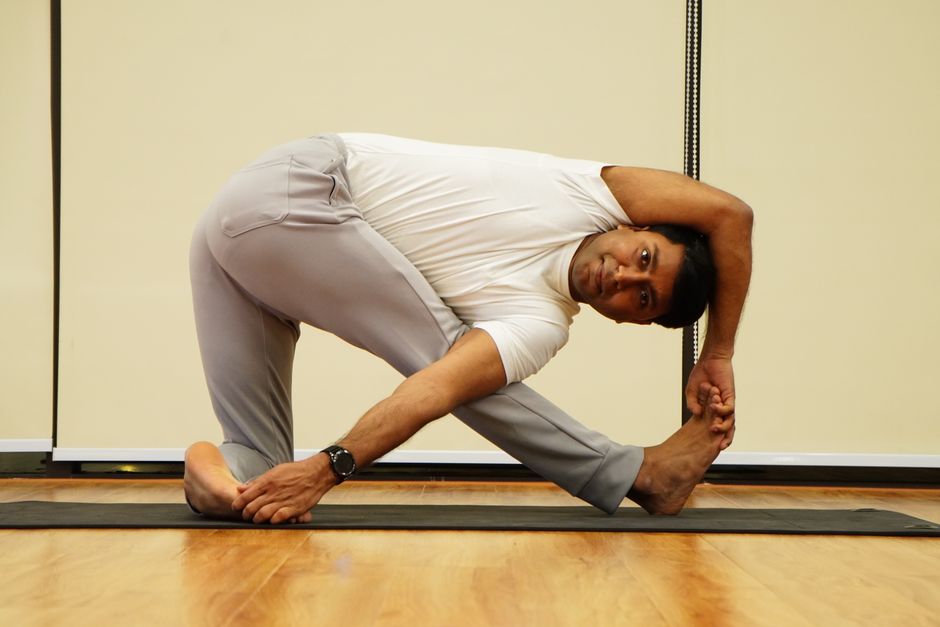
Becoming a yogi is not about touching your toes or holding a headstand. In the classical texts, a yogi is someone committed to a steady practice that trains the body, settles the mind, and refines the breath. The path has recognizable steps: learn foundational postures, build a consistent routine, add breath control, and gradually include meditation and ethical guidelines. You do not need to be flexible or young to begin. You need consistency and honest effort.
What Does It Actually Mean To Become A Yogi?
In Western culture, “yogi” often means someone who does yoga postures well. In the Indian traditions where yoga originated, the word carries a different weight. It describes a person dedicated to a discipline aimed at stilling the fluctuations of the mind.
The most cited definition comes from Patanjali’s Yoga Sutras, a text compiled roughly two thousand years ago. Its second sutra defines yoga as the quieting of the mind’s activity. Postures are one part of that project, not the whole of it.
Classical yoga is often described as having eight limbs, or ashtanga. These include ethical restraints, observances, postures, breath regulation, sense withdrawal, concentration, meditation, and a state of absorbed awareness. Most modern practitioners work mainly with postures and breath. That is a legitimate entry point, but it is not the full framework.
This matters because many people quit when their bodies do not cooperate. If your goal is only physical performance, a stiff back feels like failure. If your goal is a sustainable practice, stiffness is just information about where to start.
How To Become A Yogi: Steps For Body, Mind, And Breath
The practical path moves through stages, and the order matters more than most people realize. Trying to meditate before you can sit comfortably is a common reason beginners give up.
Step 1: Set an intention and pick a style
Choose a style that fits your body and temperament. Hatha tends to move slowly with longer holds. Vinyasa links postures to breath in a flowing sequence. Iyengar emphasizes alignment and props. Restorative uses supported positions to encourage relaxation.
None of these is superior. The best style is the one you will actually return to next week.
Step 2: Learn foundational postures
You do not need an advanced repertoire. A small set of poses covers most of what a beginner needs:
- Mountain pose for standing alignment
- Downward-facing dog for the whole back line
- Warrior I and II for legs and hips
- Tree pose for balance
- Seated forward fold for the hamstrings and back
- Child’s pose for rest and spinal release
- Supine twist for the spine and torso
- Legs-up-the-wall for a gentle inversion
Learn these from a qualified teacher if you can. A live teacher corrects what you cannot see in a mirror or a video.
Step 3: Build a repeatable routine
Frequency beats duration. Short daily sessions build the habit more reliably than one long weekly class. Many beginners start with 15 to 20 minutes several times a week and extend from there.
Pick a fixed time and place. A corner of a room and a mat left out is enough.
Step 4: Add breath work
Breath regulation, called pranayama, is where many people notice the mental effects of yoga most clearly. Start with simply noticing the breath during postures. Then add a basic practice such as equal-ratio breathing, where inhale and exhale are matched in length.
Skip breath retention and forceful techniques until you have guidance. Those practices carry real risks, including dizziness and, in rare cases, more serious effects, particularly for people with heart or lung conditions.
Step 5: Add meditation
Once you can sit comfortably for a few minutes, add a simple meditation. Watching the breath or repeating a word or phrase are both well-documented starting points. Five minutes daily is a reasonable beginning.
Step 6: Study the ethical framework
The first two limbs of classical yoga are the yamas and niyamas, guidelines for how you relate to others and to yourself. They include non-harming, truthfulness, non-stealing, moderation, and contentment, among others. These are not rules to master. They are directions to consider.
How Long Does It Take To Become A Yogi?
There is no completion date. Classical texts describe the path as lifelong, and teachers with decades of practice still describe themselves as students.
What does change on a predictable timeline is your capacity. Most beginners notice improved comfort in postures within a few weeks of regular practice. Flexibility and strength gains typically develop over months, not days. Mental changes, such as a greater ability to notice and step back from a thought, tend to be reported over a longer horizon and are harder to measure.
Be cautious with anyone promising a fixed transformation timeline. Progress in yoga depends on starting point, consistency, injury history, and age. Individual results vary widely.





Do You Need A Teacher Or Can You Learn At Home?
You can start at home. You cannot easily correct what you cannot see.
Home practice works well for building consistency. Videos and apps are convenient and low-cost. Their limitation is that they cannot tell you that your knee is drifting inward or that your lower back is rounding in a forward fold. Those patterns, repeated over time, are a common source of injury.
A teacher is most valuable early, when you are learning alignment, and again when you want to go deeper into breath work or meditation. Even a handful of sessions can prevent problems that take months to undo.
If you have a history of back, knee, shoulder, or neck problems, or if you are pregnant, get clearance from a clinician before starting. Some postures are not appropriate in those situations, and a general class may not be adapted for you.
What Are The Most Common Mistakes Beginners Make?
The most frequent mistake is treating yoga as a performance. That leads directly to the second mistake: pushing into pain.
Yoga involves sensation. It should not involve sharp pain, joint pain, or pain that persists after class. Stretching to the point of strain can injure muscles, tendons, and ligaments, and the recovery can take weeks.
Other common errors:
- Skipping the breath and treating postures as calisthenics
- Practicing intensely every day with no rest
- Comparing your range of motion to someone else’s
- Ignoring sleep, hydration, and food timing around practice
- Chasing advanced poses before the basics are stable
One clarification worth making: yoga is not a substitute for medical treatment. Some small studies suggest yoga can help with certain conditions such as chronic low back pain, but the evidence varies by condition and study quality. It is best understood as a complement to standard care, not a replacement.
How Do You Build A Practice That Lasts?
Long-term practitioners tend to share a few habits. They practice at a set time. They lower the bar on hard days rather than skipping. They separate “showing up” from “performing well.”
Five minutes on a bad day keeps the thread intact. That thread is what turns a hobby into a practice.
It also helps to vary intensity across the week. A vigorous session followed by a restorative one gives the body time to adapt. Muscles and connective tissue respond to load, but they need recovery to do it.
Finally, be patient with the mental side. The stillness that classical yoga describes is not a switch you flip. It is a capacity that grows with repetition, the same way strength does.
Frequently Asked Questions
Can I become a yogi without being flexible?
Yes. Flexibility is a result of practice, not a requirement to begin. Many teachers recommend starting with props like blocks and straps to make postures accessible.
How many days a week should a beginner practice yoga?
Most beginner programs suggest three to four sessions per week, with at least one rest day. Daily short sessions are also fine if the intensity stays moderate.
Is yoga a religion?
Yoga has roots in Indian philosophical and spiritual traditions, but modern practice is not inherently religious. Many people practice it purely for physical and mental health.
Do I need to be vegetarian or follow strict rules to be a yogi?
No strict diet is required to practice yoga. Classical texts discuss moderation and non-harming, and some practitioners choose vegetarianism, but this is a personal choice rather than a requirement.
