
Becoming a certified prosthetist orthotist is a long, structured path that combines a specific master’s degree with a rigorous clinical residency and a board examination. It is a demanding career in healthcare that requires a strong background in science and a commitment to patient care. The journey typically takes about seven years of education and training after high school before you can practice independently.
What Does a Prosthetist Orthotist Actually Do?
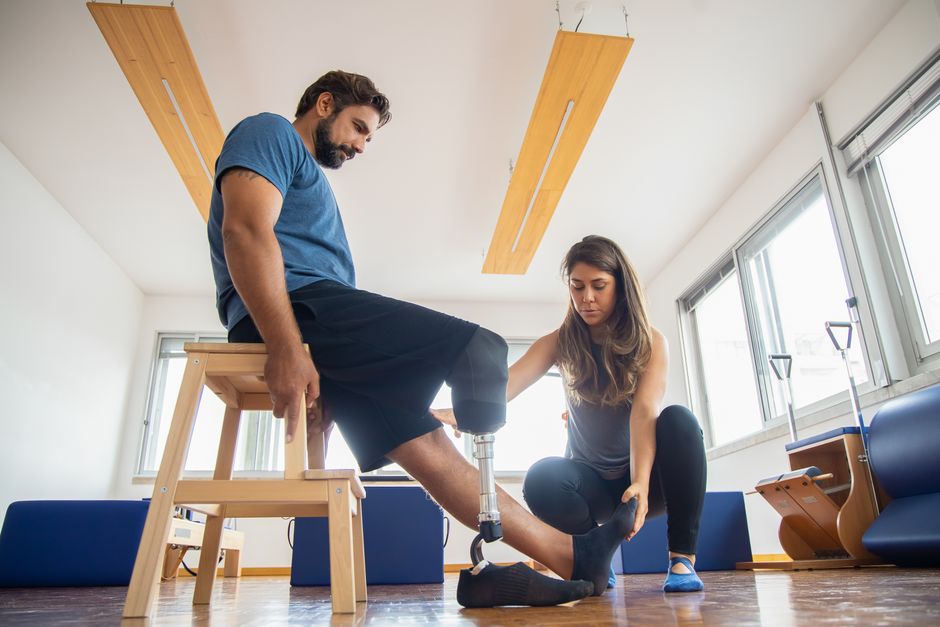
Before starting this journey, it helps to understand the job itself. A prosthetist designs and fits artificial limbs, called prostheses, for people who have lost a limb. An orthotist designs and fits braces, called orthoses, which support or correct parts of the body that are weak or injured.
Most professionals in this field are certified in both areas, making them a prosthetist-orthotist. You work directly with patients, measuring their bodies, taking plaster casts or digital scans, and designing devices that fit comfortably and function well. You also teach patients how to use their new device and adjust it over time as their body changes.
This is a clinical role, not just a technical one. You will spend significant time with patients, understanding their daily lives, their goals, and their physical challenges. The work requires patience, problem-solving skills, and genuine empathy.
What Are the Educational Requirements?
The first major step is earning a bachelor’s degree. There is no single required major, but you need to complete the prerequisite courses for graduate programs. These almost always include classes in human anatomy, physiology, physics, and chemistry. Most aspiring prosthetists choose a major like biology, kinesiology, or exercise science to naturally cover these requirements.
After your bachelor’s degree, you must earn a master’s degree in prosthetics and orthotics from a program accredited by the Commission on Accreditation of Allied Health Education Programs, known as CAAHEP. This is non-negotiable. There are currently about a dozen accredited programs in the United States, and they are highly competitive.
Admission to these master’s programs typically requires a strong GPA, letters of recommendation, and relevant experience. Many programs look for applicants who have shadowed a prosthetist-orthotist or worked in a related clinical setting. Direct patient care experience, even as a volunteer, strengthens your application considerably.
How Long Is the Clinical Residency?
Once you finish your master’s degree, you are not yet certified. The next step is a clinical residency. This is a supervised, paid training period where you apply your classroom knowledge to real patients under the guidance of an experienced certified professional.
The residency lasts between 18 and 24 months. You will spend roughly half of that time in prosthetic care and half in orthotic care. During this period, you learn the practical realities of the job: taking accurate measurements, working with fabrication labs, billing insurance, and managing patient expectations.
Residency positions are competitive and are matched through a national system similar to medical residency matching. You will need to interview at multiple sites and rank your preferences. The quality of your residency matters because it prepares you directly for the certification exam.





What Does the Certification Exam Involve?
After completing your residency, you are eligible to sit for the certification exam administered by the American Board for Certification in Orthotics, Prosthetics, and Pedorthics, known as ABC. This is the standard credential for the profession in the United States.
The exam has multiple parts. It includes a written multiple-choice section covering clinical knowledge, patient management, and device design. There is also a clinical simulation portion where you demonstrate your decision-making skills on case scenarios. Finally, there is a practical component where you must fabricate or modify a device in front of examiners.
Passing the exam grants you the credential of Certified Prosthetist Orthotist, abbreviated as CPO. This certification is not just a title. Most employers require it, and many insurance companies only reimburse for services provided by certified practitioners. You must also maintain your certification through continuing education credits every year.
How Much Does This Path Cost?
This is an expensive educational journey. A master’s degree in prosthetics and orthotics can cost anywhere from $30,000 to $80,000 in tuition depending on whether you attend a public or private university. This does not include living expenses, books, or travel for clinical rotations.
Financial aid is available. Many students use federal student loans, and some programs offer graduate assistantships that cover part of the tuition. There are also scholarships through professional organizations like the American Orthotic and Prosthetic Association. You should plan your finances carefully before committing to this path.
The residency is paid, but the salary is modest compared to the education cost. Resident salaries typically range from $40,000 to $55,000 per year. Once certified, the earning potential improves significantly. The median salary for a certified prosthetist orthotist is around $75,000 to $90,000, with experienced practitioners earning more.
Is the Job Market Strong?
The demand for certified prosthetists is growing. The primary driver is the aging population. Older adults have higher rates of diabetes and vascular disease, which are leading causes of limb loss. Additionally, advancements in prosthetic technology are expanding the range of what is possible, creating more opportunities for specialized care.
The Bureau of Labor Statistics projects that employment for orthotists and prosthetists will grow faster than the average for all occupations over the next decade. This is a stable career with a clear and regulated entry path. However, the field is small, and job openings can be concentrated in specific geographic areas, often near major hospitals and rehabilitation centers.
Rural areas often have a shortage of certified professionals. If you are willing to relocate, you may find strong job prospects and even signing bonuses in underserved regions.
What Skills Help You Succeed?
Academic ability is only part of the picture. The best prosthetists combine technical precision with strong interpersonal skills. You will work with patients who are often coping with trauma, illness, or significant life changes. Your ability to listen and communicate clearly directly affects their outcomes.
Manual dexterity matters. You will use hand tools, power tools, and specialized equipment to shape plastic, metal, and other materials. A comfort with technology is also essential. Modern prosthetics increasingly use microprocessors, sensors, and computer-aided design software.
Problem-solving is a daily requirement. No two patients have identical needs. You must adapt standard designs to unique body shapes, activity levels, and personal goals. A device that works for one person may fail for another, and you must figure out why and fix it.
Are There Alternative Routes?
Some professionals enter this field with only a bachelor’s degree and complete a shorter post-baccalaureate certificate program. This pathway is less common and is not accepted by all employers. It also does not lead to the full CPO credential. If you want the highest level of professional standing, the master’s degree and ABC certification are the standard.
Another option is to work as a technician first. Orthotic and prosthetic technicians fabricate the devices but do not fit them on patients. This role requires only a high school diploma or an associate degree. Working as a technician gives you hands-on experience with materials and fabrication, which can make you a stronger candidate for a master’s program later.
Frequently Asked Questions
How many years does it take to become a certified prosthetist orthotist?
It takes about seven years after high school: four years for a bachelor’s degree, two years for a master’s degree, and 18 to 24 months for a clinical residency.
Do I need a medical degree to become a prosthetist orthotist?
No, you need a master’s degree in prosthetics and orthotics from an accredited program, not a medical degree.
Is the ABC certification mandatory to work as a prosthetist orthotist?
Most employers require it, and insurance reimbursement typically depends on it, so it is effectively mandatory for clinical practice.
Can I become a prosthetist orthotist with a biology degree?
Yes, a biology degree is a common and acceptable undergraduate path as long as you complete the prerequisite courses required by the master’s program.
