
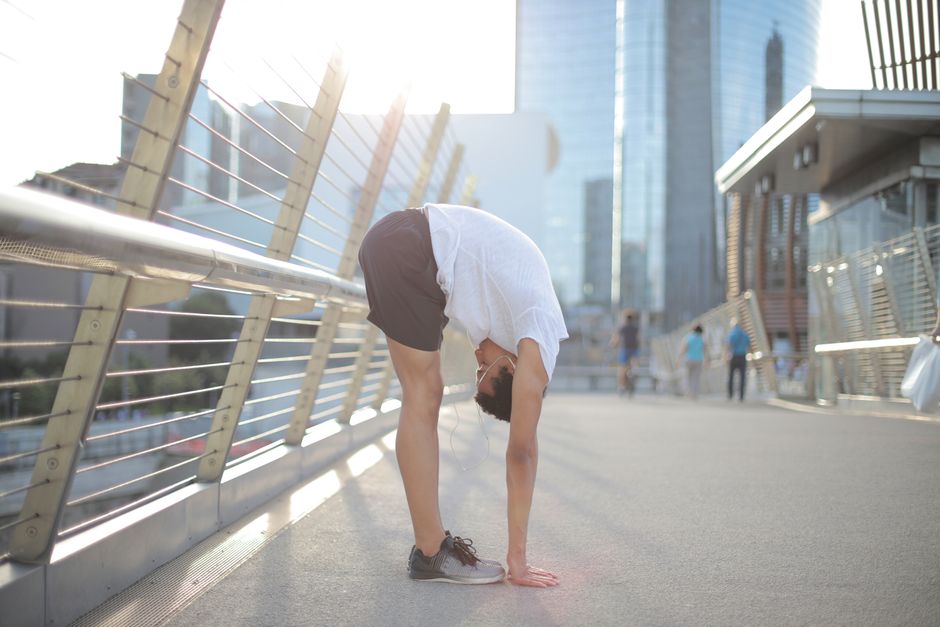
Flexibility is the range of motion you have around a joint or group of joints. You improve it through consistent stretching, and the effect is real but temporary: a stretch session increases tolerance to stretching for a while, and repeated sessions over weeks gradually allow more range. The most effective approach combines static stretching held for a sustained period, dynamic warm-up movements, and strength work at the end of your range. It takes weeks, not days, and progress is usually modest and gradual.
What Actually Limits Your Flexibility?
Your range of motion is capped by several structures, and knowing which one is limiting you explains why some stretches work and others feel pointless.
Muscles and their surrounding connective tissue — the fascia — resist being lengthened. So do the tendons that attach muscle to bone. Joint capsules, the tough envelopes around joints, have their own limits. And your nervous system sets a ceiling on how far you will allow a joint to move, largely through the stretch reflex: when a muscle is stretched quickly, sensors inside it signal it to contract rather than relax.
That last point matters more than most people realize. Much of what we call “tightness” is not a short muscle. It is your nervous system protecting a joint it considers unstable or unfamiliar in a new position. This is why slow, controlled stretching works better than bouncing, and why strength training at end range can improve flexibility — the nervous system gains confidence in that position.
Bone structure and joint shape set a hard limit no stretch can change. Hip socket depth, for example, varies a lot between people. If you have ever wondered why a friend folds into a deep squat effortlessly and you cannot, anatomy is often part of the answer.
How To Be More Flexible: Which Stretching Method Works Best?
Static stretching — holding a position still — has the strongest body of evidence for improving range of motion. The general finding across many studies is that holding a stretch for roughly 30 seconds, repeated a few times per muscle group, several days a week, produces measurable gains over several weeks.
Dynamic stretching, where you move a joint through its range with control rather than holding, is best used as a warm-up. It raises tissue temperature and prepares the nervous system. It does not replace sustained stretching if your goal is lasting range.
Other techniques have support but with more caveats:
- PNR (contract-relax) stretching: You contract the muscle being stretched for a few seconds, then relax and stretch further. Some studies suggest it produces slightly larger gains than static stretching alone, though results vary across trials.
- Loaded stretching: Holding a stretch while bearing weight or resistance. Popular in strength training circles. The evidence is promising but thinner than for plain static stretching.
- Ballistic stretching: Bouncing movements. Generally not recommended for beginners because it triggers the stretch reflex and raises injury risk, though trained athletes use controlled versions.
One clarification worth making: stretching before exercise does not reliably prevent injury, and prolonged static stretching immediately before power activities like sprinting or jumping can slightly reduce performance. Save the long holds for after training or for separate sessions.
How Often and How Long Should You Stretch?
Frequency matters more than duration. Stretching two to three times a week produces gains; stretching daily produces somewhat more. A single long session once a week does little.
For each stretch, hold for about 30 seconds. Two to four repetitions per muscle group is a reasonable target. You should feel a clear pull, not sharp pain. If a stretch causes pain or numbness, back off — that is a signal, not something to push through.
Total time does not need to be large. Ten to fifteen minutes of focused stretching, done consistently, is enough for most people. The consistency is what accumulates. A month of regular practice typically produces noticeable change; a single session produces a temporary gain that fades within hours.
Warm tissue stretches more comfortably than cold tissue. A short walk, a warm shower, or a few minutes of easy movement beforehand makes stretching feel easier and is generally recommended.
Why Strength Training Improves Flexibility
This surprises people. Lifting weights through a full range of motion can improve flexibility about as well as stretching in some studies, and the two together work better than either alone.
The reason is partly neural. When you control a heavy load at the end of your range — a deep squat, a full-depth press — your nervous system learns that position is safe. The protective tension eases. Muscle also lengthens under load over time through the addition of sarcomeres, the tiny contractile units inside muscle fibers, though the size of this effect in humans is debated.
Practical implication: if you want to touch your toes, strengthening your hamstrings through their full range — Romanian deadlifts, for example — may help as much as hamstring stretching. This is not a replacement for stretching if your range is very limited, but it is a useful addition that many people skip.
Does Foam Rolling or Massage Help Flexibility?
Foam rolling and massage produce a short-term increase in range of motion, typically lasting minutes to a couple of hours. They do not appear to create lasting flexibility on their own.
The effect likely comes from reduced pain perception and increased tolerance to stretch rather than the tissue physically lengthening. That is still useful — a brief window of easier movement can make a stretching session more productive, or help before activity. But relying on a foam roller without stretching will not build range.
The evidence for these tools is mixed and the effects are modest. They are reasonable adjuncts, not foundations.
Can You Become Flexible at Any Age?
Yes. Flexibility declines with age, but it responds to training at every age studied. Older adults who begin stretching programs show gains in range of motion, and flexibility training is part of what helps maintain independence and reduce fall risk.
Connective tissue does become stiffer with age, and collagen cross-linking increases. This means progress may be slower than it would have been at twenty. It does not mean the ceiling is fixed. The same principles — regular, sustained stretching, gradual progression, patience — apply.
What changes with age is the need for caution. If you have joint replacements, osteoporosis, or a history of joint injury, check with a clinician before starting aggressive stretching, particularly for the spine and hips. Some positions that are fine for a healthy twenty-year-old carry real risk for someone with low bone density.
Common Flexibility Mistakes That Slow Progress
Most stalled progress comes down to a few predictable errors.
Stretching inconsistently. This is the biggest one. Three sessions a week for months beats one heroic session followed by nothing. Range of motion gains fade when training stops, typically over a few weeks.
Stretching cold and hard. Cold tissue is less pliable. A brief warm-up makes the session more comfortable and likely more effective.
Pushing into pain. Discomfort is expected; sharp pain is not. Pain triggers protective tension, which works against you. The goal is a clear stretch sensation you can breathe through.
Ignoring the nervous system. Bouncing, forcing, and holding your breath all increase protective tension. Slow breathing and relaxed effort let the muscle lengthen further.
Stretching only what feels tight. Sometimes the tight-feeling muscle is compensating for a weak or restricted one elsewhere. Persistent tightness in one spot, especially if it comes with pain, is worth having assessed rather than stretched indefinitely.
How Long Until You See Results?
Expect small changes within two to four weeks of consistent practice, and more meaningful change over two to three months. This is a general pattern from stretching research, not a guarantee for any individual.
Progress is not linear. Some weeks feel easier than others. Range also varies by time of day — most people are stiffer in the morning and more supple in the afternoon, which is normal and not a sign of regression.
People with naturally stiffer connective tissue or structural limits at a joint may plateau earlier. That is not failure. It reflects anatomy. The goal is useful, comfortable range for your body and your activities, not a specific pose or benchmark.
Frequently Asked Questions
How long should you hold a stretch to get more flexible?
About 30 seconds per stretch is a reasonable target supported by research. Two to four repetitions per muscle group, done several days a week, produces measurable gains over weeks.
Can you become flexible in a week?
You can feel looser within a session, but that gain fades within hours. Lasting flexibility takes weeks of consistent practice, not days.
Is it better to stretch before or after exercise?
Dynamic movement is better before exercise, and sustained static stretching is better after or in a separate session. Long static holds right before power activities can slightly reduce performance.
Does stretching actually lengthen muscles?
Some evidence suggests muscles adapt over time with regular stretching, but much of the early gain comes from increased stretch tolerance set by the nervous system. Both mechanisms likely contribute.
