
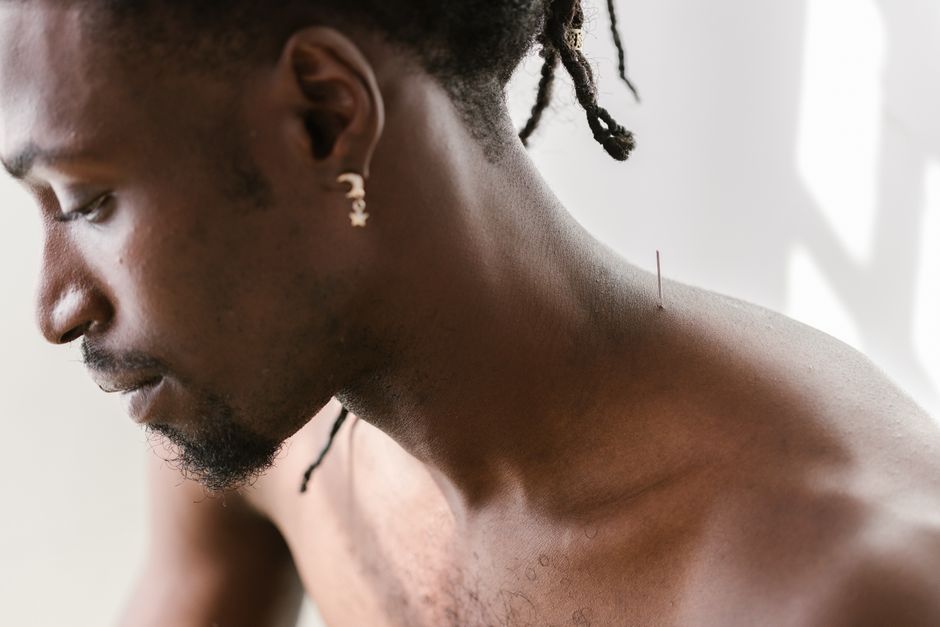
Ear piercing layout is a design decision, not a medical one, and the most common mistake is filling one ear evenly while ignoring the other. Balance comes from distributing visual weight across both ears rather than matching them. That usually means choosing a focal point, repeating one or two elements, and letting the rest of the layout stay quiet.
There is no rule that says both ears should mirror each other. In fact, most stylists and piercers who work with multi-piercing layouts treat the two ears as one composition. The goal is harmony — a sense that the arrangement belongs together — not symmetry, where each side copies the other exactly.
This guide explains how visual weight works in ear styling, how to plan a layout around your anatomy and healing timeline, and where the honest limits of aftercare advice sit.
What Is the Difference Between Harmony and Symmetry in Ear Piercings?
Symmetry means both ears carry the same piercings in the same positions. Harmony means the two ears relate to each other without being identical.
Symmetry is easier to plan. You pick a set of piercings, do them on both sides, and the layout is finished. The trade-off is that symmetrical setups can look flat. Every ear repeats the same information, so there is no visual anchor and no sense of movement.
Harmony works differently. One ear might carry the statement pieces while the other holds smaller, simpler jewelry. The eye still reads both ears as one arrangement because they share color, metal, or a repeated shape.
Neither approach is better. Symmetry suits people who want a clean, predictable look and who plan to stop at a small number of piercings. Harmony suits people building a larger layout over time, because it gives you room to add pieces without forcing a matching addition on the other side.
The practical difference shows up later. If you commit to symmetry, every new piercing creates an obligation to repeat it. If you work toward harmony, a new piercing on one ear can be absorbed into the existing composition.
How Does Visual Weight Work Across Two Ears?
Visual weight is how much attention a piercing or piece of jewelry draws. Bigger, brighter, higher-contrast, and more detailed pieces carry more weight than small, simple, low-contrast ones.
Balance is not about equal weight on each side. It is about the whole composition feeling settled when you look at the person, not just at one ear.
A few things reliably increase visual weight:
- Larger jewelry, including hoops and statement studs
- Higher-contrast materials, such as yellow gold against darker skin or bright gems against pale skin
- Piercings placed in open, visible areas of the ear rather than tucked into folds
- Clusters of several small pieces close together, which read as one larger mass
- Movement, such as dangling or hinged pieces that shift when you turn your head
A useful way to check your layout is to step back from a mirror and squint. Whatever still reads clearly is carrying the most weight. If all of it sits on one ear, the arrangement will look lopsided even if the piercing count is identical on both sides.
This is where most people get caught out. They count piercings and assume the ears are balanced because the numbers match. Weight and count are not the same thing. Three small studs in a row can carry less weight than one medium hoop in a prominent position.
How Do You Plan a Balanced Ear Piercing Layout?
Start with the piercing you already have or want most, and treat it as the anchor. Everything else is arranged around it.
A workable process looks like this:
- Choose one anchor piece per ear — the largest or most detailed item
- Pick one or two shared elements across both ears, such as metal color, gemstone shape, or a repeated size
- Keep the non-anchor piercings smaller and simpler than the anchor
- Leave visible space between piercings so each one reads separately
- Decide which ear carries more weight, and let the other ear stay lighter
The shared elements are what create harmony. If both ears use the same metal and the same gemstone shape, the arrangement holds together even when the piercings themselves differ.
Anatomy sets the hard limits here. Not every ear can support every piercing. The thickness and curve of the cartilage, the position of the antihelix, and the depth of the conch bowl all vary between people, and they vary between your own left and right ear. A piercer assessing your anatomy in person is the only reliable way to know which placements are viable.
It also helps to plan in stages rather than all at once. Cartilage piercings take a long time to heal, and healing several at once on the same ear makes aftercare harder to manage and increases the chance that one of them has problems. Planning a layout you will build over a year or more is more realistic than planning one you will finish in a month.





Does Jewelry Choice Matter More Than Piercing Placement?
Jewelry choice often matters more than placement, because the same piercing can read as subtle or as a focal point depending on what sits in it.
Placement decides where the eye lands. Jewelry decides how strongly it lands there. A helix piercing with a tiny flat stud nearly disappears. The same piercing with a large hoop becomes the loudest element on the ear.
This is useful when you cannot add more piercings. If your anatomy will not support a particular placement, or you are not ready for another healing period, you can shift the balance of an existing layout by changing jewelry size, finish, or shape rather than adding holes.
Metal color is the single strongest tool for tying two ears together. Matching metal across both ears creates an automatic visual link even when the piercings are completely different. Mixed metals can work, but they need a deliberate reason — usually a repeated shape or a shared gemstone that does the linking instead.
One caution on materials: jewelry quality affects healing, not just appearance. Implant-grade titanium, niobium, and 14-karat or higher solid gold are commonly used in fresh piercings because they are less likely to trigger irritation. Nickel-containing alloys are a common cause of contact sensitivity, and plated jewelry can flake or wear through over time. This is general guidance rather than a rule for every person, and a piercer can advise on what suits your situation.
How Do Healing Times Affect How You Build a Layout?
Healing times shape layout planning more than most people expect, because a piercing that is still healing cannot be styled freely.
Earlobe piercings generally heal faster than cartilage piercings. Cartilage has limited blood supply compared with the lobe, which is the main reason it takes longer to heal and is more prone to irritation. This is well established in piercing aftercare guidance.
During healing, the jewelry usually needs to stay in place. Changing it early can disrupt the healing channel and introduce irritation or infection. That means any piercing you add will be locked into its initial jewelry for the duration, and you will not be able to fine-tune the visual balance until it settles.
Practical implications for layout planning:
- Plan the anchor piercing first, since it will be the hardest to adjust later
- Avoid starting several piercings on the same ear at once
- Expect the layout to look unfinished for a while, and accept that
- Do not plan jewelry changes around a date, because healing timelines vary between people
Healing time is not a fixed number. It varies with placement, your individual healing response, aftercare, and whether the piercing gets knocked or slept on. Anyone quoting an exact number of weeks for a specific piercing is simplifying.
Signs that a piercing is not healing well include persistent redness, swelling that worsens rather than improves, pain that increases, and discharge that is thick, colored, or foul-smelling. These warrant assessment by a healthcare provider rather than a jewelry change. Infections in ear cartilage can become serious, and cartilage piercings are more prone to complications than lobe piercings.
When Should You Break the Balance Rules?
Deliberate imbalance is a legitimate design choice, and it often looks better than a careful even split.
A single strong piece on one ear, paired with almost nothing on the other, can read as intentional rather than unfinished. The key is that the imbalance looks chosen. That usually means the lighter ear still shares one element with the heavier one — the same metal, or one small matching stud.
Imbalance also solves practical problems. If one ear has anatomy that limits placement, or one ear has had trouble healing, you can concentrate the layout on the easier side and keep the other ear minimal. That is a reasonable response to real constraints, not a compromise.
The other reason to break the rules is comfort. If you sleep on one side, that ear will be under pressure regularly, and a heavy layout there may cause ongoing irritation. Keeping the sleep-side ear lighter is a practical decision that also happens to look deliberate.
There is no scoring system for ear layouts. The arrangement is working if it looks considered to you and does not interfere with healing. Beyond that, the rules are conventions, not requirements.
Frequently Asked Questions
Should ear piercings be symmetrical?
No, symmetry is one option rather than a requirement. Many people build a balanced layout using different piercings on each ear, linked by matching metal or a repeated shape.
How many piercings can you have on one ear?
There is no fixed maximum, but anatomy and healing capacity set practical limits. Most piercers advise against healing several cartilage piercings on the same ear at once because aftercare becomes harder to manage.
What jewelry metal is best for a new ear piercing?
Implant-grade titanium, niobium, and solid 14-karat or higher gold are commonly used in fresh piercings because they are less likely to cause irritation. Nickel-containing alloys are a frequent cause of contact sensitivity.
Can you change earrings before a piercing is fully healed?
Changing jewelry too early can disrupt the healing channel and cause irritation or infection. Most aftercare guidance recommends leaving the initial jewelry in until healing is complete.
