
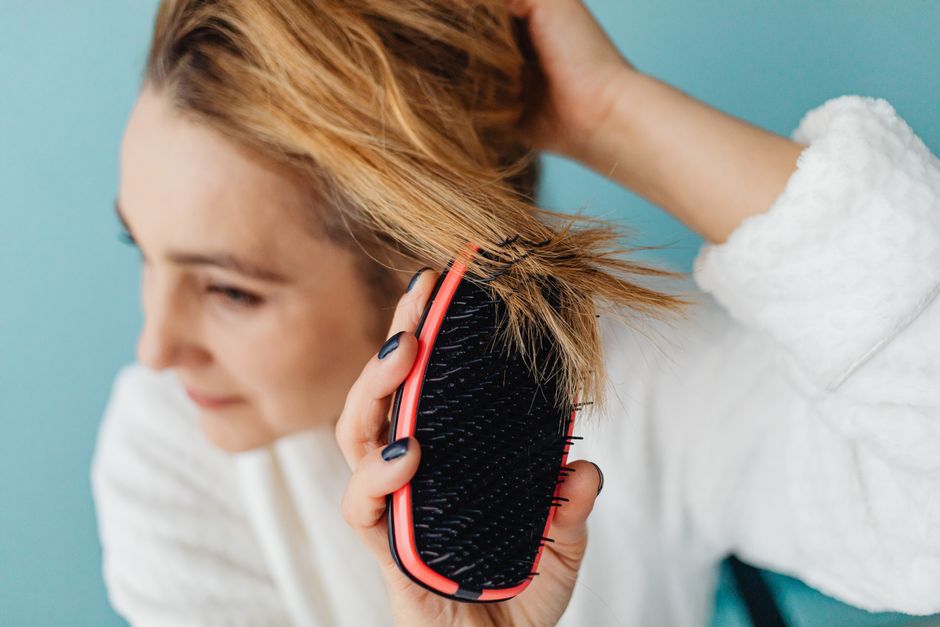
Hair breakage happens when the hair shaft weakens and snaps, often leaving you with shorter, frayed strands and a lack of length retention. You can avoid it by changing how you handle, wash, and style your hair, while also addressing internal health factors like nutrition. The core strategy is to reduce physical stress on the hair and keep it moisturized, as dry and brittle hair is far more likely to break than hydrated, flexible hair.
What Exactly Causes Hair Breakage?
Hair is made of a protein called keratin. When that protein structure is damaged, the hair loses its ability to stretch and bounce back. Instead of bending, it snaps.
Most breakage is mechanical. That means it comes from things you do to your hair. Rough towel drying, aggressive brushing, tight hairstyles, and sleeping on rough cotton pillowcases all create friction and tension. Over time, that friction wears away the protective outer layer of the hair, called the cuticle. Once the cuticle is damaged, the inner cortex is exposed and the hair becomes weak.
Chemical damage is the other major cause. Bleaching, perming, relaxing, and even frequent coloring break the disulfide bonds inside the hair shaft. These bonds are what give hair its strength. When they are broken, the hair cannot hold its structure.
Heat styling is a third factor. Flat irons, curling wands, and blow dryers boil the moisture inside the hair shaft. This creates bubbles in the cortex, which weakens the hair from the inside out.
How To Avoid Hair Breakage: Start With Your Wash Routine
How you wash your hair matters more than most people realize. The goal is to clean the scalp without stripping the hair of its natural oils.
Washing your hair every day is rarely necessary. For most people, washing two to three times a week is enough. When you do wash, focus the shampoo on the scalp, not the lengths of your hair. The lather running down the strands is enough to clean them.
Conditioner is not optional if you are prone to breakage. It smooths the cuticle and adds slip, which reduces friction when you detangle. Apply conditioner from the mid-lengths to the ends, where hair is oldest and most damaged. Leave it on for a few minutes before rinsing.
Warm water is better than hot water. Hot water strips oils faster. A cool rinse at the end can help seal the cuticle, though the effect is temporary.
Detangling Without Causing Damage
Never brush wet hair with a regular brush. Wet hair is at its weakest. When wet, the hair shaft swells and the cuticle lifts, making it much more vulnerable to stretching and snapping.
Use a wide-tooth comb or your fingers to detangle wet hair. Start at the ends and work your way up to the roots. This prevents you from forcing tangles down the shaft, which causes them to tighten and break.
Detangling should happen while the hair is coated with conditioner. The conditioner provides slip, which allows knots to slide apart rather than snap. If your hair is severely tangled, apply a leave-in conditioner or a detangling spray before you start.
For dry detangling, use a brush with flexible bristles. Boar bristle brushes are gentle because they distribute natural oils from the scalp down the hair. But if your hair is curly or coily, a wide-tooth comb or your fingers are safer options even when dry.





Heat Styling: Use It Less or Use It Smarter
Heat is the fastest way to damage hair. If you can air dry your hair, do it. If you must use a blow dryer, keep it on a low or medium setting and hold it at least six inches away from your hair.
Always use a heat protectant product before any heat styling. These products coat the hair with a barrier that helps distribute heat more evenly. They do not make hair immune to heat damage, but they reduce the severity of it.
Flat irons and curling wands should be used at the lowest effective temperature. For fine or damaged hair, that might be around 300 degrees Fahrenheit. For thick, healthy hair, it might be closer to 350 or 375. If you smell burning hair or see steam, the temperature is too high.
Limit heat styling to once a week or less if you can. Every time you apply high heat, you lose a little more of the hair’s internal moisture and protein.
Choose Hairstyles That Do Not Pull
Tight hairstyles are a leading cause of breakage and hair loss. Ponytails, buns, braids, and weaves that pull on the roots put constant tension on the hair follicle and the hair shaft.
This tension can cause a specific type of hair loss called traction alopecia. It starts with breakage along the hairline and can become permanent if the pulling continues over years.
If you wear your hair up, alternate the position of the ponytail or bun. Wearing it in the same spot every day weakens the hair in that exact area. Use soft fabric hair ties instead of elastic bands with metal clasps. Snag-free spiral ties are gentler on the hair.
Sleep is another place where pulling happens without you noticing. A loose braid or a silk scrunchie can keep hair contained overnight without the tension of a tight ponytail. A satin or silk pillowcase reduces friction as you move during sleep. Cotton pillowcases absorb moisture and create friction that causes breakage and frizz.
Can Diet and Supplements Prevent Hair Breakage?
Hair is a non-essential tissue. Your body prioritizes oxygen, digestion, and organ function over hair growth. If you are deficient in certain nutrients, your hair will be among the first things to suffer.
Protein is the foundation. Hair is almost entirely protein, so a diet very low in protein can cause weak, brittle hair. Iron deficiency is also linked to hair shedding and breakage, particularly in women. Low vitamin D and low zinc have been associated with hair thinning as well.
No supplement can fix hair that is already damaged. The visible part of your hair is dead tissue. Once the fiber is split or broken, no product can truly repair it. Products marketed as “repairing” actually coat the hair temporarily, smoothing the cuticle so it looks and feels better. The damage remains until the hair grows out and is cut off.
Eating a balanced diet with adequate protein, iron, and vitamins supports new hair growth from the root. It does not reverse existing damage. If you suspect a deficiency, a blood test is the only reliable way to know. Do not take high-dose supplements without knowing you need them.
Biotin is widely marketed for hair health. Some research suggests it may help people who are actually biotin-deficient, which is rare. For most people, taking biotin has not been shown to prevent breakage or speed growth.
What About Hair Oils and Treatments?
Oils can help with breakage, but not for the reasons marketing suggests. Oils do not add moisture to the hair. They seal in moisture that is already there.
Apply oil to damp hair after washing to lock in water. Coconut oil has been studied for its ability to penetrate the hair shaft and reduce protein loss. Some research suggests it is one of the few oils that can actually get inside the hair. Other oils, like jojoba or argan, sit on the surface and smooth the cuticle.
Deep conditioning treatments can help temporarily. They smooth the cuticle and add slip, making hair less likely to tangle and break. But the effect wears off after a few washes. They are a maintenance tool, not a cure.
Protein treatments are a different category. They temporarily fill gaps in the damaged hair shaft. Overusing them can make hair stiff and more prone to breakage. If you use a protein treatment, follow it with a moisturizing conditioner.
When Breakage Is Actually Hair Loss
Breakage and hair loss look similar but are different problems. Breakage leaves short, uneven strands with frayed or split ends. Hair loss comes from the root and often shows as thinning or bald patches.
If you notice clumps of hair coming out when you wash or brush, or if your part is widening, that is shedding, not breakage. Shedding can be caused by stress, hormonal changes, thyroid issues, or certain medications.
Telogen effluvium is a common condition where a physical or emotional stressor causes many hairs to enter the shedding phase at once. It usually starts two to three months after the triggering event and resolves on its own within six months.
If you are seeing sudden or patchy hair loss, see a doctor or dermatologist. Breakage you can manage at home. Hair loss may need a medical evaluation.
Frequently Asked Questions
How often should I trim my hair to prevent breakage?
Every 8 to 12 weeks is a common recommendation to remove split ends before they travel up the shaft. Trimming does not prevent breakage, but it stops existing splits from getting worse.
Can brushing my hair 100 strokes a day help?
No, excessive brushing causes friction and breakage. Brush only as much as needed to detangle and distribute natural oils.
Does cold water stop hair breakage?
Cold water helps flatten the cuticle temporarily, which increases shine and reduces frizz. It does not strengthen the hair or prevent breakage long-term.
Are silk pillowcases worth it for hair breakage?
Yes, silk or satin pillowcases reduce friction compared to cotton. This means less mechanical damage and less moisture loss while you sleep.
