
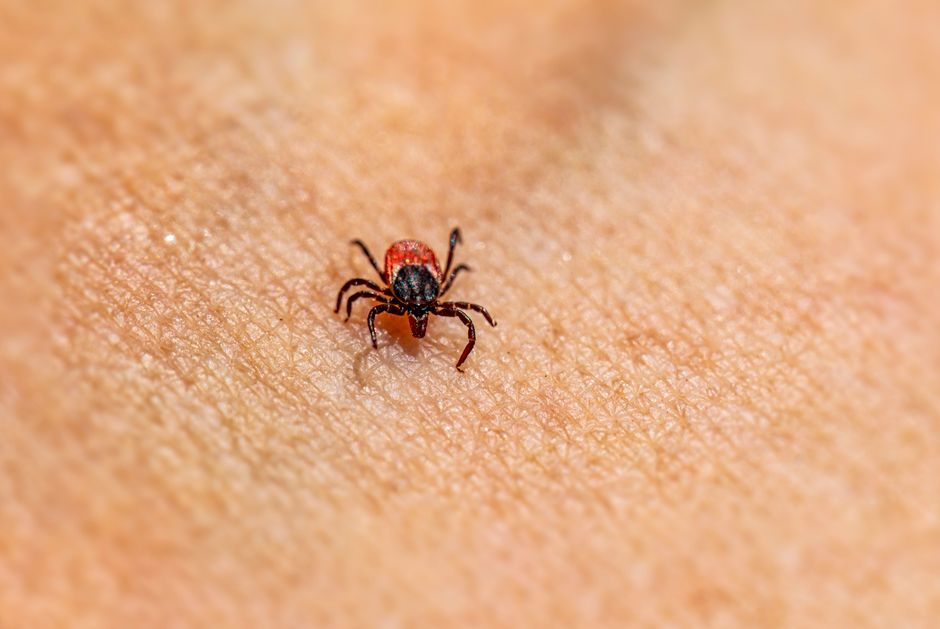
Chiggers are the tiny larvae of mites in the family Trombiculidae, and they are not insects. Avoiding their bites comes down to three things: keep your skin covered, treat clothing and exposed skin with an EPA-registered repellent, and wash your clothes and body soon after you leave a grassy or brushy area. Chiggers cannot bite through tightly woven fabric, so the right clothing is your first and best defense.
What Are Chiggers and Why Do They Bite?
Chiggers are the six-legged larval stage of a mite. The adults are harmless to people. It is the larvae — barely visible, roughly the size of a period at the end of a printed sentence — that bite.
They do not burrow into your skin, and they do not suck your blood the way a mosquito or tick does. Instead, a chigger attaches to skin, injects digestive enzymes that break down tissue, and feeds on the resulting fluid. Your body’s immune reaction to those enzymes is what causes the intense itching.
That detail matters for prevention. Because chiggers feed on skin rather than piercing through cloth, a physical barrier stops them. They also tend to crawl upward before settling, which is why bites cluster around tight clothing — waistbands, sock lines, the backs of knees, and the groin.
Chiggers are found in tall grass, weeds, brush, and damp shaded areas, especially near the edges of woods and fields. They are most active in warm months. They do not fly or jump. They wait on vegetation and grab onto whatever brushes past.
How Should You Dress to Prevent Chigger Bites?
Covering your skin is the single most reliable way to reduce chigger bites. A chigger has to reach bare skin to feed, and a fabric layer it cannot get through removes that opportunity.
- Wear long pants and long sleeves in tall grass or brush, even in hot weather.
- Tuck your pant legs into your socks or boots. This closes the path chiggers use to crawl up your legs.
- Choose tightly woven fabrics. Loosely woven or mesh materials give chiggers gaps to work through.
- Wear light-colored clothing. It will not repel chiggers, but it makes the tiny mites easier to spot and brush off.
- Avoid sandals, open shoes, and shorts in high-risk areas.
The tucking habit is the one people skip most often, and it is one of the most useful. Chiggers that land on your shoes or lower legs will crawl upward. A sealed boundary at the ankle stops many of them before they reach skin.
Which Repellents Actually Work Against Chiggers?
EPA-registered insect repellents are the products with demonstrated evidence behind them. The same active ingredients studied for mosquitoes and ticks are the ones generally used against chiggers, because no large trials have tested chigger-specific repellent performance. That is an honest gap in the research, not a reason to skip repellent.
Products containing DEET are the most widely studied and are recommended by public health agencies for use on exposed skin. Picaridin is a common alternative with a good safety profile. Oil of lemon eucalyptus is a plant-based option registered with the EPA; it is not recommended for children under 3 years old. IR3535 is another registered option.
Follow the label on any repellent. Apply to exposed skin only, avoid the eyes and mouth, and do not apply under clothing. For children, adults should apply the product rather than the child. Do not use repellent on infants under 2 months old — instead, keep them covered and out of high-risk vegetation.
Permethrin is different. It is not for skin. It is a treatment you apply to clothing, boots, and gear, and it kills chiggers and ticks on contact rather than just repelling them. Clothing pre-treated with permethrin is sold commercially. Treating your own clothing is an option, but follow the product instructions exactly and let items dry fully before wearing. Permethrin-treated clothing retains protection through multiple washes, though the exact number depends on the product.
How Do You Check for and Remove Chiggers After Being Outdoors?
Take a shower and wash thoroughly with soap and water soon after you come inside. This washes away chiggers that are still crawling and have not yet attached. There is no fixed time window that guarantees you will avoid bites, but the sooner you wash, the fewer chiggers have a chance to settle.
While you are at it, check the spots chiggers favor:
- Around the ankles and behind the knees
- The waistband and groin area
- Under tight clothing and elastic bands
- Armpits and the backs of the arms
Wash your clothes in hot water, or at least change out of them and launder them before wearing them again. Chiggers on fabric can transfer to skin later.
One common myth worth correcting: people often say chiggers burrow under the skin and need to be suffocated with nail polish or petroleum jelly. They do not burrow. By the time itching starts, the chigger has usually detached. Nail polish does nothing to speed healing, and the itching is your immune response, not an embedded mite.
What Do Chigger Bites Look Like and How Long Do They Last?
Chigger bites appear as small, red, intensely itchy bumps, often in clusters. They may form a small welt or a tiny blister at the center. Because chiggers tend to gather where clothing is tight, the pattern of bites is often a clue.
The itching usually starts within hours and can last a week or more. It is often worse at night. This is the body reacting to the enzymes the chigger injected, and it can persist after the mite is long gone.
Try not to scratch. Scratching breaks the skin and raises the risk of a secondary bacterial infection. Over-the-counter hydrocortisone cream and oral antihistamines are commonly used to reduce itching. A cool compress can help. If a bite becomes hot, swollen, increasingly painful, or starts to ooze pus, that suggests infection and warrants medical attention.
Chiggers in the United States are not known to transmit disease to people the way ticks do. The main problem they cause is the miserable itching and the risk of infection from scratching.
How To Avoid Chigger Bites Clothing Repellents More: Putting It Together
No single step is perfect, but layering them works. Cover up, tuck in, use an EPA-registered repellent on skin and permethrin on clothing, and wash soon after exposure.
Pay attention to where you walk. Staying on trails and out of tall grass and brush removes most of the risk. If you must pass through high vegetation, move through it deliberately and check yourself afterward rather than lingering.
Repellent is not a substitute for clothing, and clothing is not a substitute for checking yourself afterward. The people who get bitten least are the ones who do all three — cover, repel, and wash — rather than relying on any one tactic.
Frequently Asked Questions
Do chiggers burrow into your skin?
No. Chiggers attach to the surface, inject digestive enzymes, and feed on skin tissue fluid, then drop off. The itch is an immune reaction, not a mite living under your skin.
What is the best repellent for chiggers?
EPA-registered repellents containing DEET or picaridin are the most established options for exposed skin, and permethrin-treated clothing adds a second layer of protection. No large trials have tested repellents specifically against chiggers, so these recommendations rest on broader evidence for biting pests.
Does tucking your pants into your socks prevent chigger bites?
It helps significantly because chiggers crawl upward from the ground and settle where clothing is tight. Sealing the ankle closes one of their main routes to bare skin.
How soon should you shower after possible chigger exposure?
As soon as you reasonably can. A thorough soap-and-water shower washes off chiggers that have not yet attached, and there is no fixed window that guarantees protection.
