
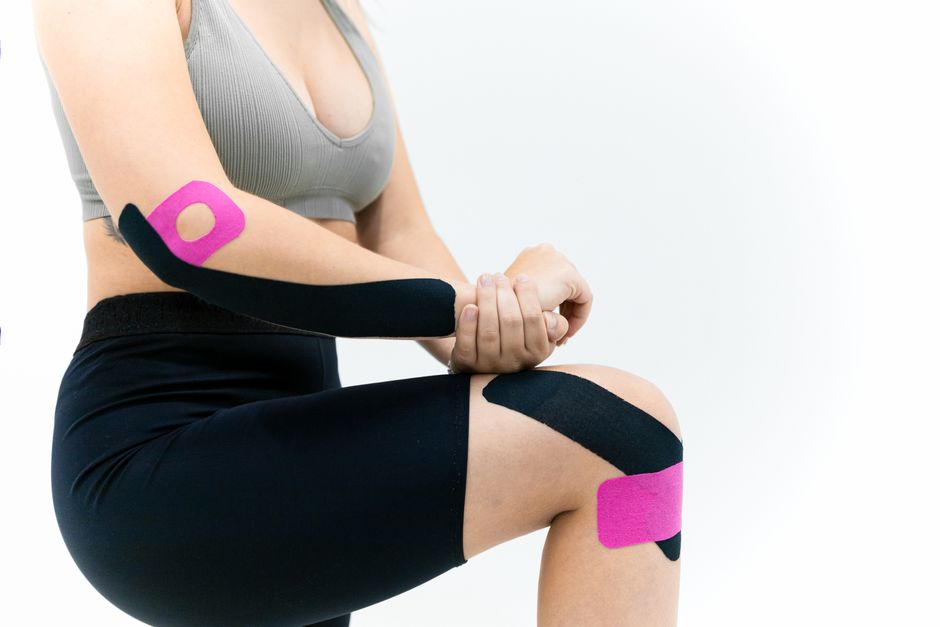
Kinesiology tape is an elastic cotton strip with a stretchy adhesive backing. To apply it to your knee, you place the tape over the area that hurts, usually in a Y-shape or a strip that runs along the muscle, and you rub the tape so the glue sticks. The tape is meant to stay on for a few days at a time. It does not cure an injury, but some people find it makes movement feel more comfortable.
What follows is a plain description of how the tape is typically applied, what it can and cannot do, and when knee pain needs a doctor rather than a roll of tape.
What Is KT Tape and How Does It Work?
KT tape — short for kinesiology tape — is an elastic therapeutic tape. It stretches in one direction and is applied to the skin over muscles, joints, and ligaments. Unlike rigid athletic tape, which is meant to limit movement, KT tape is designed to stretch with the body.
The proposed mechanism is that lifting the skin slightly creates more space between the skin and the tissue beneath it. Some researchers believe this may affect how the body senses position and movement, a sense called proprioception. Proprioception is how your brain knows where your knee is without you looking at it. If tape changes that feedback even a little, it could change how you move.
Here is where honesty matters. The evidence that KT tape changes pain or joint function through a specific biological mechanism is limited and mixed. Some studies show small improvements in pain scores or in how people rate their own function. Others show no difference compared with a placebo tape. The effects, when they appear, tend to be modest.
What is clearer is that many people report that the tape feels supportive or that it reminds them to move a certain way. That subjective sense of support can be real even when the measured effect is small.
How To Apply KT Tape To Knee For Pain And Support?
The most common knee application uses a Y-strip that runs down each side of the kneecap. Here is the standard method. It is the same approach taught in most consumer and clinical guides.
- Clean and dry the skin. Oils, lotion, and sweat stop the adhesive from holding.
- Trim or shave hair if the area is very hairy. Hair weakens the bond.
- Measure the tape. Cut a strip long enough to run from just above the kneecap to a few inches below it.
- Round the corners of the tape. Square corners peel up first.
- Cut the strip into a Y by splitting one end down the middle, leaving a solid section at the other end.
- Peel a short section of backing off the solid end and anchor it above the kneecap without stretch.
- Peel the rest of the backing and lay the two tails down each side of the kneecap, following its curve.
- Apply light stretch — roughly 25 percent — as you lay the tails. Do not stretch the last inch or two at the bottom.
- Rub the tape firmly for about 30 seconds. Friction and warmth help the adhesive activate.
A second common option is a single I-strip placed straight across the knee or along the front of the thigh. Some people use it for general support. The Y-strip around the kneecap is the more common choice for kneecap-related discomfort.
Two practical notes. Apply the tape to skin that is free of cuts, rashes, or sunburn. And if you are using it over a new injury, get the injury looked at first. Tape is not a substitute for a diagnosis.
Which Type of Knee Pain Does KT Tape Help With?
KT tape is most often used for kneecap pain, sometimes called patellofemoral pain. This is the dull ache around or under the kneecap that shows up with stairs, squats, or sitting for a long time. It is also used for general knee soreness after activity and for mild sprains.
For patellofemoral pain, some studies suggest tape may reduce pain during activity in the short term. The effect is usually small and not always consistent across studies. It is reasonable to think of tape as one small tool, not a treatment on its own.
KT tape is not a treatment for structural damage. It will not repair a torn ligament, a torn meniscus, or worn cartilage. It will not treat an infection or a fracture. If your knee is swollen, unstable, locking, or giving way, tape is not the answer. Those signs need a medical evaluation.
It is also worth knowing that the research comparing KT tape to other options is limited. There is no strong evidence that tape works better than exercise, physical therapy, or simply resting. For most knee pain, the things with the best evidence behind them are strengthening the muscles around the knee and the hip, and gradually returning to activity.



How Long Should You Leave KT Tape On?
KT tape is generally left on for several days at a time. Many brands and clinical guides suggest three to five days. After that, the adhesive usually loosens on its own.
You can shower with it. You should not soak it in a bath or pool for long periods, and you should not scrub it. Pat it dry.
Remove the tape sooner if it starts to peel, if it gets wet and dirty, or if your skin becomes itchy, red, or irritated. Remove it slowly, in the direction of hair growth. Warm water or a little oil can help loosen the adhesive.
Do not reapply new tape to the same spot if the skin underneath is irritated. Give the skin a day or two to recover. Repeated use on the same patch of skin can cause contact dermatitis, which is a red, itchy rash. This is one of the more common problems people run into with tape.
Does KT Tape Actually Reduce Pain?
The honest answer is that the evidence is mixed, and any benefit is likely small. Some studies report reduced pain scores with KT tape compared with no tape. Others find that KT tape performs about the same as a sham tape that is applied without any real tension.
That last comparison matters. If a tape applied with no therapeutic tension works as well as one applied with tension, then the benefit may come from the sensation of having something on the skin, or from the belief that it will help, rather than from the tape’s mechanics.
None of this means the tape is useless. A small reduction in pain can still make it easier to move, and moving is often what helps a knee recover. If tape helps you do your exercises with less discomfort, that is a real benefit even if the tape itself is not doing much.
What the evidence does not support is the idea that KT tape heals tissue, corrects alignment permanently, or replaces rehabilitation.
When Should You See a Doctor Instead?
Some knee symptoms need medical attention rather than tape. Get evaluated if you have any of the following.
- Sudden severe pain, or pain after a fall or twist
- Swelling that comes on fast
- The knee locking, catching, or giving way
- Inability to put weight on the leg
- Redness, warmth, or fever along with the pain
- Numbness or tingling in the leg or foot
- Pain that is not improving after a few weeks
These signs can point to a range of problems, from a ligament injury to a meniscus tear to an infection. The symptoms overlap, so a proper exam matters. Tape should not delay that.
If you have a skin condition, a history of reactions to adhesives, or poor circulation, talk to a clinician before using tape.
How To Apply KT Tape To Knee For Pain And Support — Practical Takeaways
KT tape is a low-cost, low-risk option that some people find helpful for knee discomfort. The application is straightforward: clean skin, a Y-strip around the kneecap, light stretch on the tails, and a firm rub to set the adhesive. Leave it on for a few days and remove it if your skin reacts.
Keep your expectations realistic. The evidence for a meaningful pain-reducing effect is mixed, and any benefit is usually small. The tape is best used as a support while you do the things that have stronger evidence behind them, like strengthening the muscles around the knee and returning to activity gradually.
Frequently Asked Questions
How long does KT tape last on the knee?
Most guides suggest three to five days, and the adhesive usually loosens on its own by then. Remove it sooner if it peels or your skin gets irritated.
Can I shower with KT tape on my knee?
Yes, brief showers are fine, and you should pat the tape dry afterward. Avoid long soaks in a bath or pool, which loosen the adhesive.
Does KT tape really help knee pain?
The evidence is mixed, and any benefit tends to be small. Some studies show a modest reduction in pain, while others find it works about the same as a tape applied with no tension.
Can KT tape heal a knee injury?
No, KT tape does not repair torn ligaments, cartilage, or other structural damage. It may make movement feel more comfortable, but it is not a treatment for an injury.
