
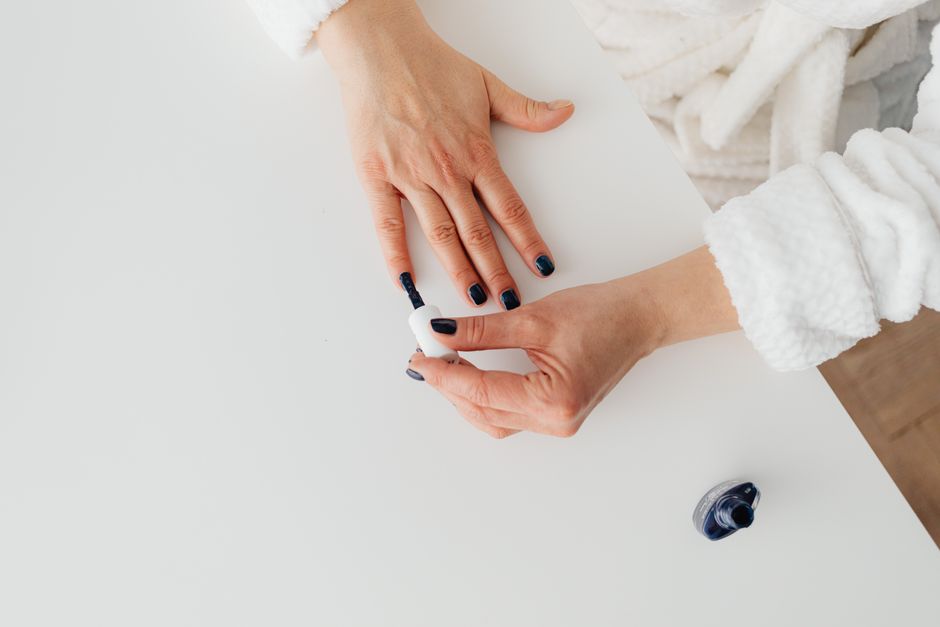
Gel polish can last two to three weeks without chipping, but that durability comes from a chemical process that bonds the coating tightly to your nail plate. Applying it safely means controlling three things: how much you file the natural nail surface, how carefully you keep the gel off your skin, and how you remove it when it is time to come off. Get those three right and gel polish is a reasonable option for most healthy adults.
The core safety rule is simple. Do not over-file the nail plate, do not let uncured gel sit on your skin, and never pry or peel the polish off. Removal is where most damage happens, not application.
How Does Gel Polish Actually Bond To A Natural Nail?
Gel polish is not paint that dries. It is a mixture of acrylate monomers and oligomers that stays liquid until exposed to ultraviolet or LED light of a specific wavelength. That light triggers a chemical reaction called polymerization, and the liquid turns into a hard plastic film in seconds.
That film has to grip something. Manufacturers build the system to grip a slightly roughened nail surface. The nail plate is made of keratin, the same protein in hair, and its top layer is a thin, tightly packed sheet of dead cells. Buffing that surface lightly creates microscopic texture the gel can lock onto.
The problem is that the nail plate is thin. The average fingernail is roughly 0.5 millimeters thick, and the visible free edge is only part of that. Every time you file the surface, you remove material that does not grow back from the top. It grows back only from the base, where new nail is formed. So surface thinning is cumulative and slow to correct.
This is why the difference between a light buff and aggressive filing matters more than almost anything else in the process.
What Do You Need Before You Start?
You need a clean, dry nail plate, a proper light, and gel products you can trust. Everything else is secondary.
- A 180-grit or finer buffer or file for light surface preparation only
- A lint-free wipe and isopropyl alcohol for dehydrating the nail
- A gel base coat, color coat, and top coat from the same system
- An LED or UV lamp matched to the product’s cure requirements
- A small brush for cleanup, or wooden orange sticks
- Acetone and foil wraps or soak-off clips for removal
Mixing brands is a common mistake. Base coats, colors, and top coats are formulated to cure together. A top coat from one line over a base coat from another may not fully cure, and undercured gel is the source of most allergic reactions.
Check the lamp. If your gel says it cures in 30 seconds under a 48-watt LED lamp and you are using a 6-watt lamp, it may not cure completely. Follow the manufacturer’s stated cure time and lamp type rather than guessing.
How To Apply Gel Polish On Natural Nails Safely Step By Step
Work thin. Almost every problem with gel polish traces back to coats that are too thick or product that touched the skin.
Step 1: Prep the nail. Push back the cuticles gently after a shower or soak, when they are soft. Do not cut living skin. Wipe each nail with isopropyl alcohol to remove oils.
Step 2: Buff lightly. One or two passes with a fine buffer is enough to dull the shine. You are not trying to scratch deep grooves. Stop when the surface looks matte, not when it looks thinner.
Step 3: Apply base coat. Keep it thin and stop just short of the cuticle and sidewalls. Leave a hairline gap of bare nail around the edges. Cap the free edge if the product allows.
Step 4: Cure. Follow the manufacturer’s time exactly. Do not pull your hand out early. If you feel heat or a burning sensation during curing, pull your hand out, wait, and re-cure. Heat usually means the gel is too thick.
Step 5: Apply color in thin layers. Two or three thin coats cure better than one thick coat. Again, keep the gel off the skin and off the cuticle.
Step 6: Apply top coat and cure. Seal the free edge. Wipe off the tacky layer if the top coat requires it.
Step 7: Clean up any gel that touched skin before curing. This is the step people skip. Uncured acrylates on skin are the main cause of allergic reactions. If gel touches your skin, wipe it off with a brush and alcohol before you put your hand under the light.




Why Does Gel Polish Cause Allergies And Nail Damage?
Two separate problems get blamed on the same thing, and they have different causes.
Nail damage is mechanical and chemical. Over-filing thins the plate. Peeling the polish off tears layers of keratin with it. Long soaks in acetone dry the nail and surrounding skin. Repeated cycles without a break leave nails weak, peeling, and prone to splitting. The damage is real, but it is usually reversible if you stop, because the nail plate grows out from the base.
Allergy is different. Acrylates are the family of chemicals in gel polish, and they are known skin sensitizers. Once you become sensitized, you stay sensitized. Reactions often start as itching, redness, or swelling around the nail, and they can appear after months of problem-free use. The trigger is almost always uncured product contacting skin, either during application or from a poorly cured coating that leaches over time.
This matters beyond your nails. Sensitization to acrylates can affect your ability to tolerate certain dental materials, medical adhesives, and bone cement later, because those contain related chemicals. That is a documented concern in the dermatology literature, and it is one of the strongest reasons to keep gel off your skin.
If you develop itching, redness, or swelling around your nails, stop using gel products and see a dermatologist. Do not try to push through it.
How Should You Remove Gel Polish Without Damaging Nails?
Soak it off. Never peel it off.
File the top coat lightly to break the seal. Soak a cotton ball in acetone, place it on the nail, and wrap with foil or use a soak-off clip. Wait long enough for the gel to lift on its own, checking every few minutes. Most gels release within 10 to 15 minutes, though some hard gels take longer. Gently push off what has loosened. Do not scrape at gel that is still bonded.
Acetone is drying. It strips oils from the nail and skin, which is why nails often look white and flaky after removal. Wash your hands, then moisturize the nails and surrounding skin. Some people apply a nail oil or a thick cream and let the nails recover for a week or two before the next application.
Peeling the gel off is the single most damaging habit in gel manicures. Each peel takes a layer of the nail plate with it, and doing it repeatedly is how nails become thin and painful.
How Often Is It Safe To Get Gel Polish?
There is no official clinical guideline stating a safe frequency for gel polish application. Clinicians who treat nail problems generally suggest giving nails a break between applications, but the evidence base for a specific interval is limited.
What is clear from the mechanism is that recovery time matters. The nail plate grows slowly. A fingernail takes roughly six months to fully regrow from base to tip, so any thinning from over-filing takes that long to correct. If your nails are thin, peeling, or sensitive, giving them a rest is reasonable. If they look and feel healthy, many people tolerate regular applications without obvious problems, but that is an observation about individual tolerance, not a proven safe schedule.
Watch for warning signs rather than counting weeks. Persistent soreness, a nail that bends easily, ridges that were not there before, or skin reactions around the nail all suggest it is time to stop and let things recover.
What Precautions Matter Most For Sensitive Skin Or Nail Conditions?
If you have eczema, psoriasis, or a history of contact dermatitis, gel polish carries more risk. Broken or inflamed skin around the nail lets acrylates reach the immune system more easily, which raises the chance of sensitization.
People with nail fungus, a nail injury, or a nail that has separated from the nail bed should not apply gel polish over the affected area. Covering an infection traps moisture and can make it worse, and it hides changes that a clinician needs to see.
Pregnant women and people undergoing chemotherapy or with compromised immunity should talk to a clinician before regular gel use. No clinical guidelines specifically address gel polish safety in these groups, so the honest position is that the risk is not well studied.
If you do your own gel at home, the same rules apply as in a salon. Thin coats, no skin contact, full cure, and soak-off removal. A salon that rushes the prep, files aggressively, or uses a lamp that does not match the product is a bigger risk than the polish itself.
Frequently Asked Questions
Is gel polish bad for your natural nails?
Gel polish itself is not inherently damaging, but the filing, peeling, and acetone soaks that often come with it can thin and weaken the nail plate. Damage is usually reversible because the nail regrows from the base, but it takes months.
Can I apply gel polish without a UV lamp?
No, standard gel polish requires a UV or LED lamp to cure, and it will not harden properly without one. Uncured gel on the nail is soft, prone to smearing, and a higher risk for skin reactions.
Why does gel polish burn when it cures?
A burning or heating sensation usually means the gel layer is too thick, and the exothermic curing reaction is generating more heat than the nail can disperse. Pull your hand out, wait a moment, then re-cure with thinner coats.
How long should I wait between gel manicures?
No clinical guideline specifies a required waiting period. Many clinicians suggest a break if your nails look thin, peeling, or sensitive, and recovery can take months since a fingernail regrows slowly.
