
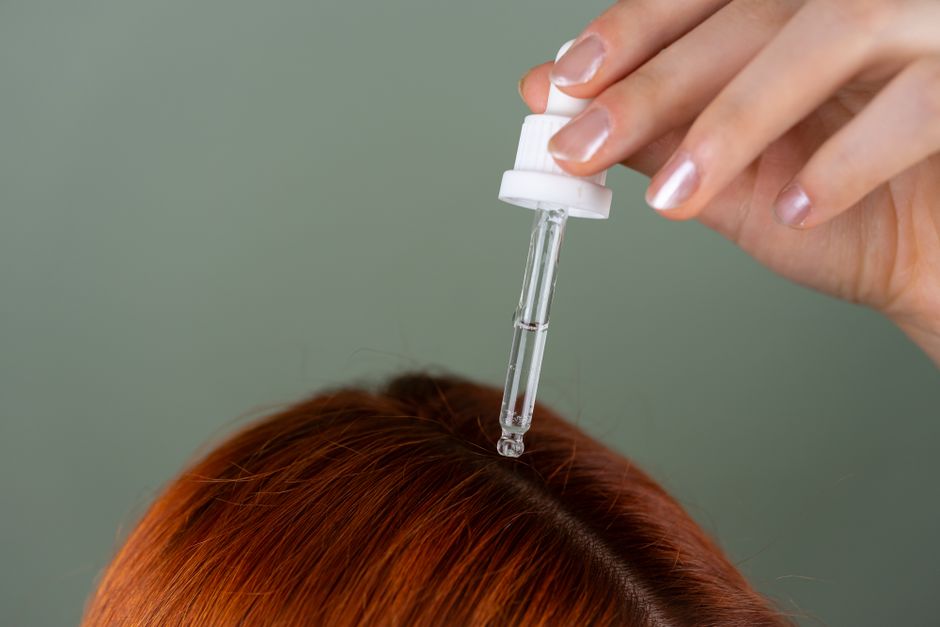
Coconut oil is one of the few natural products with real, published evidence behind its use in hair care. Research shows that its unique molecular structure allows it to penetrate the hair shaft better than most other oils, reducing protein loss. To get the benefit, you need to apply it to the lengths and ends of your hair, not just the scalp, and you need to leave it on for a specific amount of time. The method is simple: warm a small amount, work it through damp or dry hair, leave it for 20 to 30 minutes (or longer as a mask), and rinse thoroughly with shampoo.
Why Coconut Oil Works Differently Than Other Oils
The structure of coconut oil is what makes it special. Most hair oils, like olive or almond oil, sit on the surface of the hair strand. Coconut oil is different because it contains a high concentration of lauric acid, a fatty acid with a strong affinity for hair proteins.
Because of this, coconut oil can penetrate the hair cortex — the inner layer of the hair fiber. Once inside, it reduces the amount of water the hair absorbs and limits protein loss. This is particularly useful for hair that is damaged or has high porosity, meaning the cuticle is lifted and moisture escapes easily.
This is not marketing language. A well-known study published in the Journal of Cosmetic Science tested coconut oil against mineral oil and sunflower oil. The researchers found that only coconut oil significantly reduced protein loss in both undamaged and bleached hair. No other oil in that study performed the same way.
How To Apply Coconut Oil To Hair: Step-By-Step
Start with the right amount. For short hair, a half-teaspoon is enough. For shoulder-length hair, use about one tablespoon. For long or very thick hair, two tablespoons is a reasonable starting point. You can always add more, but removing excess oil takes extra washing and can leave hair greasy.
Warm the oil slightly. Coconut oil is solid at room temperature. Rub it between your palms or warm the jar in a bowl of hot water. Do not microwave it directly. Uneven heating can create hot spots that could burn your scalp.
Apply to the mid-lengths and ends first. This is the oldest and most damaged part of the hair. It needs the most protection. Work the oil through these sections with your fingers or a wide-tooth comb.
Apply to the scalp only if you need it. A dry, flaky scalp may benefit from a small amount of oil massaged in gently. But if your scalp is normal or oily, skip this step. Excess oil on the scalp can clog follicles and make hair look flat.
Leave it on for 20 to 30 minutes for a standard treatment. For a deeper conditioning mask, you can leave it on for one to two hours. Some people leave it overnight, but this is not necessary for most hair types. The hair shaft can only absorb so much oil, and leaving it on longer does not increase penetration.
Rinse with warm water, then shampoo. You will likely need to shampoo twice to remove all the oil. Follow with conditioner only on the ends if your hair feels dry. Do not use hot water to rinse — it can open the cuticle and make hair frizzy.
How Often Should You Use Coconut Oil?
Once a week is a good starting point for most people. This gives your hair time to absorb the treatment and lets you see how your hair responds. If your hair is very dry or damaged, twice a week may be helpful.
If your hair becomes heavy, greasy, or limp after using coconut oil, reduce the frequency or the amount. Some hair types do not respond well to coconut oil. This is especially true for fine hair, which can be weighed down easily, and for people with low-porosity hair, where the cuticle is tightly closed and oil sits on the surface rather than soaking in.
Pay attention to your hair’s response. Healthy hair that feels soft and manageable after a treatment is a sign the oil is working. Hair that feels stiff, straw-like, or overly oily is a sign you are using too much or too often.





Best Practices: Damp Hair vs. Dry Hair
For most people, applying coconut oil to damp hair works best. Damp hair has a slightly open cuticle, which allows the oil to penetrate more easily. It also helps distribute the oil more evenly.
To do this, towel-dry your hair after washing. Squeeze out excess water — do not rub, as this can damage the cuticle. Apply the oil while the hair is still slightly damp, then comb through.
Dry hair application also works, particularly as a pre-wash treatment. Some research suggests that applying oil to dry hair before shampooing can reduce the damage caused by the washing process itself. The oil acts as a barrier, reducing the swelling of the hair shaft when it comes into contact with water.
There is no strong evidence that one method is clearly better than the other. It depends on your hair type and your goal. If you want deep conditioning, damp hair is a reasonable choice. If you want to protect your hair during washing, apply to dry hair before you shower.
Scalp Application: What the Evidence Shows
Many people apply coconut oil to their scalp to treat dryness or dandruff. There is some logic to this. Coconut oil has mild antibacterial and antifungal properties, and it can soften the skin.
However, there is limited clinical research specifically on coconut oil for scalp conditions. Some studies suggest that oils can help with seborrheic dermatitis, a common cause of dandruff, but the evidence is not strong enough to recommend coconut oil as a primary treatment.
If you have a flaky scalp, it is worth trying a small amount of coconut oil massaged into the scalp for 10 to 15 minutes before washing. If it helps, continue. If it makes the flaking worse or your scalp feels greasy, stop. A flaky scalp that does not improve with oil may be caused by a fungal overgrowth, and oils can sometimes feed that fungus. In that case, a medicated shampoo is a more evidence-based option.
Do not use coconut oil as a treatment for hair loss. No clinical evidence supports this claim. Some people believe that massaging the scalp improves blood flow and stimulates growth, but this has not been proven in controlled trials.
Risks and Mistakes to Avoid
Coconut oil is generally safe for most people, but it is not risk-free. The most common mistake is using too much. Excess oil is difficult to wash out completely and can leave hair looking greasy for days. It can also build up on the scalp over time, potentially leading to clogged hair follicles.
People with fine or thin hair should be especially careful. Coconut oil can weigh hair down and make it look flat and stringy. If this happens, use a lighter oil like argan or jojoba instead.
People with acne-prone skin should avoid getting coconut oil on their face. Coconut oil is comedogenic, meaning it can clog pores. If you apply it to your hair, cover your face with a towel or wash your face immediately after the treatment.
If you have a known allergy to coconut, do not use coconut oil on your hair. Allergic reactions can include itching, redness, and swelling of the scalp. This is rare, but it happens.
One more caution: coconut oil is not a protein treatment. If your hair is breaking off due to protein loss, coconut oil helps by reducing that loss during washing. But if your hair is damaged because of heat styling or chemical processing, coconut oil cannot repair the broken bonds. It can only coat the hair and temporarily improve its appearance.
Does Coconut Oil Work for All Hair Types?
No. The evidence shows that coconut oil penetrates the hair shaft, but penetration is not the same as benefit for everyone.
People with high-porosity hair — hair that absorbs water quickly and dries quickly — tend to see the most benefit. Their cuticles are lifted, so the oil can get inside and reduce moisture loss.
People with low-porosity hair may not see the same results. In this hair type, the cuticle lies flat and tightly packed. Oil cannot easily get in, so it sits on the surface and can make hair feel heavy or sticky.
If you are unsure of your hair porosity, there is a simple home test. Place a strand of clean hair in a glass of water. If it floats for a few minutes before sinking, it is likely normal porosity. If it sinks immediately, it is high porosity. If it floats for a long time, it is low porosity. This test is not scientific, but it gives you a rough idea of how your hair will respond.
Frequently Asked Questions
Can I leave coconut oil in my hair overnight?
Yes, but it is not necessary for most people. The hair shaft absorbs what it can within the first 30 to 60 minutes, and leaving it on longer increases the risk of greasy buildup and pillow stains.
Should I apply coconut oil to wet or dry hair?
Damp hair absorbs the oil more easily, but dry hair application works well as a pre-wash treatment to protect against shampoo damage. Choose based on your goal.
How much coconut oil should I use for my hair?
Start with half a teaspoon for short hair, one tablespoon for shoulder-length hair, and two tablespoons for long or thick hair. You can always add more if needed.
Why does my hair feel stiff after using coconut oil?
Using too much oil or leaving it on too long can leave a coating that makes hair feel stiff or straw-like. Wash with a clarifying shampoo and reduce the amount you use next time.
