
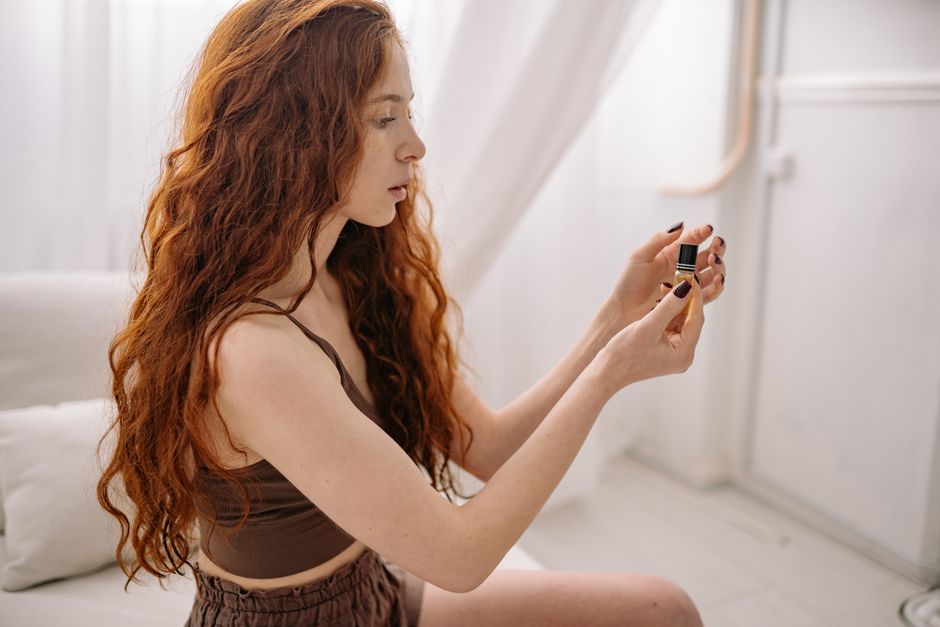
Argan oil is a plant oil pressed from the kernels of the argan tree, which grows mainly in Morocco. To apply it to hair, you put a few drops on your palms, rub them together, and work the oil through the ends and mid-lengths of your hair — not the scalp — either before washing, after washing on damp hair, or on dry hair to smooth frizz. That is the short answer. The rest of this guide explains how much to use, which method fits your hair type, and what argan oil actually does and does not do.
What Is Argan Oil and What Does It Actually Do to Hair?
Argan oil is mostly made of unsaturated fatty acids, with oleic acid and linoleic acid being the two main ones. It also contains vitamin E and other antioxidant compounds. These are the components behind most of its effects on hair.
Here is the important distinction. Argan oil is an emollient. It coats the outside of the hair strand, smooths the cuticle, and helps the hair hold onto moisture by slowing water loss. That is a real, well-understood physical effect. What argan oil is not is a repair treatment. Hair is dead tissue once it leaves the follicle. No oil can rebuild a broken protein structure inside the strand or make split ends rejoin. It can make damaged hair look and feel smoother, and it can reduce the friction that leads to more breakage. It cannot reverse damage that has already happened.
The vitamin E and antioxidant content is often used in marketing to suggest broader benefits. There is some laboratory research on argan oil’s antioxidant and anti-inflammatory properties, but human studies on hair specifically are limited. No large human trial has confirmed that argan oil promotes hair growth or treats hair loss. If you see a product claiming to regrow hair, that claim is not supported by current evidence.
One clarification worth knowing: “Moroccan oil” and argan oil are not always the same thing. Many products sold under that name are primarily silicone (often dimethicone or cyclopentasiloxane) with a small amount of argan oil added. Silicones do smooth hair, but they behave differently from pure argan oil and build up over time. Check the ingredient list if you want the real thing.
How To Apply Argan Oil To Hair Step by Step
The method is simple, but the amount is where most people go wrong. Start with less than you think you need.
- Warm two to four drops in your palms. For fine or thin hair, use one to two drops. For thick, coarse, or curly hair, you can use more.
- Rub your palms together until the oil is spread thin across both hands.
- Start at the ends and work upward toward the mid-lengths. The ends are the oldest, driest part of the hair and need it most.
- Avoid the roots and scalp unless your scalp is very dry. Oil near the roots can make hair look greasy fast.
- Comb or finger-comb through to distribute evenly.
You can apply it to damp hair after washing, which helps seal in moisture, or to dry hair as a finishing step to tame frizz. Both work. Damp application tends to absorb more evenly. Dry application gives more immediate surface smoothing.
You do not need to rinse it out if you use a small amount. If you use too much, the hair will look stringy, and the only fix is to wash it out. That is why starting small matters.
Should You Apply Argan Oil to Wet or Dry Hair?
Both work, and the choice comes down to what you want it to do. On damp hair, argan oil spreads more easily and helps trap moisture inside the strand as the hair dries. This is the better option if your goal is softness and less dryness over the day. On dry hair, it sits more on the surface and works as a smoother for frizz and flyaways.
A practical approach is to use a small amount on damp hair after washing, then add a single drop to dry hair later if you need to touch up frizz. Keep the total amount modest. Layering too much oil is the most common reason people end up with greasy-looking hair.




Can You Use Argan Oil as a Pre-Wash Treatment?
Yes, and this is one of the more useful ways to use it for dry or damaged hair. Apply a larger amount than you would for styling — enough to lightly coat the mid-lengths and ends — about 30 minutes to a few hours before washing, or overnight. Then shampoo it out.
The idea is that the oil has time to coat the hair and reduce friction before the washing process, which itself causes some wear. This is a reasonable practice, though the evidence that a pre-wash oil treatment produces lasting structural change is limited. What it reliably does is make hair feel softer and easier to manage, and it can reduce breakage during combing.
If you sleep with oil in your hair, protect your pillowcase with a towel or use a silk pillowcase. Argan oil can stain fabric.
How Much Argan Oil Should You Use for Your Hair Type?
There is no official guideline for argan oil amounts, so these are general starting points based on how the oil behaves on different hair textures, not clinical dosing. Adjust from there.
| Hair Type | Starting Amount | Best Method |
|---|---|---|
| Fine or thin | 1–2 drops | Ends only, on damp hair |
| Medium, straight or wavy | 2–4 drops | Mid-lengths and ends, damp or dry |
| Thick or coarse | 4–6 drops | Mid-lengths and ends, damp or dry |
| Curly or coily | 4–8 drops, or more | Section by section, on damp hair |
Fine hair is the easiest to overload. If your hair goes flat or looks greasy within an hour, you used too much. Coarse and curly hair can usually handle more because there is more surface area and the oil distributes less visibly.
Does Argan Oil Help With Frizz, Split Ends, and Damage?
Argan oil helps with frizz and the appearance of split ends. It smooths the outer cuticle layer, which reduces the roughness that makes hair look frizzy. It also adds a light coating that can make split ends look less obvious for a while. What it cannot do is repair a split end. Once the cuticle has separated and the inner fibers are exposed, the only real fix is a trim. Oil is cosmetic here, not corrective.
For damage from heat styling, coloring, or chemical treatments, argan oil can improve how the hair feels and reduce breakage from friction during combing. It does not restore the protein bonds that heat and chemicals break. Products that claim to “repair” damaged hair with argan oil are using the word loosely. They improve appearance and manageability. They do not rebuild the strand.
Who Should Be Careful With Argan Oil?
Argan oil is generally well tolerated, and allergic reactions to it are uncommon. That said, “natural” does not mean risk-free. Some people can develop irritation or an allergic skin reaction to plant oils, including argan oil. If you notice redness, itching, or a rash where the oil touches your skin, stop using it.
If you have a known nut allergy, note that argan oil comes from the kernel of the argan fruit. Argan is not a true nut in the botanical sense, and refined argan oil is generally considered low risk for people with tree nut allergies. However, if you have a severe allergy, talk to your doctor or allergist before using it. This is a case where individual guidance matters more than a general rule.
People with very oily scalps or seborrheic dermatitis may find that applying oil near the roots makes things worse. Keep it on the lengths and ends, and if you have a scalp condition, follow the treatment your dermatologist recommends rather than adding oil.
Does Argan Oil Help Hair Growth?
No clinical evidence currently confirms that argan oil promotes hair growth or treats hair loss. This is one of the most common claims attached to argan oil products, and it is not supported by human trials. Hair growth depends on the follicle, which is below the skin surface. A surface oil does not reach or act on the follicle in any demonstrated way.
What argan oil can do is reduce breakage, and less breakage can mean hair appears to grow longer because less of it snaps off. That is a real but indirect effect. It is not the same as stimulating new growth. If you are experiencing noticeable hair thinning or loss, that is a medical issue worth discussing with a doctor, because the causes range from thyroid problems to nutritional deficiencies to genetics, and the treatments differ.
How To Choose a Good Argan Oil Product
Look at the ingredient list, not the front of the bottle. Pure argan oil should list argan oil (often written as Argania Spinosa Kernel Oil) as the main or only ingredient. Many “argan oil” products are mostly silicone and other oils with argan oil far down the list.
That is not automatically bad. Silicone-based serums can smooth hair effectively, and some people prefer them. But if you want the actual effects of argan oil, you need a product where it is the primary ingredient. Cold-pressed argan oil is often sold as pure oil. It has a faint nutty smell and a light golden color. Highly refined versions are lighter in color and nearly odorless.
Store argan oil away from direct sunlight and heat. Like other plant oils, it can go rancid over time, and rancid oil will not do your hair any favors.
The Bottom Line on Applying Argan Oil
Use a few drops, focus on the ends and mid-lengths, and keep it away from your roots. Apply to damp hair for moisture and softness, or to dry hair for frizz control. Use more as a pre-wash treatment if your hair is dry. Expect smoother, softer, more manageable hair — and do not expect it to repair damage or grow new hair, because the evidence does not support those claims.
Frequently Asked Questions
How many drops of argan oil should I use on my hair?
Start with one to two drops for fine hair and up to four to six drops for thick or coarse hair. There is no official guideline, so adjust based on how your hair responds.
Can I leave argan oil in my hair overnight?
Yes, you can apply it as an overnight treatment and wash it out in the morning. Use a towel or silk pillowcase to protect your bedding from oil stains.
Does argan oil really repair damaged hair?
No, argan oil cannot repair damaged hair because hair is dead tissue once it grows out of the follicle. It can smooth the surface and reduce the look of damage, but it does not rebuild the strand.
Can I put argan oil on my scalp?
You can, but it is usually better to keep it on the lengths and ends, especially if your scalp is oily. Applying oil near the roots can make hair look greasy quickly.
