
Most people don’t struggle to drink eight glasses of water because they’re lazy. They struggle because they try to drink it all at once, forget by mid-morning, or force down plain water they don’t enjoy. The fix is simpler than the rule itself: spread it out, attach it to things you already do, and eat some of your water instead of only drinking it. The eight-glasses rule is easy to follow once you stop treating it like a single daily task and start treating it like a rhythm.
Where Does The 8 Glasses A Day Rule Actually Come From?
The rule is not a scientific standard. It is a rough cultural shorthand that grew out of mid-twentieth-century nutrition advice, and it has never been a formal clinical recommendation from any major health body.
That matters because people often treat “8×8” — eight 8-ounce glasses — as a medical target. It isn’t. The National Academies of Sciences, Engineering, and Medicine publishes general fluid intake guidance, but that guidance covers total water from all sources, including food and other drinks, and it varies by sex and life stage. It is not a glass-by-glass prescription.
Eight 8-ounce glasses works out to about 64 ounces, or roughly 1.9 liters. For many healthy adults, that’s a reasonable and harmless amount. But it’s a convenient round number, not a threshold your body is measuring against.
How Much Water Do You Actually Need?
Your needs depend on body size, activity, climate, diet, and health status — not a fixed glass count. A person working outdoors in Arizona in July and a person sitting in an air-conditioned office in Seattle do not have the same requirement.
General guidance from the National Academies suggests roughly 2.7 liters of total fluid per day for adult women and about 3.7 liters for adult men. Those figures include water from food and all beverages, not just plain water. Roughly 20 percent of typical fluid intake comes from food, especially fruits and vegetables.
So if you’re aiming for eight glasses of plain water on top of a normal diet, you’re likely already near or above general guidance. That’s fine for most healthy people. It’s not a minimum you’re failing to hit.
One clarification worth knowing: thirst is a real and generally reliable signal in healthy adults. The idea that by the time you feel thirsty you’re already dangerously dehydrated is overstated for most people going about their day.
How Do You Actually Drink 8 Glasses Without Forcing It?
The people who hit eight glasses consistently don’t rely on willpower. They build the habit around cues that already exist in their day.
Try attaching water to events rather than times. Drink a glass after you brush your teeth, one with each meal, one when you sit down at your desk, one when you get home. That’s six without any effort to “remember.”
- Start with one full glass before coffee or breakfast — it’s the easiest glass to keep.
- Keep water visible. A bottle on your desk gets drunk; one in a cabinet does not.
- Use a bottle you know the size of. If it holds 24 ounces, three refills is close to eight glasses.
- Pair a glass with every meal — that’s three reliably.
- Drink a glass when you take a break, not just when you feel thirsty.
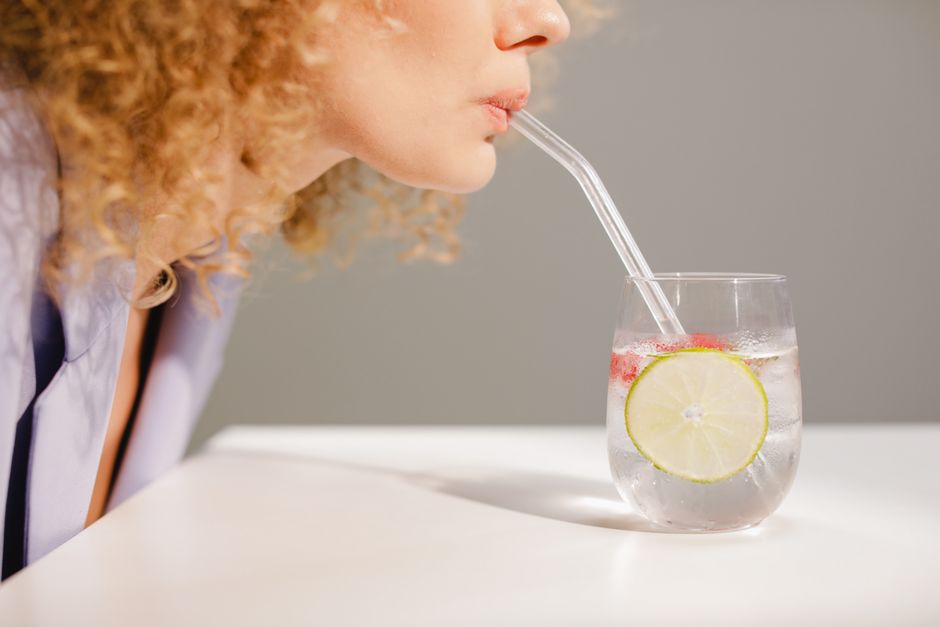
Temperature and flavor matter more than people admit. If cold water with lemon or cucumber gets you drinking more, that’s a legitimate strategy. The goal is hydration, not purity of method.
Can You Count Other Drinks And Food Toward Your Total?
Yes. For most healthy adults, the body uses water from tea, coffee, milk, juice, soup, and water-rich foods just as it uses water from a plain glass.
Coffee and tea are the most misunderstood. The old idea that caffeine dehydrates you has been softened considerably by research. Moderate caffeine intake does have a mild diuretic effect, but the fluid in the drink generally offsets it. For most people, a cup of coffee counts toward fluid intake rather than against it.
Food is a bigger contributor than many realize. Fruits and vegetables are largely water by weight. Soup, yogurt, and even cooked grains add meaningfully to daily fluid totals.
Alcohol is the exception. It does have a net dehydrating effect, and it should not be counted as a glass of water.
What Happens If You Drink Too Much Water?
Drinking far more water than your kidneys can process is genuinely dangerous, though rare. It can dilute the sodium in your blood — a condition called hyponatremia — which in severe cases is a medical emergency.
This is not a concern at eight glasses a day for a healthy adult. It becomes a concern with extreme intake, often in endurance athletes who drink large volumes during long events, or in people with certain medical conditions or medications that affect sodium balance.
Signs of overhydration can include nausea, headache, confusion, and in serious cases swelling or seizures. If you’re drinking several liters in a short window and feeling unwell, that’s worth medical attention.
People with heart failure, kidney disease, or liver disease are often given specific fluid limits by their clinicians. If that applies to you, follow those instructions rather than the eight-glass rule.
Does Everyone Need 8 Glasses?
No. The rule is a reasonable default for many healthy adults, but it doesn’t fit everyone, and some people should not aim for it without medical guidance.
People who need to be more careful about fluid intake include those with heart, kidney, or liver conditions, and people taking medications that affect fluid or sodium balance. Older adults can also have a blunted thirst response, which means drinking on a schedule may be more useful for them than waiting for thirst.
Pregnant and breastfeeding women have higher fluid needs, but the specific amounts should come from their clinician rather than a general rule. Infants and young children have different needs entirely, and no clinical guidelines support applying an eight-glass target to them.
How Can You Tell If You’re Drinking Enough?
Urine color is the simplest practical check. Pale yellow generally suggests adequate hydration; dark yellow or amber suggests you could drink more.
Other signals include frequency of urination, dry mouth, and how you feel during exercise. If you’re urinating regularly and your urine is light, you’re likely in a reasonable range.
Don’t chase perfectly clear urine. Completely colorless urine can mean you’re drinking more than you need, and it isn’t a goal in itself.
Frequently Asked Questions
Do I really need to drink 8 glasses of water a day?
No — eight glasses is a rough cultural guideline, not a clinical requirement. Most healthy adults meet their fluid needs through a mix of water, other drinks, and food.
Does coffee count toward water intake?
Yes, for most people. The fluid in coffee and tea generally offsets the mild diuretic effect of caffeine, so moderate intake counts toward daily fluids.
What is the fastest way to drink 8 glasses of water a day?
Attach glasses to meals and daily routines rather than drinking them all at once. Drinking large volumes quickly can cause discomfort and, in extreme cases, dilute blood sodium.
Can drinking too much water be harmful?
Yes, though it’s rare. Drinking far more than your kidneys can process can lower blood sodium to dangerous levels, a condition called hyponatremia.
