
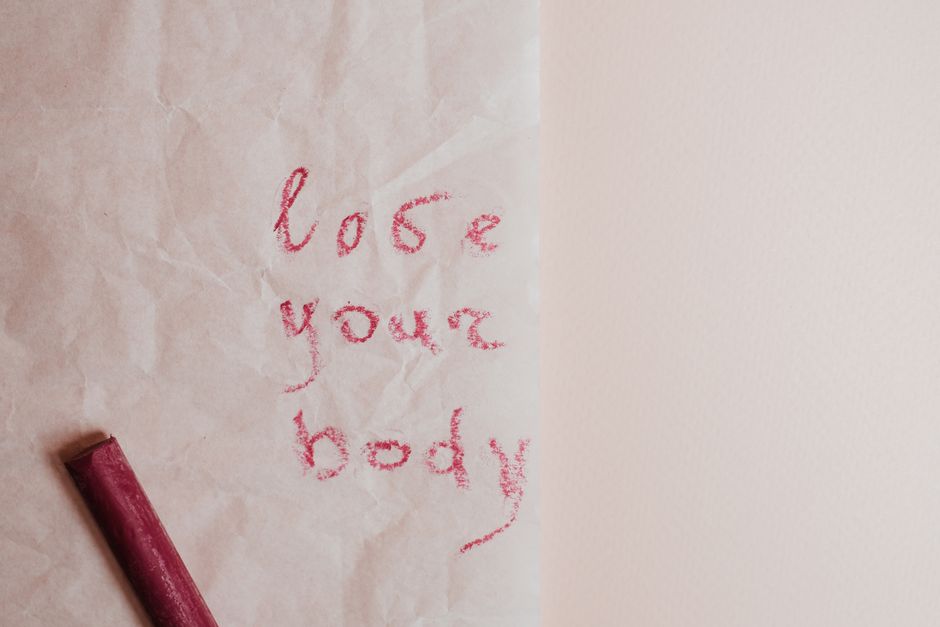
Accepting your body at a larger size does not mean giving up on your health, and it does not mean you are weak. It means separating your worth as a person from the number on a scale. Self-hatred is not a motivator; it is a stressor, and chronic stress has real physiological effects. You can pursue health goals from a place of self-respect, and research suggests that approach is more sustainable than shame-based dieting.
Why Do I Hate My Body So Much?
You are not broken for feeling this way. The pressure to be thin comes from a mix of cultural messaging, family history, and a multibillion-dollar diet industry that profits from your dissatisfaction. When every magazine cover, social media feed, and clothing store reinforces one body type, internalizing that standard is a normal response to an abnormal environment.
There is also a biological component. Weight stigma is real, and it causes harm. Studies show that people who experience weight discrimination have higher levels of cortisol, the stress hormone. That stress response can affect blood pressure, blood sugar regulation, and even sleep quality. Hating your body is not just an emotional burden; it is a physical one.
Understanding that your feelings are a reaction to external pressures, not a reflection of your personal failure, is the first step. You did not create the diet culture you grew up in. You are just living in it.
How To Separate Your Worth From Your Weight
Your value as a human being is not calculated in pounds. This is not a motivational slogan; it is a logical position. Your character, your relationships, your work, your kindness — none of these have a body mass index. When you attach your self-esteem exclusively to your appearance, you are measuring a complex person with a single, crude tool.
Start by noticing when you talk to yourself harshly. That inner voice that calls you names for eating dessert is not giving you helpful feedback. It is repeating scripts you learned years ago. When you hear that voice, pause and ask yourself one question: Would I speak this way to a friend I love? If the answer is no, you are allowed to change the way you speak to yourself.
Body neutrality is a useful middle ground. You do not have to love your body every day. You just have to stop treating it like an enemy. Your body carries you, digests your food, and keeps your heart beating without your conscious effort. You can respect that function without celebrating every reflection.
Can You Be Fat And Healthy At The Same Time?
Yes, but the answer requires nuance. Weight is one marker among many, and it is not the most accurate predictor of health on its own. Blood pressure, fasting blood glucose, cholesterol levels, and physical fitness are all independent indicators. A person in a larger body with normal blood pressure, normal blood sugar, and good cardiovascular endurance may be metabolically healthier than a thin person with poor lab results.
Research supports this idea. Some studies indicate that a significant portion of people classified as overweight have normal metabolic profiles. The term “metabolically healthy obesity” exists in medical literature, though experts debate how stable that condition is over time. What is clear is that health is not a binary state determined by clothing size.
However, being honest matters here. Carrying excess weight, particularly around the abdomen, does increase the risk of developing conditions like type 2 diabetes, certain types of cancer, and cardiovascular disease. That is not a judgment; it is a statistical fact. The goal is not to pretend weight has no relationship to health. The goal is to stop treating weight as the only metric that matters.





What Does Health At Every Size Actually Mean?
Health at Every Size, often abbreviated as HAES, is a movement and an approach to healthcare. It challenges the assumption that weight loss is the only path to better health. Instead of focusing on the scale, HAES emphasizes intuitive eating, joyful movement, and addressing the social determinants of health like poverty, stress, and access to care.
Clinical trials comparing HAES-based programs to traditional weight-loss programs have found something interesting. Participants in HAES programs often show improvements in blood pressure, cholesterol, and physical activity levels even when their weight does not change significantly. They also tend to stick with the program longer because it does not rely on restriction and deprivation.
Critics argue that HAES downplays the real risks of obesity. Supporters counter that weight loss is difficult to maintain long-term, and that improving metabolic health without weight loss is still a win. Both sides have valid points. The practical takeaway is that you can improve your health markers without making weight loss the primary goal.
How To Move Your Body Without Punishing Yourself
Exercise is not a punishment for what you ate. It is a physiological stressor that, in the right doses, makes your heart, lungs, and muscles stronger. The problem is that many people associate movement with gym class humiliation or diet boot camps. That association has to be broken.
Find movement that feels good. This is not about cheating; it is about sustainability. Walking, swimming, dancing, or lifting light weights all count. The best exercise is the one you will actually do more than once. If you dread the treadmill, stop using the treadmill. Your body does not know the difference between a gym and a living room; it only knows that you are moving.
Start with a realistic goal. Walking for ten minutes after dinner is a legitimate starting point. The physiological benefits of exercise — improved insulin sensitivity, better mood, lower blood pressure — begin at levels far below what fitness influencers show online. You do not need a 45-minute high-intensity workout to get a health benefit.
How To Handle Negative Thoughts When They Come
Negative thoughts will not disappear overnight. You have spent years building mental habits, and those habits do not change in a week. What changes is your relationship to the thoughts. You can learn to notice a negative thought without believing it or acting on it.
Cognitive behavioral therapy, or CBT, offers practical tools for this. One technique is called cognitive defusion. It means recognizing that a thought is just a thought, not a fact. When your brain says “I am disgusting,” you can reframe it as “I am having the thought that I am disgusting.” That small shift creates distance between you and the thought.
If self-help strategies are not enough, professional support is a valid option. Therapists who specialize in body image or eating disorders can help you untangle the roots of your self-criticism. This is not a sign of weakness; it is a sign that you are taking your mental health seriously.
How To Handle Other People’s Opinions About Your Body
Other people will have opinions. Family members may comment on your weight. Friends may talk about their diets. Strangers may stare. You cannot control any of this. You can control how much weight you give their opinions.
Set boundaries where you can. If a relative makes a comment about your body, you can say, “I do not want to discuss my body” and change the subject. You do not owe anyone an explanation for your size. You do not have to justify your existence in a larger body.
Remember that people who comment on your body are often projecting their own fears about weight onto you. Their discomfort is not your responsibility to manage. You are allowed to protect your peace, even if it makes someone else uncomfortable.
When Does Body Acceptance Cross Into Dangerous Territory?
Body acceptance is not the same as ignoring health problems. If you have symptoms like excessive thirst, unexplained fatigue, chest pain, or shortness of breath, those need medical attention regardless of your weight. Acceptance means stopping the self-hatred; it does not mean skipping your annual physical.
There is also a difference between accepting your body and being trapped in a binge-restrict cycle. If you find yourself eating compulsively and feeling out of control, that may be a sign of binge eating disorder. This is a real medical condition, and it is treatable. Seeking help is not a betrayal of body positivity; it is a way of caring for yourself.
The line is different for everyone. A useful question to ask yourself is: Is this thought or behavior improving my life, or is it causing harm? If self-acceptance helps you sleep better and enjoy time with your family, keep it. If it is masking a serious health issue, address the health issue. These are not mutually exclusive.
Frequently Asked Questions
Is it possible to be overweight and still be healthy?
Yes, some people in larger bodies have normal blood pressure, blood sugar, and cholesterol. However, excess weight does increase long-term risk for certain conditions, so regular medical checkups are still important.
How do I stop hating my body when I see it in the mirror?
Try shifting your focus from appearance to function — what your body does for you rather than how it looks. Practicing neutral statements like “this is my body” instead of judgmental ones can reduce the emotional charge over time.
Does losing weight automatically make you happier?
No, weight loss does not guarantee improved mental health. Many people find that their self-criticism follows them to a lower weight, which is why addressing the underlying thought patterns matters more than the scale.
What should I say to family members who comment on my weight?
State a clear boundary: “I do not want to discuss my body, and I would appreciate it if you stopped commenting on it.” You do not need to justify or explain this request beyond that statement.
