
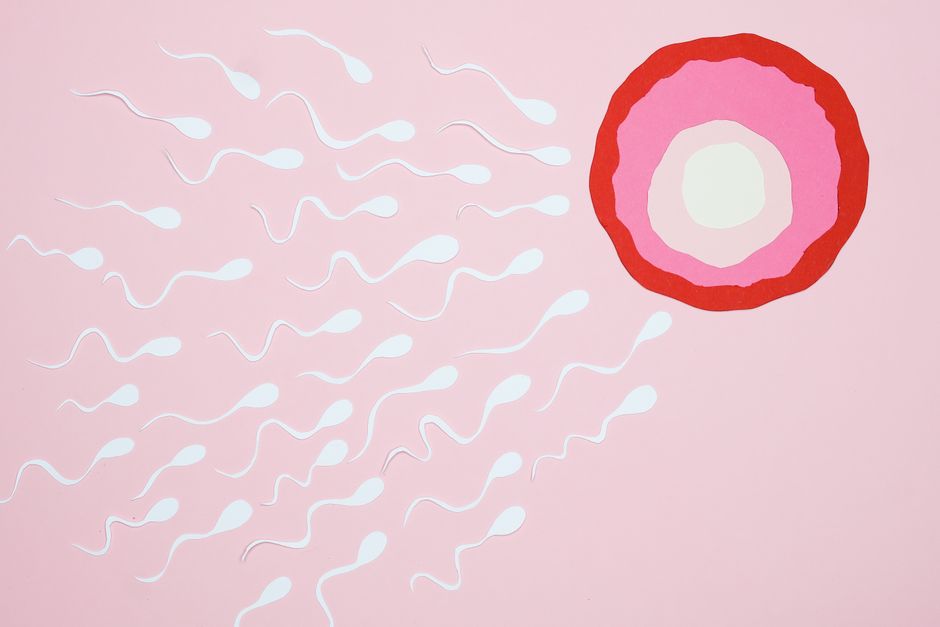
The sperm tail is a whip-like structure called a flagellum that propels sperm forward through the female reproductive tract. Its core is a bundle of microtubules arranged in a precise 9+2 pattern — nine pairs in a ring around two central strands. Tiny molecular motors called dynein arms slide these strands against each other, and that sliding is converted into the rhythmic bending that drives movement.
That is the short answer. The longer answer involves one of the most elegant mechanical systems in human biology — a structure so efficient that engineers still study it. Understanding how the sperm tail works explains a lot about fertility, why some sperm can’t swim, and why the tail is far more than a simple propeller.
What Is the Structure of the Sperm Tail?
The sperm tail is built around a structure called the axoneme — the same basic design found in cilia and flagella across nearly all life forms that have them. This shared architecture is ancient in evolutionary terms, which is one reason it has been studied so thoroughly.
The axoneme contains nine outer doublets of microtubules arranged in a ring, plus two single microtubules in the center. This is the 9+2 arrangement. Each outer doublet is made of tubulin proteins, and attached to them are dynein arms — motor proteins that generate force by splitting ATP, the cell’s energy currency.
Wrapped around the axoneme are additional layers that vary along the tail’s length:
- The midpiece sits just behind the head and is packed with mitochondria. These organelles produce the ATP that powers tail movement.
- The principal piece is the longest section, surrounded by a fibrous sheath that provides structural support and helps regulate how the tail bends.
- The end piece is the short terminal segment, containing only the bare axoneme.
Each region has a distinct job. The midpiece is the power plant. The principal piece is the engine room and driveshaft combined. The end piece is the tip of the whip.
How Does the Sperm Tail Actually Move?
Movement happens when dynein arms on one microtubule doublet reach over and “walk” along the adjacent doublet. This generates a sliding force. But because the doublets are tethered together by elastic links, they can’t slide freely past each other. Instead, the sliding force is converted into bending.
The result is a wave. The tail bends first to one side, then the other, in a rhythmic oscillation that travels from the midpiece toward the tip. This wave pushes the sperm forward. The head, which contains the DNA, is carried along in a slight side-to-side motion.
The energy demand is significant. Sperm are among the most metabolically active single cells in the body relative to their size. Mitochondria in the midpiece generate ATP through both glycolysis and oxidative phosphorylation. Interestingly, some research suggests that glycolysis — not mitochondrial respiration — may be the primary ATP source for tail motility in human sperm, though the exact balance between these pathways is still studied.
The tail doesn’t just push forward. It also allows the sperm to change direction, respond to chemical signals from the egg, and navigate the physical obstacles of the reproductive tract. This guidance system is called chemotaxis, and the tail is its steering mechanism.
How The Sperm Tail Works Structure And Function in Fertility
Tail function is essential for natural conception. A sperm that cannot swim cannot reach the egg. This is why semen analysis — the basic test for male fertility — includes a motility assessment.
Motility is typically graded by how well sperm move. The World Health Organization publishes reference ranges for what is considered normal. As of the most recent WHO laboratory manual, the lower reference limit for total motility is 40% or more, and for progressive motility — sperm moving actively in a forward direction — it is 32% or more. These are not pass-fail thresholds. They are reference values, and many men with lower numbers still achieve pregnancy naturally.
What matters is not just how many sperm move, but how well they move. A sperm with a normal-looking tail under a microscope may still have subtle defects in the dynein arms or other internal structures that affect swimming. Standard semen analysis cannot detect these fine-level problems. More advanced tests, such as computer-assisted semen analysis, can measure specific movement characteristics like velocity and linearity, but they are not routinely used in most clinics.
Conditions that affect tail function include:
- Primary ciliary dyskinesia — a genetic disorder that affects cilia and flagella throughout the body. Because the tail shares the same basic structure as respiratory cilia, men with this condition often have both chronic respiratory infections and reduced sperm motility.
- Varicocele — enlarged veins in the scrotum that can raise testicular temperature and impair sperm production and function. It is one of the more common identifiable causes of male infertility.
- Oxidative stress — reactive oxygen molecules can damage the sperm membrane and the tail’s internal structures. Some degree of oxidative stress is normal, but excessive levels are linked to poor motility.
- Genetic mutations — changes in genes that code for dynein or other tail proteins can produce sperm that are alive but immobile.
It is worth noting that many cases of reduced motility have no identifiable cause. This is called idiopathic asthenozoospermia, and it is common. The absence of a clear explanation does not mean the problem isn’t real. It means the tools available to detect the underlying issue are still limited.




What Role Do Mitochondria Play in Tail Movement?
Mitochondria are the tail’s power source. In the midpiece, they are packed tightly around the axoneme in a spiral arrangement. This positioning is not random — it places ATP production as close as possible to where the energy is needed.
But the relationship between mitochondria and motility is more complicated than “more mitochondria equals better swimming.” Some studies have found that sperm with unusually high mitochondrial numbers do not always swim better. And sperm can also generate ATP through glycolysis in the principal piece, independent of mitochondria.
What is clear is that mitochondrial dysfunction is associated with poor motility. When mitochondria produce less ATP or leak excessive reactive oxygen species, tail movement suffers. This is one reason why conditions that affect mitochondrial health — including certain medications, environmental exposures, and aging — can impact fertility.
Some research has explored whether mitochondrial nutrients like coenzyme Q10 or L-carnitine can improve sperm motility. Results have been mixed. Some small trials show modest improvements; others show none. No large, well-controlled trial has established a clear benefit, and no supplement is currently recommended as a standard treatment for poor motility. Anyone considering supplements for fertility should discuss it with a doctor, because dosage, quality, and interactions vary widely.
How Does the Tail Compare to Other Cilia and Flagella?
The sperm tail shares its 9+2 axoneme structure with respiratory cilia, fallopian tube cilia, and the flagella of many single-celled organisms. This shared design is why genetic conditions affecting one often affect the others.
But there are differences. Respiratory cilia are short and beat in coordinated waves to move mucus. The sperm tail is long — roughly 45 to 50 micrometers in humans — and beats in a single, asymmetric wave to push one cell forward. The tail also has extra structures, like the fibrous sheath, that cilia lack.
These differences matter clinically. A man with primary ciliary dyskinesia may have both chronic sinus and lung infections and reduced fertility, because the same underlying defect affects cilia in his airways and the flagellum on his sperm. The two problems have a common root.
Can Tail Function Be Improved?
There is no proven way to directly “repair” a defective sperm tail. The structure is built during sperm development in the testes, and once a sperm is mature, its tail either works or it doesn’t.
What can be addressed are factors that affect sperm production and overall sperm health. These include:
- Managing underlying conditions like varicocele or infections
- Avoiding excessive heat exposure to the testes
- Limiting alcohol, tobacco, and recreational drug use
- Maintaining a healthy weight and managing chronic conditions like diabetes
- Reviewing medications that may affect sperm function
These steps support sperm health broadly. They do not guarantee improvement in motility, and the evidence for many lifestyle interventions is modest. But they are reasonable measures, and they carry other health benefits.
For men with severe motility problems, assisted reproductive technologies like intracytoplasmic sperm injection (ICSI) can bypass the need for swimming altogether. A single sperm is injected directly into an egg. This approach has made it possible for many men with poor motility to father biological children. It is not a treatment for the tail itself — it is a workaround.
Frequently Asked Questions
What is the sperm tail made of?
The sperm tail is made of microtubules arranged in a 9+2 pattern, along with dynein motor proteins, a fibrous sheath, and mitochondria in the midpiece. This structure is called a flagellum.
How fast can sperm swim?
Human sperm typically swim at speeds of about 1 to 4 millimeters per minute in laboratory conditions. Actual speed varies depending on the environment and the sperm’s health.
Can a sperm without a tail fertilize an egg?
A sperm without a functional tail cannot swim to the egg on its own. However, in a laboratory setting, a sperm with a tail defect can be injected directly into an egg using a technique called ICSI.
Does the sperm tail affect the baby’s health?
Tail defects generally affect the sperm’s ability to reach the egg, not the genetic material it carries. Once fertilization occurs, the tail is discarded and does not contribute to the embryo.
