
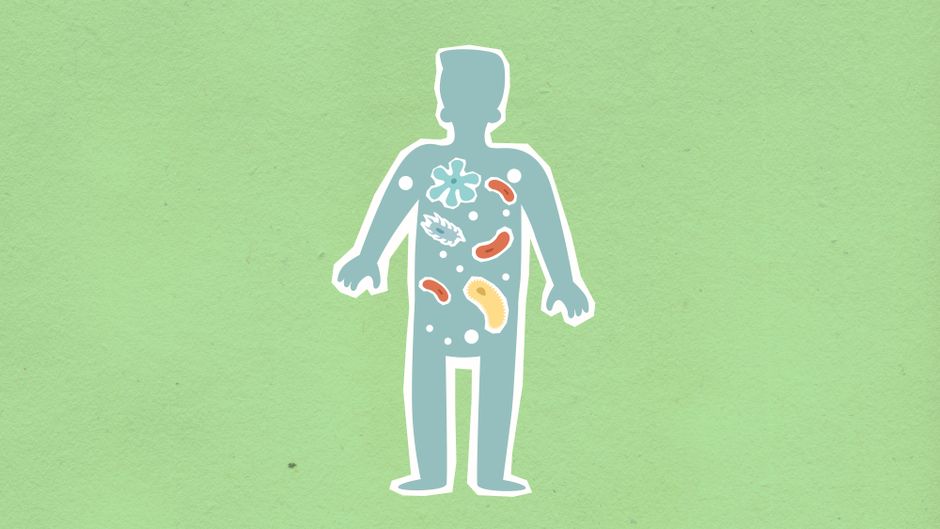
Your gut holds trillions of bacteria, and they are not just along for the ride. The gut microbiome shapes the immune system by training immune cells from birth, teaching them to tolerate harmless food and microbes while staying ready to attack real threats. Roughly 70 to 80 percent of the body’s immune cells live in the gut wall, which gives this relationship a central role in how your body defends itself.
How The Gut Microbiome Shapes The Immune System
The microbiome is the collection of bacteria, fungi, viruses, and other microbes living in your intestines. The immune system is the body’s defense network. These two systems grow up together, and each one shapes the other.
From birth, gut microbes help the immune system learn what is dangerous and what is not. Immune cells in the gut wall sample the bacteria around them constantly. They use that information to build tolerance to helpful microbes and food, and to prepare responses against harmful ones.
This is a two-way street. The immune system also controls which microbes are allowed to live where. When the immune system weakens, the mix of gut bacteria can shift. When the bacterial mix shifts, immune function can change too.
How Do Gut Bacteria Train Immune Cells?
Gut bacteria train immune cells through constant, low-level contact. The lining of the gut is not a solid wall. It is a single layer of cells with immune cells sitting just beneath it, sampling what passes by.
Specialized immune cells called dendritic cells reach into the gut space and collect bacterial samples. They then carry these samples to lymph nodes, where other immune cells learn to recognize them. This process helps the immune system build a memory of which microbes belong in the body.
Bacteria also produce signaling molecules. Short-chain fatty acids are one well-studied example. These are made when gut bacteria ferment dietary fiber. Research has shown they influence the activity of immune cells, including regulatory T cells, which help keep immune responses from becoming overactive.
This training does not happen once. It continues throughout life. The immune system is constantly updating its understanding of the microbes around it.
What Role Does Gut Bacteria Play in Immune Tolerance?
Gut bacteria play a central role in immune tolerance. Tolerance is the ability to ignore harmless things while still responding to real threats. Without it, the immune system would attack everything.
Regulatory T cells, often called Tregs, are a key part of this process. The gut microbiome supports the development and activity of these cells. Some studies indicate that certain gut bacteria promote Treg activity, which helps prevent immune reactions against food and helpful microbes.
This mechanism matters for food allergies and inflammatory conditions. The evidence is strongest for the general principle that the microbiome supports tolerance. The specific details of which bacteria do what are still being worked out.
Some research suggests that early-life exposure to a diverse range of microbes helps the immune system develop tolerance. This is one reason why some researchers think that overly sterile environments may affect immune development. The evidence here is mixed, and no single factor explains immune development on its own.
How Does the Microbiome Affect Inflammation?
The microbiome affects inflammation by influencing how immune cells respond to signals. Some gut bacteria promote anti-inflammatory signals. Others can trigger inflammatory responses when they cross into places they should not be.
When the gut barrier is compromised, bacteria and bacterial fragments can leak into the bloodstream. This can trigger an inflammatory response. The gut lining is designed to keep most microbes contained, but it is not perfect.
A diet low in fiber and high in processed foods can reduce the diversity of gut bacteria. Research consistently shows that a diverse microbiome is generally associated with better health outcomes. The relationship is complex, and diet is one of many factors.
Chronic low-grade inflammation is linked to many conditions, including heart disease and type 2 diabetes. Whether the microbiome directly causes these conditions is not fully established. The evidence points to a contributing role, not a sole cause.
What Happens When the Gut Microbiome Is Out of Balance?
When the gut microbiome is out of balance, immune function can be affected. This imbalance is called dysbiosis. It means the mix of microbes has shifted in a way that may cause problems.
Dysbiosis has been associated with several conditions. These include inflammatory bowel disease, allergies, and some autoimmune conditions. The association is well documented. Whether dysbiosis is a cause or a consequence in each case is often unclear.
Antibiotics can cause significant shifts in the gut microbiome. A single course can reduce bacterial diversity for weeks or longer. Most people recover over time, but the microbiome may not return to exactly its previous state.
Other factors that can affect the microbiome include stress, poor sleep, and certain medications. The evidence for how much each factor matters is still developing.
Can You Change Your Microbiome to Support Immunity?
You can influence your gut microbiome through diet and lifestyle, but the effects are gradual and not fully predictable. No single food or supplement has been shown to reliably improve immune function by changing the microbiome.
Fiber is the most well-supported dietary factor. Gut bacteria ferment fiber into short-chain fatty acids, which support immune function. Good sources include vegetables, fruits, whole grains, and legumes. The general dietary guidance is to eat a variety of plant foods.
Fermented foods like yogurt, kefir, and sauerkraut contain live bacteria. Some studies suggest they can increase microbiome diversity. The evidence is promising but not conclusive for immune outcomes specifically.
Probiotic supplements are widely marketed. The evidence for their benefit is mixed and depends on the specific strain and the person taking them. No probiotic has been shown to prevent or treat most diseases. Some clinicians recommend specific strains for particular conditions, but this is not the same as general immune support.
What does not work is expecting rapid change. The microbiome is relatively stable in adults. Significant shifts take time and sustained dietary change.
What Does the Evidence Show About the Microbiome and Immune Health?
The evidence shows a strong, well-established link between the gut microbiome and immune function. What it does not show is a simple formula for optimizing immunity through the microbiome.
Research in animals has shown that mice raised without any gut bacteria have underdeveloped immune systems. This is strong evidence for the microbiome’s role in immune development. Human studies are more complex because it is not possible to control the human microbiome the way researchers control a mouse’s.
Human studies have found associations between microbiome composition and immune-related conditions. These are associations, not proof of cause and effect. The field is moving toward more rigorous trials, but many questions remain.
The most honest summary is this: the microbiome is important for immune function, and diet influences the microbiome. The details of how to change the microbiome to improve immunity are still being studied. Anyone claiming a simple solution is ahead of the evidence.
Frequently Asked Questions
How does the gut microbiome affect the immune system?
The gut microbiome trains immune cells to tolerate harmless substances and respond to threats. It also produces molecules that influence immune cell activity throughout the body.
Can probiotics boost immunity?
The evidence is mixed and depends on the specific strain. No probiotic has been shown to reliably boost immunity in healthy people.
What foods support a healthy gut microbiome?
Fiber-rich foods like vegetables, fruits, whole grains, and legumes support a diverse microbiome. Fermented foods may also help, though the evidence for immune benefits specifically is limited.
Does gut health affect autoimmune disease?
Research has found associations between gut microbiome imbalances and some autoimmune conditions. Whether the microbiome causes these conditions is not established.
