
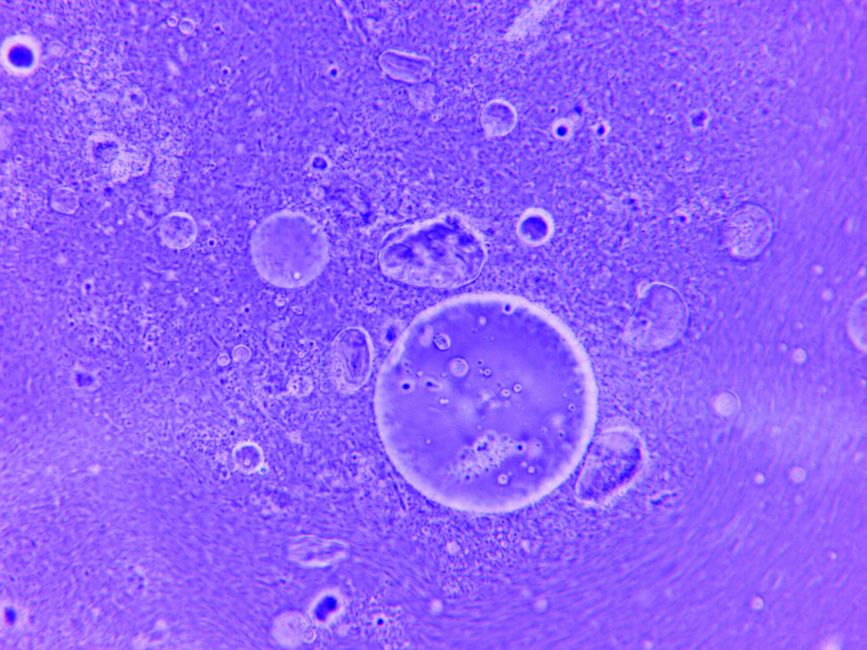
A spherical virus is a tiny infectious particle built from a protein shell called a capsid that wraps around genetic material. Many of these viruses, including influenza and HIV, take their round shape from an outer envelope studded with proteins that latch onto host cells. That structure is not just cosmetic — it decides which cells the virus can enter, how it survives outside the body, and how it spreads from person to person.
What Makes a Virus Spherical?
Virus shape comes down to how proteins assemble. A spherical virus is not truly a perfect ball. Under an electron microscope, most look like a rough sphere or a faceted ball made of repeating protein units.
The core is the capsid, a shell built from many copies of one or a few proteins. These proteins lock together in repeating patterns, the same way tiles fit on a curved surface. This repeating design is efficient. A virus only needs a small amount of genetic material to code for one protein that gets copied hundreds of times.
Some viruses, such as adenoviruses, are built this way and are called non-enveloped or “naked” viruses. Others take an extra step. After the capsid forms, they steal a piece of membrane from the host cell and wrap themselves in it. That stolen membrane is the envelope, and it is what gives many spherical viruses their characteristic round, fuzzy outline.
So there are really two kinds of round viruses: those with a protein-only shell, and those with a protein shell plus a lipid envelope. The distinction matters a great deal for how they behave.
How Spherical Viruses Work: Structure and Infection
The structure of a spherical virus is a delivery system. Its job is to protect genetic material long enough to reach a cell, then get that material inside.
The genetic material — either DNA or RNA — sits inside the capsid. For enveloped viruses, the envelope surrounds the capsid. Sticking out through the envelope are glycoproteins, which are proteins with sugar chains attached. These surface proteins act like keys.
Infection follows a rough sequence:
- Attachment. A surface protein on the virus binds to a specific receptor on a host cell. This is highly selective — a virus can usually only enter cells that carry the right receptor.
- Entry. The virus gets inside, either by fusing its envelope with the cell membrane or by being taken in by the cell in a bubble called a vesicle.
- Uncoating. The capsid breaks open and releases the genetic material.
- Replication. The cell’s own machinery is hijacked to copy the viral genome and make viral proteins.
- Assembly and release. New virus particles are built and leave the cell, often by budding off the surface, which is how many enveloped viruses acquire their envelope.
This is the key insight about spherical viruses: their shape and their surface proteins are inseparable from how they infect. Change the surface protein and you change which cells the virus can target. That is also why the surface proteins are the main target for vaccines and the main reason some viruses change from season to season.
Why Does the Envelope Matter So Much?
The envelope is the single biggest difference between one round virus and another in terms of how it spreads.
An envelope is a lipid bilayer — a fatty membrane, essentially the same material that makes up our own cell membranes. That has real consequences. Lipids are fragile. They dry out, and they are destroyed by soap, alcohol, and heat.
This is why enveloped viruses such as influenza and coronaviruses are generally easier to inactivate with handwashing and disinfectants than non-enveloped viruses. It is also why they tend to survive poorly on dry surfaces compared to tougher naked viruses like norovirus, which lacks an envelope and can persist on surfaces for long periods.
Enveloped viruses usually spread through respiratory droplets, bodily fluids, or close contact — routes that keep them moist. Non-enveloped viruses are hardier and more often spread through contaminated surfaces, food, and water.
The envelope also helps the virus hide. Because it is made of material borrowed from host cells, parts of it can look familiar to the immune system, which can complicate detection. At the same time, the viral glycoproteins poking through the envelope are unmistakably foreign and are what antibodies learn to recognize.





Are All Round Viruses the Same Shape?
No. “Spherical” is a loose description, and different viruses achieve a round appearance in different ways.
Some have a truly geometric core. Many non-enveloped viruses form an icosahedral capsid — a 20-sided structure made of repeating protein units. An icosahedron is a very efficient way to build a closed shell from identical parts, and it looks roughly spherical from a distance.
Enveloped viruses are more irregular. Their capsid inside may be icosahedral, helical, or another shape, but the flexible envelope draped around it produces a rounder, less geometric outline. The surface proteins are scattered across the envelope rather than arranged in a strict pattern.
This is why two viruses can both look “spherical” yet be built on completely different plans. Shape alone does not tell you how a virus works, what it infects, or how dangerous it is.
How Do Spherical Viruses Infect Cells and Cause Illness?
Infection is not the same as illness. Many infections are cleared by the immune system before a person feels anything.
Once a spherical virus gets its genetic material into a cell, it forces the cell to make copies of the virus. The cell may die in the process, or the immune response may damage it while fighting the infection. Symptoms usually come from a mix of both — cell damage and the body’s inflammatory response.
Where symptoms appear depends on which cells the virus can enter. A virus that binds receptors in the airways causes respiratory symptoms. One that targets immune cells causes different problems. This is why the surface proteins matter so much: they determine the tissue, and the tissue determines the illness.
Some enveloped viruses can also fuse infected cells with neighboring ones, forming large merged cells. This lets the virus spread between cells while partly avoiding antibodies floating in the bloodstream. Not every virus does this, but it is one reason some infections are hard for the immune system to fully clear.
Why Do Some Spherical Viruses Change So Often?
Surface proteins are the target of antibodies, so viruses face pressure to change them. RNA viruses tend to make more copying errors than DNA viruses, which generates variation.
Two patterns are worth separating. Antigenic drift is the slow accumulation of small changes in surface proteins over time. It is why influenza vaccines are updated most years. Antigenic shift is a sudden, large change, often when genetic material from different viruses mixes. Shift is rarer but can produce a virus the population has little immunity to.
Not all spherical viruses change at the same rate. Some are relatively stable, which is why a single vaccine can provide long-lasting protection. Others change constantly. The rate of change depends on the virus’s genetics and the immune pressure it faces — not on its shape.
Does Shape Affect How Viruses Spread?
Shape itself does not determine spread. The envelope and the route of transmission do most of the work.
Enveloped spherical viruses generally need moisture and close contact or droplets to move between people. Non-enveloped round viruses are tougher and can survive longer in the environment, which is why they often spread through contaminated food, water, and surfaces.
This is a useful distinction for everyday prevention. Handwashing with soap and water works against both types, because soap disrupts the lipid envelope of enveloped viruses and physically removes both kinds from skin. Alcohol-based sanitizers are effective against many enveloped viruses but are less reliable against some non-enveloped ones, such as norovirus.
No single measure covers every virus. The structure of the virus tells you which defenses are likely to work best.
Frequently Asked Questions
What is a spherical virus made of?
A spherical virus is made of genetic material — DNA or RNA — surrounded by a protein shell called a capsid. Many also have an outer lipid envelope with surface proteins that help them attach to host cells.
Why are some viruses spherical and others not?
Shape comes from how viral proteins assemble, not from any single purpose. Some viruses build a geometric icosahedral shell, while others wrap themselves in a flexible membrane, which gives them a rounder, less regular outline.
Are enveloped viruses easier to kill than non-enveloped ones?
Generally yes, because the lipid envelope is fragile and is broken down by soap, alcohol, and heat. Non-enveloped viruses like norovirus lack that envelope and tend to survive longer on surfaces.
Does the shape of a virus affect how sick it makes you?
No. How sick a virus makes you depends mainly on which cells it can infect and how your immune system responds, not on whether it is round or another shape.
