
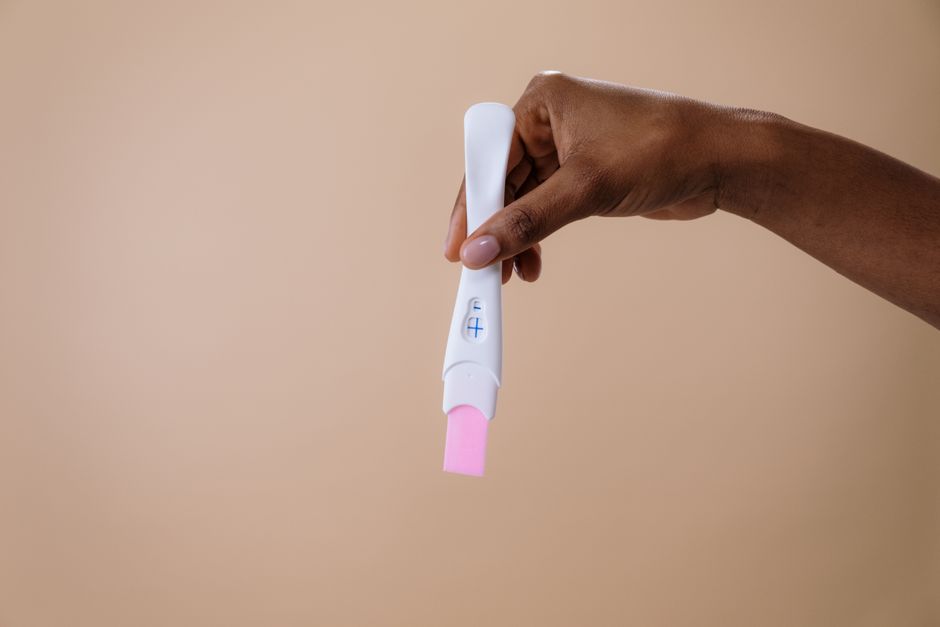
Waiting to find out if you are pregnant can feel like the longest days of your life. The most accurate time to test is after you have missed your period, but some sensitive tests can give you a reliable result a few days before. For the clearest answer, test on the first day of your missed period, as this timing gives you a 99% or higher accuracy rate with most home pregnancy tests. Testing earlier increases the chance of a false negative, so understanding the timing helps you avoid confusion and unnecessary worry.
How Do Home Pregnancy Tests Work?
Home pregnancy tests detect a hormone called human chorionic gonadotropin, or hCG. Your body starts making hCG after a fertilized egg attaches to the lining of your uterus. This process is called implantation and it happens about 6 to 12 days after ovulation.
Once implantation occurs, hCG levels rise quickly. They double roughly every 48 to 72 hours in early pregnancy. A home test works by using antibodies that bind to hCG in your urine. When enough hCG is present, a line or symbol appears to show a positive result.
The sensitivity of a test matters. Tests labeled as “early detection” can measure lower levels of hCG, usually around 10 to 25 mIU/mL. Standard tests typically detect hCG at 25 mIU/mL or higher. This difference explains why some tests work earlier than others.
How Soon To Test For Pregnancy Timing Accuracy?
The accuracy of a pregnancy test depends entirely on when you take it relative to ovulation and implantation. Testing too early is the main reason people get false negatives. If you test before your body has produced enough hCG, the test simply cannot detect it.
Research from the American College of Obstetricians and Gynecologists states that home pregnancy tests are 99% accurate when used on the first day of a missed period. This is the gold standard for timing. Testing before your missed period lowers that accuracy rate.
A study published in the journal Human Reproduction looked at how early detection tests performed. It found that only about 50% of pregnant women got a positive result on the day before their expected period. By the day of the missed period, that number jumped to over 90% for most sensitive tests.
The key takeaway is simple: the day after your missed period is the most reliable time. If you test earlier, understand that a negative result may not be final.
What Is the Best Time of Day to Take a Pregnancy Test?
Your first morning urine is the most concentrated. This means it contains the highest level of hCG if you are pregnant. Testing with first morning urine gives you the best chance of getting an accurate result, especially if you are testing early.
Some people test later in the day and still get accurate results. This works best if you are already past your missed period, because hCG levels are high enough by then. For early testing, morning urine is strongly recommended.
Drinking a lot of water before a test can dilute your urine. Diluted urine may lower the hCG concentration enough to cause a false negative. If you test later in the day, try to avoid drinking large amounts of fluid for a couple of hours beforehand.



How Many Days Before a Missed Period Can You Test?
Some early detection tests claim they can work up to 6 days before your missed period. This claim is technically true for a small number of women, but it is not realistic for most. Implantation timing varies, and hCG needs time to rise to detectable levels.
Here is a realistic breakdown of accuracy based on timing:
| Days Before Missed Period | Approximate Accuracy | Best Test Type |
|---|---|---|
| 6 days before | Less than 25% | Early detection (10 mIU/mL) |
| 4 days before | Around 50% | Early detection (10 mIU/mL) |
| 2 days before | Around 75% | Early detection (10 mIU/mL) |
| 1 day before | Around 90% | Early detection (10 mIU/mL) |
| Day of missed period | 99% or higher | Any standard test |
These numbers come from research on early detection tests. They show that testing too early often leads to a negative result even when pregnancy has occurred. If you get a negative result before your missed period, wait a few days and test again.
What Can Cause a False Negative or False Positive?
A false negative is the most common problem with pregnancy tests. It happens when you are pregnant but the test says you are not. The main cause is testing too early. Other causes include using a test that has expired, using it incorrectly, or having very dilute urine.
Ectopic pregnancies can also produce lower hCG levels. If you have symptoms of pregnancy but keep getting negative tests, see a healthcare provider. They can run a blood test, which is more sensitive than a urine test.
False positives are much rarer. They can happen if you have a chemical pregnancy, which is an early miscarriage that occurs shortly after implantation. Some medical conditions, like certain ovarian tumors, can also produce hCG. Very rarely, a test may have a manufacturing defect that causes a false positive.
Medications that contain hCG, such as some fertility treatments, can cause false positives. If you are taking fertility drugs, ask your doctor when it is safe to test.
What Are the Signs You Should Test Again?
If your first test is negative but your period does not arrive, test again in a few days. A missed period is the strongest single sign of pregnancy. Other signs include breast tenderness, fatigue, nausea, and frequent urination.
Some women experience implantation bleeding, which is light spotting that happens around the time of expected implantation. This is not a reliable sign of pregnancy on its own, but combined with a missed period, it increases the chance.
If you test before your missed period and get a negative result, wait until after your missed period to test again. If your period is more than a week late and tests are still negative, see a healthcare provider. There are other reasons for a late period, including stress, changes in weight, or hormonal imbalances.
Should You Use a Digital or Line Test?
Digital tests display the words “pregnant” or “not pregnant.” They are easy to read but are generally less sensitive than line tests. Most digital tests require a higher hCG level to show a positive result. This makes them a poor choice for early testing.
Line tests, also called strip tests, show one or two lines. They are usually more sensitive and cost less. The downside is that you have to interpret the lines yourself. A faint line still means you are pregnant, because it indicates hCG is present.
If you are testing early, choose a sensitive line test. If you are testing after your missed period, either type works well. The most important factor is following the instructions exactly. Leave the test for the full time stated, and read the result within the time window given.
Common Misconceptions About Pregnancy Test Timing
One widespread myth is that any positive line, no matter how faint, means you are not really pregnant. This is false. A line is a line. If hCG is present, even in small amounts, the test picks it up. A faint positive is still a positive.
Another myth is that drinking lots of water helps you produce urine for a test. As mentioned earlier, this dilutes your urine and can cause a false negative. Do not force fluids before testing.
Some people believe that all pregnancy tests are the same. They are not. Tests vary in sensitivity by a large margin. A standard test may need 25 mIU/mL of hCG, while an early detection test may need only 10 mIU/mL. Check the package to see the sensitivity level if you plan to test early.
There is also a belief that a negative test means you are definitely not pregnant. This is not true if you tested early. Only a positive test is definitive. A negative test before your missed period does not rule out pregnancy.
What to Avoid When Testing for Pregnancy
Avoid using expired tests. The chemicals in the test break down over time and become unreliable. Check the expiration date on the box before using it.
Avoid reading the test result after the recommended time window. Most tests tell you to read the result within 3 to 10 minutes. After that, the test can dry and create an evaporation line that looks like a faint positive. This is not a real result. If you look at a test an hour later, do not trust what you see.
Avoid testing with a very full bladder if you are early in your cycle. Concentrated urine is better. If you wake up in the middle of the night to urinate, that sample is also concentrated and works well if you cannot wait until morning.
Avoid relying on a single test if the result is negative and your period is late. Testing again in 48 hours gives hCG time to double if you are pregnant. Two tests taken two days apart are more reliable than one.
Frequently Asked Questions
Can I get a positive pregnancy test 5 days before my period?
It is possible but unlikely. Only about one in four women will get a positive result that early, even with a sensitive test.
Does a faint line mean I am pregnant?
Yes, a faint line means hCG is present and you are pregnant. The line may be light because your hCG levels are still low.
How long after implantation can I test positive?
Most sensitive tests can detect hCG about 4 to 5 days after implantation. This is usually 10 to 12 days after ovulation.
What should I do if my test is negative but my period is late?
Wait 48 hours and test again. If your period is more than a week late and tests remain negative, see a healthcare provider for a blood test.
