
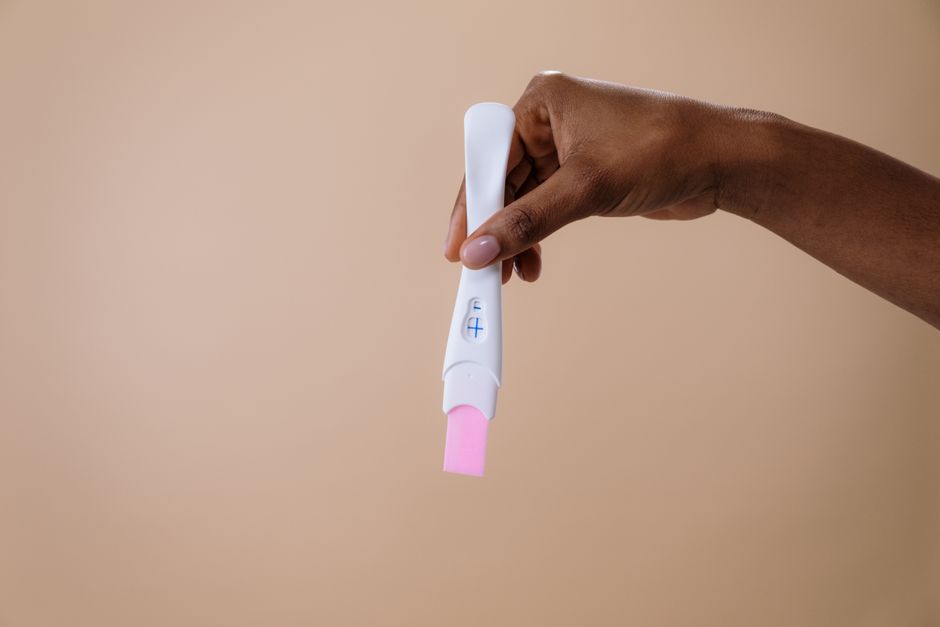
Pregnancy tests work by detecting a hormone called human chorionic gonadotropin, or hCG, which the body starts making after a fertilized egg implants in the uterus. Implantation usually happens about 6 to 12 days after ovulation, and hCG levels then roughly double every 48 hours in early pregnancy. That timeline is why most home pregnancy tests can give a reliable result around the first day of a missed period — roughly 10 to 14 days after conception — and why testing much earlier often produces a false negative rather than a false positive.
Getting a positive result earlier than that is possible, but it depends on when you ovulated, when implantation happened, and how sensitive your test is. Understanding the biology behind those numbers makes it easier to test at the right time and trust what the result says.
How Soon Can You Detect Pregnancy?
The earliest a home urine test can realistically detect pregnancy is around 10 days after conception, though many tests are not considered reliable until closer to the first day of a missed period.
Conception — the moment sperm meets egg — typically occurs within about 24 hours of ovulation. The fertilized egg then travels down the fallopian tube and implants in the uterine lining. Only after implantation does the body begin producing hCG in amounts a test can pick up.
Implantation is the rate-limiting step. It usually occurs 6 to 12 days after ovulation, with some variation. Before implantation, there is no hCG to detect, no matter how sensitive the test. This is the single most important fact for anyone testing early: a negative result before implantation has happened tells you nothing about whether you are pregnant.
After implantation, hCG rises quickly at first. Blood tests can detect hCG a few days earlier than urine tests because they measure the hormone directly in the bloodstream at lower concentrations. A quantitative blood test can detect very small amounts of hCG, which is why clinicians sometimes use it when timing matters.
Why Do Some Tests Detect Pregnancy Earlier Than Others?
Home pregnancy tests differ mainly in their sensitivity threshold — the lowest concentration of hCG they can reliably detect.
Sensitivity is usually expressed in milli-international units per milliliter (mIU/mL). Many over-the-counter tests claim sensitivity around 20 to 25 mIU/mL, and some advertise lower thresholds. A lower number means the test can detect a smaller amount of hCG, which in theory allows earlier detection.
In practice, sensitivity claims on the box do not guarantee an earlier positive. A test only reads positive if your hCG has actually crossed that threshold, and hCG levels vary widely between individuals at the same point after conception. A highly sensitive test used too early still returns a negative.
Test format matters less than people assume. Digital tests, line tests, and midstream sticks all detect hCG the same way. The differences are mostly about how easy the result is to read, not about how early they work.
What Is the Difference Between Blood and Urine Tests?
Blood tests detect pregnancy earlier than urine tests because they measure hCG directly in the blood, where the hormone appears before it concentrates enough in urine to register.
There are two main types of blood tests:
- Qualitative blood test: gives a yes-or-no answer about whether hCG is present.
- Quantitative blood test (beta hCG): measures the exact amount of hCG, which can help track how a pregnancy is progressing.
A quantitative blood test can detect hCG at very low levels, often before a urine test would turn positive. This is why a doctor may order a blood test when there is a medical reason to confirm pregnancy early — for example, before certain treatments or procedures.
Urine tests are the standard for home use because they are accurate, inexpensive, and easy to use. Their main limitation is timing: they need enough hCG to have built up in urine, which lags behind blood levels.



Does the Time of Day You Test Matter?
Testing first thing in the morning can improve your chances of an accurate result when you are testing early, because urine is more concentrated after several hours without fluids.
hCG concentration in urine depends partly on how diluted your urine is. Drinking a lot of water before testing can dilute hCG below a test’s detection threshold, producing a false negative. This matters most in very early pregnancy, when hCG levels are still low.
Once hCG levels are higher — typically around the time of a missed period — the time of day matters much less. At that point, most tests will detect pregnancy regardless of when you use them.
What Causes a False Negative or False Positive?
False negatives are far more common than false positives, and they almost always come down to testing too early.
Common reasons for a false negative include:
- Testing before implantation has occurred
- Testing before hCG has risen enough to be detected
- Using diluted urine
- Checking the test result too early or too late, outside the window stated in the instructions
- Using an expired or improperly stored test
False positives are rare but do happen. Certain medications that contain hCG, some fertility treatments, and a small number of medical conditions can cause a positive result when there is no pregnancy. A very early miscarriage — sometimes called a chemical pregnancy — can also produce a brief positive followed by a negative.
If you get a positive result that you were not expecting, or a result that does not match your symptoms, a follow-up test or a blood test can clarify what is happening.
When Should You Test to Get a Reliable Answer?
The most reliable time to take a home pregnancy test is the first day of a missed period, or about 10 to 14 days after conception.
By that point, hCG levels have usually risen high enough for most urine tests to detect reliably. Testing earlier is not wrong, but it increases the chance of a false negative and may mean testing again in a few days.
If your cycles are irregular, counting days is less useful. Ovulation timing varies, so a missed period is a more dependable signal than a fixed number of days. If you track ovulation through methods like basal body temperature or ovulation predictor kits, you can estimate your testing window more accurately.
If you test early and get a negative result but still suspect you are pregnant, waiting 48 to 72 hours and testing again is a reasonable approach, since hCG roughly doubles in that time during early pregnancy.
How Accurate Are Home Pregnancy Tests?
Home pregnancy tests are highly accurate when used correctly and at the right time. When taken on or after the first day of a missed period, they correctly identify pregnancy in the large majority of cases.
Accuracy drops when tests are used too early. A test that is 99 percent accurate under ideal conditions can still miss an early pregnancy if hCG has not yet reached the detectable range. This is not a flaw in the test — it is a limit set by biology.
Following the instructions exactly matters. Most tests specify how long to wait before reading the result and how long the result stays valid. Reading a test after the valid window can produce an evaporation line that looks faintly positive but is not a true positive.
What Should You Do After a Positive Test?
A positive home test is generally reliable, and the next step is usually to contact a healthcare provider to confirm the pregnancy and plan early care.
A provider may order a blood test to confirm and measure hCG, or schedule an ultrasound later in the first trimester. Early prenatal care supports both the pregnant person’s health and the developing pregnancy.
If you are taking any medications, have a chronic health condition, or have had previous pregnancy complications, telling your provider early helps them adjust care appropriately. This is standard clinical practice, not a sign that anything is wrong.
If you get a positive result and then start bleeding or cramping, contact a provider. Bleeding in early pregnancy has several possible causes, and only a clinician can determine what is happening in your specific case.
Frequently Asked Questions
How soon can I take a pregnancy test after sex?
A home urine test is most reliable about 10 to 14 days after conception, which is often around the first day of a missed period. Testing earlier can produce a false negative because hCG may not have risen enough to be detected.
Can a pregnancy test be positive 5 days after conception?
It is very unlikely. Implantation usually happens 6 to 12 days after ovulation, and hCG only starts rising after that, so a test at 5 days would have nothing to detect in most cases.
Are blood tests more accurate than urine tests for early pregnancy?
Blood tests can detect hCG earlier and at lower levels than urine tests, which makes them more useful for very early confirmation. Urine tests remain highly accurate when used around the time of a missed period.
Can I get a false negative if I test too early?
Yes, testing too early is the most common cause of a false negative. Waiting 48 to 72 hours and testing again usually gives a clearer answer, since hCG roughly doubles in early pregnancy.
