
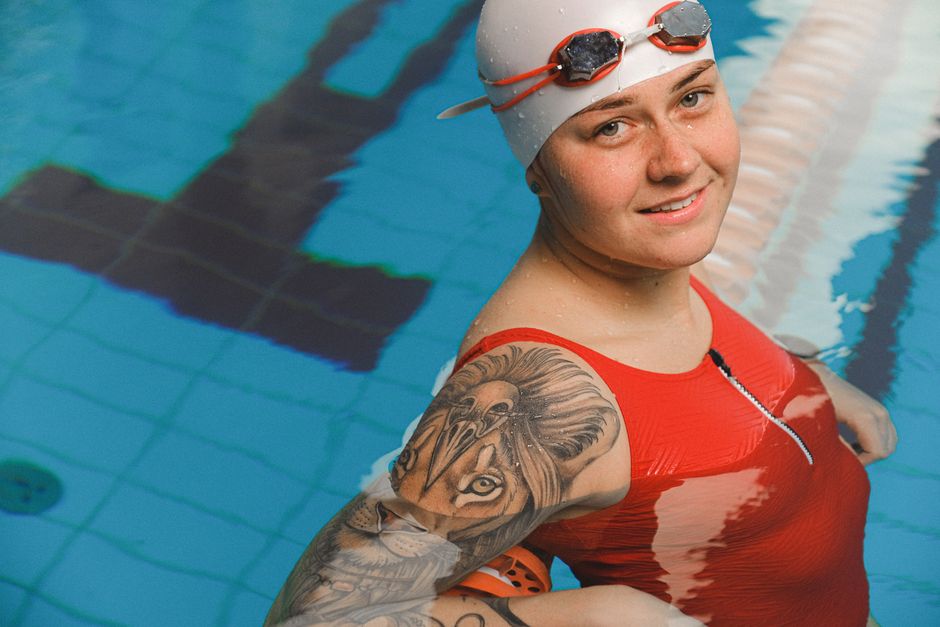
Most tattoo artists tell clients to stay out of the water for at least two weeks, and that advice is well grounded. A fresh tattoo is an open wound, and pools, lakes, oceans, and hot tubs all carry bacteria that can infect it. Two weeks is the common minimum. Many artists ask for three to four weeks before full submersion, especially for large pieces or tattoos on the hands and feet.
There is no single official medical guideline that sets one exact number. The timeline depends on how fast your skin closes over and how big the tattoo is. What matters most is whether the surface has finished healing, not how many days have passed on a calendar.
Why Is Swimming After a Tattoo Risky?
A new tattoo is a wound. The tattoo needle has pushed ink through the epidermis and into the dermis, leaving thousands of tiny punctures across the skin. For the first several days, that skin is raw and the body is working to close it.
Water is a problem for two separate reasons. The first is infection. Pool water, lake water, ocean water, and hot tub water all contain microorganisms. A hot tub is especially concerning because the warm temperature supports bacterial growth, and some outbreaks of skin infections have been linked to hot tubs. When bacteria get into a healing tattoo, the result can be a localized infection or, in rare cases, something more serious.
The second reason is that soaking softens the skin. Prolonged exposure to water can cause the top layer to break down and can pull ink out of the dermis before it has settled. This is why artists warn that soaking too early can leave a tattoo looking patchy or faded. It is also why they tell you not to soak in a bath even after you are allowed to shower.
Chlorine does not make this safe. Pool chlorine kills many germs, but it does not sterilize water, and it does not make an open wound safe to submerge. Some people assume a chlorinated pool is fine because it is “clean.” It is not clean in the way a healing wound needs.
How Soon Can I Go Swimming After A Tattoo? Risks, Tips, and Timelines
The standard advice is to wait at least two weeks before any swimming, and many artists recommend longer. The exact number is less important than what your skin looks like. A tattoo is generally considered closed enough for water when the surface has finished peeling, there is no scabbing left, and the skin looks like intact skin rather than a wound.
For most people that happens somewhere between two and four weeks. Larger tattoos, tattoos in areas that move a lot, and tattoos on the hands or feet often take longer. If any part of the tattoo is still an open sore, scabbed, or weeping, it is not ready.
Here is a practical way to think about the stages:
- Days 1 to 3: The tattoo is an open wound. No swimming of any kind. Keep it clean and follow your artist’s aftercare instructions.
- Days 4 to 14: The skin is forming a protective layer and may scab or peel. Still no pools, lakes, oceans, or baths.
- Week 2 to 4: Many tattoos are closed by now. This is when short exposure may become acceptable, but check with your artist and look at the skin honestly.
- After about 4 weeks: Most tattoos are healed enough for normal swimming. Deep water and long soaks are usually fine once the surface is fully intact.
These are general ranges, not a rule that fits everyone. Healing speed varies with age, health, skin type, and how well you care for the tattoo in the first days.
Does It Matter What Kind of Water You Swim In?
Yes. Not all water carries the same risk, and the differences are worth knowing.
A chlorinated pool is generally lower risk than natural water, but it is not risk-free for an open wound. Lakes, rivers, and ponds can contain bacteria and other organisms that cause skin infections. The ocean carries its own set of bacteria, and salt water can sting and irritate healing skin. Hot tubs and spas are a particular concern because the warm water and shared use make bacterial contamination more likely.
If you must be in water before your tattoo is fully healed, a quick shower is fine once your artist clears it, because running water and brief contact are different from soaking. Submersion is the problem. Sitting in a bath, a hot tub, or a pool keeps the tattoo wet for an extended period, which is exactly what you want to avoid early on.
What Are the Signs of an Infected Tattoo?
Infection is the main thing to watch for, and it can appear even if you follow every rule. Knowing the signs helps you act quickly.
Watch for spreading redness, swelling that gets worse rather than better, warmth around the tattoo, pus or fluid that looks like discharge, and a fever. Some redness and mild swelling in the first day or two is normal inflammation from the needlework itself. What is not normal is redness that spreads outward, pain that increases after the first few days, or any fever.
If you notice these signs, contact a healthcare provider. Skin infections on a tattoo can usually be treated, but they should not be ignored. This is especially true if you have a condition that affects healing or your immune system.
What Tips Help You Protect a Tattoo Around Water?
Plan your tattoo around your schedule. If you have a beach trip or a pool party coming up, book the tattoo for after it. This single decision avoids most of the conflict.
While the tattoo is healing, keep it out of standing water and follow your artist’s cleaning instructions. Most artists recommend gentle washing with mild soap and water, patting dry, and applying a thin layer of the aftercare product they recommend. Do not pick at scabs or peeling skin.
Once you are cleared to swim, rinse the tattoo with clean water afterward and pat it dry. Avoid long soaks in hot tubs for a while longer, since the heat and shared water raise the risk. Use sunscreen on healed tattoos, because sun exposure fades ink over time, though sunscreen should not go on broken skin.
One point people often miss: a tattoo can look healed on the surface while the deeper layers are still settling. The surface closing is the main gate for water exposure, but the ink continues to settle for weeks after. This is one reason artists are cautious about harsh soaps, scrubbing, and long soaks even after the two-week mark.
Can You Swim With a Second-Skin Film or Bandage?
Some artists apply a clear adhesive film, often called a second-skin bandage, over a new tattoo. These dressings are designed to protect the tattoo from friction, bacteria, and water while it heals.
If your artist applied one and told you it is waterproof, that changes the practical picture for brief contact, but it does not mean you should go swimming. The seal can lift at the edges, especially with movement in water, and once water gets underneath, the tattoo is exposed and trapped against moisture. Follow the specific instructions your artist gave you rather than assuming the film makes swimming safe.
When Should You Ask Your Artist Instead of Guessing?
Your tattoo artist knows their work and has seen how different tattoos heal. They are a good first source for the timeline on your specific piece. They are not a medical provider, though, and they cannot diagnose an infection.
If you are unsure whether your tattoo is healed enough for water, wait. Waiting a few extra days costs nothing. Swimming too early can cost you ink quality or, worse, an infection that needs treatment. When in doubt, give it more time and check with your artist.
Frequently Asked Questions
How soon can I go swimming after a tattoo?
Wait at least two weeks, and many artists recommend three to four weeks before full submersion. The real signal is whether the skin has fully closed, not the calendar alone.
Can I swim in a chlorinated pool with a new tattoo?
No, not while the tattoo is still an open wound. Chlorine reduces some germs but does not make pool water safe for broken skin.
What happens if I swim too soon after getting a tattoo?
You raise the risk of infection and of ink fading or looking patchy. Soaking softens healing skin and can pull ink out before it settles.
How do I know my tattoo is healed enough to swim?
The surface should be fully closed, with no scabs, peeling, or open areas. If any part still looks like a wound, it is not ready.
