
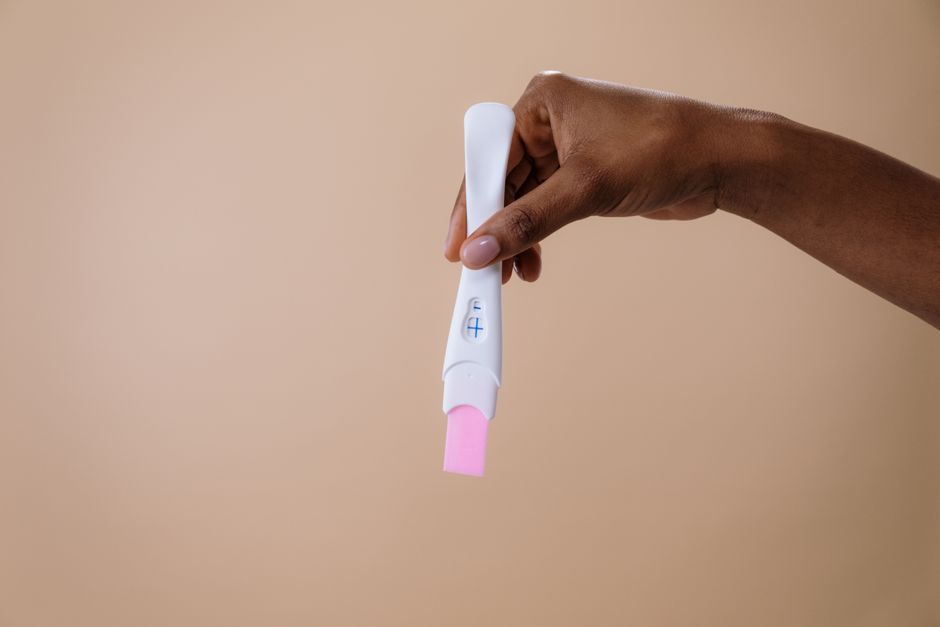
A pregnancy test can show a positive result as early as 10 to 14 days after ovulation, though the exact timing depends on when the fertilized egg implants and how quickly your body produces hCG. Some highly sensitive home tests claim detection as early as 6 days before a missed period, but that window is unreliable for most people. The most dependable approach is to test on the first day of a missed period, when accuracy for home urine tests approaches 99%.
How Soon Can a Pregnancy Test Show Positive Results After Conception?
The timeline from conception to a positive test is not instant. It depends on a biological chain of events that takes roughly one to two weeks to complete.
After ovulation, if an egg is fertilized, it travels through the fallopian tube toward the uterus. This journey takes several days. Once it arrives, the fertilized egg — now called a blastocyst — must implant into the uterine lining. Implantation typically occurs 6 to 12 days after ovulation, with most implantations happening around day 8 or 9.
Only after implantation does the body begin producing human chorionic gonadotropin, or hCG. This is the hormone that pregnancy tests detect. The cells that will eventually form the placenta start secreting hCG almost immediately after they attach to the uterine wall.
In the earliest days, hCG levels are very low. The hormone then roughly doubles every 48 to 72 hours during early pregnancy. It takes time for levels to rise high enough for a test to detect them.
This means the earliest a highly sensitive urine test could theoretically detect pregnancy is about 10 days after ovulation. A standard urine test is more likely to give an accurate result around 12 to 14 days after ovulation, or roughly the time of a missed period.
What Is hCG and Why Does It Matter for Testing?
Human chorionic gonadotropin is a hormone produced almost exclusively during pregnancy. It plays a role in maintaining the corpus luteum, a structure in the ovary that produces progesterone early in pregnancy until the placenta takes over that job.
Home pregnancy tests work by detecting hCG in urine. The test strip contains antibodies that bind to hCG if it is present. When enough hCG binds, a visible line or digital result appears.
The key variable is sensitivity. Most home tests can detect hCG at concentrations of 20 to 25 milli-international units per milliliter (mIU/mL). Some tests advertise sensitivity as low as 10 mIU/mL. A test with lower sensitivity needs more hCG to turn positive, which means it may take longer to show a positive result.
Blood tests, which are done in a lab, can detect hCG at much lower levels — sometimes as low as 1 to 2 mIU/mL. A quantitative blood test can also measure the exact amount of hCG, which helps track whether a pregnancy is progressing normally. These tests are not typically used for routine pregnancy confirmation unless there is a medical reason.
When Should You Take a Pregnancy Test for the Most Accurate Result?
The single most reliable time to take a home pregnancy test is the first day of a missed period. At that point, if you are pregnant, hCG levels are usually high enough for a standard test to detect.
Testing earlier than that increases the chance of a false negative — a result that says you are not pregnant when you actually are. This happens because hCG levels simply have not risen high enough yet for the test to pick them up.
If you have irregular periods, you may not know exactly when your period is due. In that case, waiting at least 14 days after you think you ovulated gives you a better chance of an accurate result. If you are tracking ovulation through methods like basal body temperature or ovulation predictor kits, you can count from that date.
Testing too early is the most common reason for a false negative. If you get a negative result but still suspect you might be pregnant, waiting a few days and testing again is reasonable. hCG levels rise quickly in early pregnancy, so a test that was negative on day 10 after ovulation may be positive by day 14.



Does the Time of Day Affect Pregnancy Test Results?
For early testing, the time of day can matter. First-morning urine is typically the most concentrated, which means hCG levels are at their highest in that sample.
If you are testing around the time of your missed period or later, the concentration of your urine is less likely to make a difference. hCG levels are high enough by then that even diluted urine should produce a positive result if you are pregnant.
If you are testing very early — before your missed period — using first-morning urine gives you the best chance of detecting hCG if it is present. Drinking a lot of water before testing can dilute your urine and potentially lead to a false negative in those early days.
What Causes a False Negative or False Positive?
A false negative means the test says you are not pregnant when you actually are. The most common cause is testing too early, before hCG levels have risen enough to be detected. Other causes include using a test that has expired, not following the instructions correctly, or drinking excessive fluids before testing.
A false positive means the test says you are pregnant when you are not. This is less common but can happen. Certain medications, including some fertility drugs that contain hCG, can cause a false positive. Rare medical conditions such as certain types of tumors can also produce hCG. A chemical pregnancy — where an embryo briefly implants but does not continue to develop — can also cause a positive test followed by a negative one shortly after.
If you get a positive result on a home test, your healthcare provider will typically confirm the pregnancy with a blood test or ultrasound. If you get conflicting results — for example, a positive test followed by a negative one — contact your doctor to determine what is happening.
How Do Different Types of Pregnancy Tests Compare?
Home urine tests and lab blood tests differ in sensitivity, timing, and how they are used. The table below outlines the general differences.
| Test Type | Detects hCG At | Earliest Detection | Typical Use |
|---|---|---|---|
| Standard home urine test | 20–25 mIU/mL | About 12–14 days after ovulation | Routine at-home testing |
| High-sensitivity home urine test | 10 mIU/mL | As early as 10 days after ovulation (not always reliable) | Early testing before missed period |
| Qualitative blood test | 1–2 mIU/mL | About 8–10 days after ovulation | Medical confirmation |
| Quantitative blood test | Measures exact level | About 8–10 days after ovulation | Tracking pregnancy progression |
Home urine tests are designed for convenience and privacy. Blood tests are more sensitive and are used when a healthcare provider needs to confirm a pregnancy or monitor hCG levels over time. Neither type of test can tell you the exact date of conception — they only detect the presence of hCG.
What If You Test Negative but Still Think You Are Pregnant?
A negative result does not always mean you are not pregnant. If you tested too early, your hCG levels may not have been high enough to detect.
Waiting three to five days and testing again is a reasonable next step. hCG levels rise quickly in early pregnancy, so a test that was negative early on may become positive within a few days.
If you continue to get negative results but have symptoms like nausea, breast tenderness, or fatigue, or if your period remains absent, contact your healthcare provider. They can order a blood test to check hCG levels directly. A blood test is more sensitive and can provide a clearer answer when home tests are inconclusive.
It is also possible that a negative test is correct. Many early pregnancy symptoms overlap with premenstrual symptoms. A missed period combined with a negative test could also point to other causes, such as stress, illness, or hormonal changes. A doctor can help sort out what is going on.
Can You Get a Positive Result Before a Missed Period?
Yes, but it is not guaranteed. Some people do get a positive result a few days before their expected period, especially if they are using a high-sensitivity test and their hCG levels have risen quickly.
However, testing before a missed period increases the risk of a false negative. The timing of implantation varies from person to person, and so does the rate at which hCG rises. Two people who conceived on the same day might get different results on the same day of testing.
If you choose to test early and get a negative result, it does not mean you are not pregnant. It may simply mean your hCG levels are not yet high enough to detect. Testing again after your missed period will give you a more reliable answer.
Frequently Asked Questions
How soon after ovulation can a pregnancy test show positive?
A pregnancy test can show positive as early as 10 days after ovulation, but most reliable results appear 12 to 14 days after ovulation. Testing earlier than that increases the chance of a false negative because hCG levels may still be too low to detect.
Can a pregnancy test be positive 5 days after conception?
No, a pregnancy test cannot detect pregnancy 5 days after conception. Implantation has not yet occurred at that point, and without implantation, the body does not produce hCG.
Is it better to test in the morning or at night?
First-morning urine is best for early testing because it is more concentrated, making hCG easier to detect. If you are testing after your missed period, the time of day is less likely to affect the result.
What should I do if I get a negative test but my period is late?
Wait three to five days and test again with first-morning urine. If you still get a negative result and your period remains absent, contact your healthcare provider for a blood test or further evaluation.
