
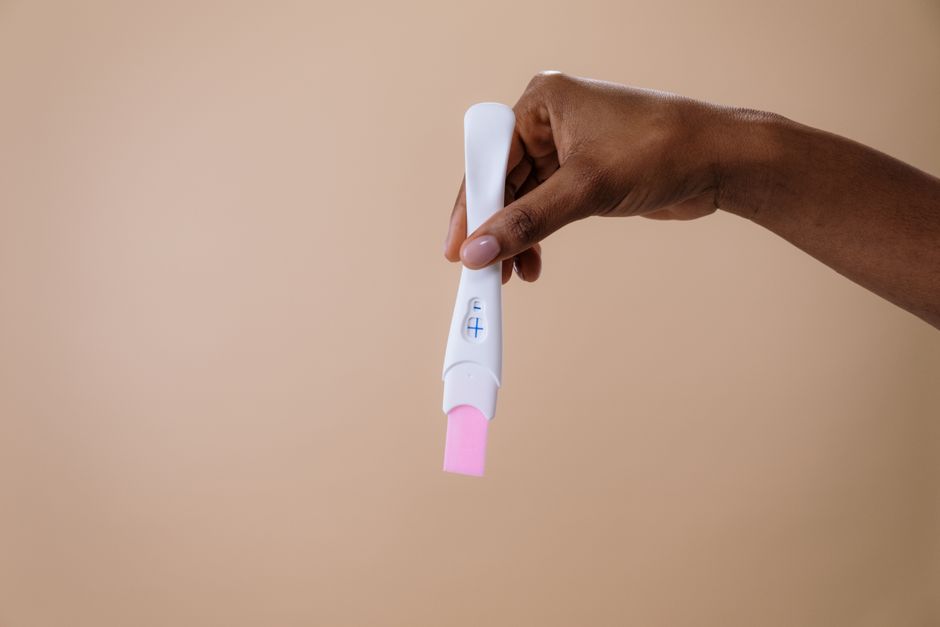
A home pregnancy test can detect pregnancy as early as the first day of a missed period, and sometimes a few days before. The timing depends on one hormone: human chorionic gonadotropin, or hCG. This hormone appears in urine only after a fertilized egg implants in the uterus, which usually happens about 6 to 12 days after ovulation.
Most tests advertise early detection, but “early” has a specific biological meaning. If you test before implantation, no test on the market can give you a positive result. Understanding that timeline helps you test at the right moment and interpret the result correctly.
How Soon Can a Pregnancy Test Detect Pregnancy?
A pregnancy test can first detect pregnancy roughly 6 to 12 days after ovulation — but only once implantation has occurred and hCG has entered your urine. The hormone needs time to build up to a level the test can measure.
Here is the sequence. After ovulation, if an egg is fertilized, it travels down the fallopian tube and implants in the lining of the uterus. The cells that will become the placenta begin producing hCG at implantation. That hormone then enters the bloodstream and, shortly after, the urine.
This is why the earliest reliable detection lines up with the first day of a missed period for most people. The typical menstrual cycle gives hCG enough time to rise to a detectable level by that point. Testing earlier than that raises the chance of a false negative — a negative result when you are actually pregnant.
One point that surprises many people: the day of implantation varies. A later implantation means hCG appears later. Two people who ovulated on the same day can get accurate results on different days.
What Is hCG and Why Does Timing Depend On It?
Human chorionic gonadotropin is the hormone pregnancy tests are built to detect. It is produced by the developing embryo and later by the placenta, and it serves a real biological purpose — it signals the body to maintain the uterine lining so the pregnancy can continue.
In early pregnancy, hCG levels roughly double every two to three days. That rapid rise is what makes early detection possible at all. A test taken too soon may simply catch the hormone before it has crossed the detection threshold.
Urine tests and blood tests measure the same hormone but differ in sensitivity. A blood test, done in a clinic, can detect hCG earlier than a urine test because blood concentrations rise before urine concentrations do. Some clinicians order blood tests when timing matters, such as monitoring an early pregnancy. Home tests rely on urine and are designed to be accurate when used at the right time.
When Should You Take a Pregnancy Test?
The most reliable time to take a home pregnancy test is the first day of a missed period. If your cycles are regular, this timing gives hCG the best chance of being detectable.
If you have irregular cycles, you may not know exactly when your period is due. In that case, testing about two to three weeks after you believe you ovulated is a reasonable approach. Waiting a few extra days generally improves accuracy rather than hurting it.
First-morning urine is often recommended because it is more concentrated after hours without drinking. This matters most for very early testing. For a test taken after a missed period, the concentration of urine is less likely to affect the result.
If you get a negative result but still feel you might be pregnant, wait a few days and test again. hCG rises quickly in early pregnancy, so a repeat test a few days later can turn positive.
What Does a False Negative or False Positive Mean?
A false negative — a negative result when you are pregnant — is most often a timing problem. You tested before hCG reached a detectable level. It can also happen if you drank a lot of fluid before testing, diluting the urine, or if you used a test incorrectly.
A false positive is much less common but does occur. Certain medical conditions and some fertility medications that contain hCG can cause a positive result without a pregnancy. A very early pregnancy that does not continue can also produce a brief positive followed by a negative — sometimes called a chemical pregnancy. If a result seems wrong, a repeat test or a visit to a clinician can clarify it.
Home pregnancy tests are generally accurate when used as directed after a missed period. No test is perfect, and reading the result within the time window stated on the instructions matters — a result read too late can be unreliable.
How Accurate Are Home Pregnancy Tests?
Home pregnancy tests are highly accurate when used on or after the first day of a missed period. Used correctly and at the right time, they give the correct answer in the large majority of cases.
Accuracy drops when you test too early. A test labeled for early detection may claim to work several days before a missed period, but the chance of a false negative is higher the earlier you test. The label describes the earliest possible detection, not the most reliable one.
Test sensitivity is usually stated on the packaging in units of hCG per milliliter of urine. A lower number means the test can detect a smaller amount of hormone. Even so, a sensitive test cannot detect hCG that has not yet been produced.
What If You Test Positive or Get an Unclear Result?
A positive home test is a strong signal of pregnancy, but it is usually confirmed by a clinician. A follow-up visit can confirm the pregnancy, check hCG levels if needed, and plan next steps in care.
An unclear result — a faint line, a result that appears after the time window, or a result that is hard to read — should be treated as inconclusive. Test again in a few days using a fresh test and follow the instructions closely. Do not interpret a line that shows up outside the recommended reading time.
If you have symptoms such as severe pain, heavy bleeding, or dizziness along with a positive or uncertain result, seek medical care promptly. These can be signs of complications that need evaluation. This is general information, not a substitute for advice from your clinician.
Frequently Asked Questions
Can a pregnancy test detect pregnancy before a missed period?
Some tests are designed to detect pregnancy a few days before a missed period, but the chance of a false negative is higher the earlier you test. The first day of a missed period remains the most reliable time for a home test.
How soon after ovulation can a pregnancy test be positive?
A test can turn positive only after implantation, which usually happens about 6 to 12 days after ovulation, plus the time needed for hCG to reach a detectable level. For most people this lines up with the first day of a missed period.
Can a pregnancy test be negative and still be pregnant?
Yes, a false negative can happen if you test too early, before hCG is high enough to detect. Waiting a few days and testing again usually gives a clearer result.
Is a blood test more accurate than a home urine test?
A blood test can detect hCG earlier than a urine test because blood levels rise first. Home urine tests are still highly accurate when used on or after the first day of a missed period.
