

Ovulation usually happens about 14 days before your next period starts — not a fixed number of days after your period ends. That single fact trips up a lot of people, because most of us were taught to count forward from the last day of bleeding. In reality, the gap between your period and ovulation depends on how long your whole cycle is, and that varies from person to person and even from month to month.
How Soon After Your Period Does Ovulation Happen?
For a person with a 28-day cycle who bleeds for five days, ovulation typically lands around day 14 — roughly nine days after the period ends. But that number shifts with cycle length. Someone with a 35-day cycle may not ovulate until around day 21, which is about 16 days after a five-day period. Someone with a 24-day cycle might ovulate around day 10, just five days after bleeding stops.
The reason is that the second half of the cycle is the more predictable part. After ovulation, the empty follicle becomes a structure called the corpus luteum, which produces progesterone and holds the uterine lining in place. This luteal phase usually lasts around 12 to 14 days. If pregnancy does not occur, the corpus luteum breaks down, progesterone falls, and the lining sheds as a period.
That means the countdown to your next period is fairly steady. The countdown from your period to ovulation is not. The first half of the cycle — from the first day of bleeding to ovulation — is called the follicular phase, and it is the flexible one. Stress, illness, travel, sleep changes, and significant weight shifts can all lengthen it, which pushes ovulation later.
Why “Day 14” Is Not a Rule for Everyone
The 28-day cycle with ovulation on day 14 is a textbook average, not a universal standard. Cycle length varies widely among healthy people. Research has consistently found that a large share of people have cycles shorter or longer than 28 days, and that ovulation day moves around accordingly.
Age matters too. In the years leading up to menopause — a stage called perimenopause — cycles often become shorter at first, then longer and more irregular. Ovulation can happen earlier or later than usual, and some cycles may not involve ovulation at all. This is a normal part of the transition, though irregular bleeding should still be discussed with a clinician.
There is one more thing worth knowing. Even people with generally regular cycles do not ovulate on the exact same day every month. Cycle-to-cycle variation of several days is common. If you are tracking to conceive or to avoid pregnancy, treating any single “ovulation day” as fixed will lead to errors.
How to Estimate When You Ovulate
Since you cannot feel ovulation directly, most methods work by detecting its aftermath or its hormonal buildup. None of them predict ovulation in advance with perfect accuracy, and each has limits.
- Calendar tracking: Count back roughly 14 days from your expected next period. This gives a rough window, not a precise date. It works best for people with very regular cycles.
- Basal body temperature: Your resting temperature rises slightly after ovulation due to progesterone. This confirms ovulation happened, but only after the fact — it cannot tell you it is about to occur.
- Ovulation predictor kits: These detect a surge in luteinizing hormone (LH) in urine. The LH surge usually precedes ovulation by about 24 to 36 hours, which makes them useful for timing. They can miss the surge in some people or give false positives in others.
- Cervical mucus changes: Around ovulation, mucus often becomes clearer, stretchier, and more slippery, similar to raw egg white. This is a real physiological sign, though it can be affected by other factors.
Combining two or more methods generally gives a better picture than relying on any single one. No method is reliable enough on its own to be used as contraception without proper training and guidance.



Can You Ovulate Right After Your Period Ends?
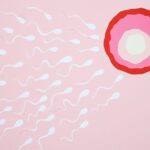
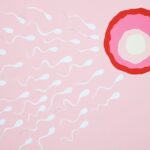
Yes, it is possible, especially in shorter cycles. If your cycle is 21 days and you bleed for seven days, ovulation could occur within a day or two of your period ending. Sperm can also survive in the reproductive tract for up to about five days, which means sex during or just after a period can sometimes lead to pregnancy if ovulation follows soon after.
This is why the rhythm method — assuming you are “safe” during and right after your period — is unreliable. The fertile window is not a fixed set of days. It depends on when ovulation actually happens that month, which can move.
It is also worth separating two ideas that get mixed up. A period is not proof that you ovulated in that cycle. Bleeding can occur without ovulation, and ovulation can occur without a preceding period in some situations. The two events are related but not locked together.
What Changes Ovulation Timing
Many factors can shift when you ovulate, and understanding them helps explain why your own timing may not match a calendar.
- Cycle length: The single biggest factor. Longer cycles push ovulation later; shorter cycles pull it earlier.
- Stress: Physical or emotional stress can delay or suppress ovulation by affecting the hormones that regulate the cycle.
- Illness and travel: A fever, a bad cold, or crossing time zones can shift ovulation by days.
- Weight changes: Significant weight loss or gain, and very low body fat, can disrupt ovulation.
- Age: Cycles tend to change as you approach perimenopause, becoming less predictable.
- Medical conditions: Conditions such as polycystic ovary syndrome and thyroid disorders are commonly associated with irregular or absent ovulation.
If your cycles are consistently shorter than 21 days or longer than 35 days, or if they stop entirely, that is worth raising with a clinician. It does not automatically signal a problem, but it is a pattern that deserves a proper look.
Does Ovulation Always Happen the Same Way?
No. Ovulation is not a guaranteed monthly event for everyone. Some cycles are anovulatory, meaning no egg is released. This is more common at the very start of menstruation and again in the years before menopause, but it can happen at other times too.
When ovulation does occur, the egg is released and remains viable for roughly 12 to 24 hours. Sperm, by contrast, can survive for up to about five days. That mismatch is why the fertile window is usually described as the five days before ovulation plus the day of ovulation itself — the days before matter as much as the day of.
Understanding that window is the practical payoff of everything above. If you know ovulation tends to happen about 14 days before your next period, you can work backward from your expected period rather than forward from your last one. That is the more reliable direction to count.
Frequently Asked Questions
How many days after your period do you ovulate?
It depends on your cycle length, not a fixed number. For a 28-day cycle with a five-day period, ovulation usually falls about nine days after bleeding ends, but shorter cycles can mean ovulation within a few days of your period stopping.
Can you get pregnant right after your period?
Yes, it is possible, especially if your cycle is short. Sperm can survive for up to about five days, so sex during or just after a period can lead to pregnancy if ovulation follows soon after.
Is ovulation always 14 days after your period?
No. The 14-day figure refers to the time before your next period, not after your last one. Ovulation typically occurs around 14 days before your next period begins, which is a different count.
How do I know if I am ovulating?
Common signs include a rise in basal body temperature, clearer and stretchier cervical mucus, and a positive result on an ovulation predictor kit. These signs suggest ovulation but none of them confirm it with complete certainty.
