
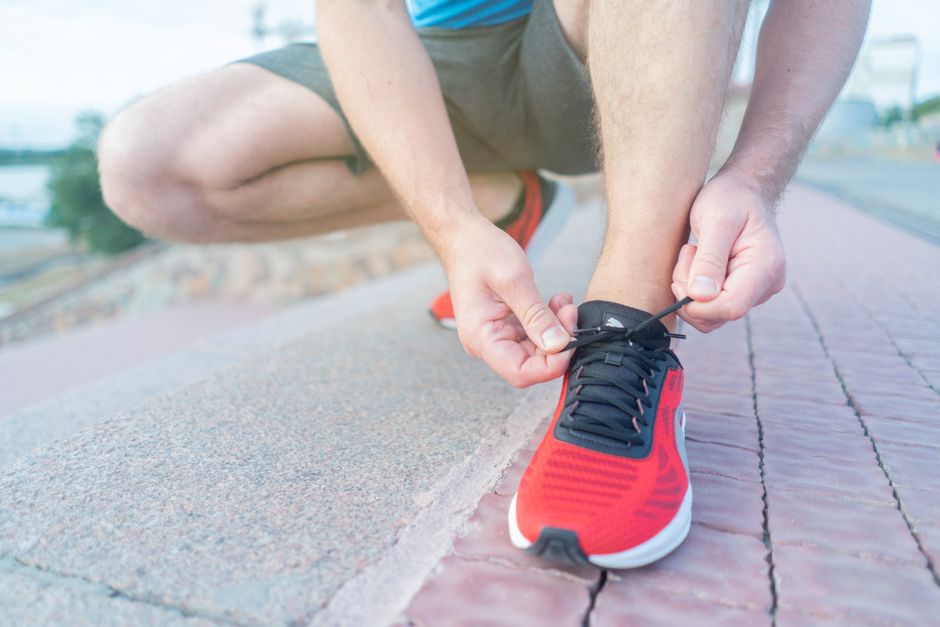
A shoe that fits correctly leaves roughly a thumb’s width of space between the end of your longest toe and the front of the shoe. The widest part of your foot should sit at the widest part of the shoe, and your heel should stay put when you walk. Length alone is not enough — width, arch position, and heel hold all matter.
How Should Shoes Fit?
Fit is about three measurements working together: length, width, and volume. Most people get the length roughly right and ignore the other two.
For length, the general guide is a thumb’s width — about half an inch — between your longest toe and the shoe’s front edge. This matters because feet lengthen slightly when you stand and can swell during the day. A shoe that feels snug sitting down may press against your toes by afternoon.
For width, the ball of your foot should rest at the widest part of the shoe. If the shoe pinches there, no amount of breaking in will fix it. Leather may stretch a little across the top, but the sole does not widen.
For heel hold, your heel should lift no more than a small amount when you walk. Excessive slipping causes blisters and forces your toes to claw for grip.
Your longest toe is not always your big toe. Many people have a second toe that extends further. Fit to the longest one.
Why Do So Many People Wear the Wrong Size?
Most adults are wearing shoes that are too small, and they often do not know it. Feet change over a lifetime. Ligaments loosen, arches can flatten, and feet can get longer and wider with age.
Research on foot health has repeatedly found that a large share of adults wear incorrectly sized shoes. A study published in the Journal of Foot and Ankle Research found that a majority of participants wore shoes shorter than their feet. This is not a rare problem.
Several things drive it:
- People keep buying the size they wore at 25, even though their feet have changed.
- Shoe sizing is not standardized across brands. A size 9 in one brand can be a size 8.5 in another.
- Many people size shoes by feel in the store, standing briefly, rather than measuring.
- Fashion preferences sometimes push people toward narrower or shorter styles than their feet need.
The fix is simple but requires a habit change. Measure your feet every year or two, and measure them at the end of the day when they are largest.
What Happens If Your Shoes Are Too Small?
Shoes that are too small cause problems that build over time. The immediate effects are blisters, calluses, and sore spots. The longer-term effects are more concerning.
Repeated pressure on the toes can lead to conditions like bunions, hammertoes, and corns. These develop gradually and are often attributed to “just getting older” when footwear is a contributing factor.
Toenail problems are common too. When the toe presses against the front of a shoe, the nail can thicken, lift, or become ingrown. People with diabetes need to take this especially seriously. Reduced sensation in the feet means small injuries from tight shoes can go unnoticed and become serious. Clinical guidelines for people with diabetes consistently emphasize properly fitted footwear as part of foot care.
There is also a gait effect. If a shoe restricts your toes or presses on the ball of your foot, you change how you walk. Over time, that altered gait can contribute to knee, hip, and lower back discomfort.




Can Shoes Be Too Big?
Yes. A shoe that is too long or too wide creates its own set of problems, though they tend to be less severe than those from shoes that are too small.
When a shoe is too big, your foot slides forward with each step. Your toes hit the front of the shoe to stabilize, which can cause the same toe irritation you get from a tight shoe. Your heel lifts excessively, causing friction and blisters at the back.
Your foot also has to work harder to grip the shoe. This can lead to arch fatigue and, over time, contribute to tendon irritation. People sometimes size up to accommodate width, which trades a pinch for a slide. The better solution is finding a wider size in the correct length.
How Do You Measure Your Feet at Home?
You can get a useful measurement at home in a few minutes. Do this at the end of the day, and wear the socks you normally wear with the shoes you are buying.
- Stand on a piece of paper with your heel against a wall.
- Mark the tip of your longest toe and the back of your heel.
- Measure the distance in inches or centimeters.
- Measure both feet. Most people have one foot slightly larger — fit to the larger one.
- Measure the width across the ball of your foot as well.
Compare your numbers to the brand’s size chart, not to a size you remember from another brand. If you are between sizes, go with the larger one, especially for athletic shoes where your feet will swell during activity.
For children, this matters even more. Kids’ feet grow quickly, and they often do not tell you when shoes are tight. A general guideline is to check fit every few months and leave about a thumb’s width of growing room. No clinical guidelines specify an exact replacement schedule for children’s shoes because growth varies widely.
Does Shoe Fit Change With Activity?
It does, and this is where a lot of people get it wrong. Your feet swell during the day and during exercise. They can also spread under load as your arches flatten slightly with each step.
For running and walking shoes, the general advice is to size up by about half a size compared to your casual shoes. This gives room for swelling and for your foot to lengthen under impact. A running shoe that fits perfectly standing still will likely feel tight a few miles in.
For dress shoes, the fit is different. Leather dress shoes have less give than athletic shoes, so getting the length and width right at purchase matters more. There is no breaking-in period that will fix a shoe that is fundamentally too short.
For boots and work shoes, heel hold is especially important because the shoe is heavier. A slight heel slip of a quarter inch or less is generally acceptable in a new boot. More than that, and the boot is likely too long or too wide.
What About Arch Support and Insoles?
Arch support is one of the most marketed aspects of shoe fit, and the evidence is more nuanced than ads suggest.
For people with flat feet or plantar fasciitis, some studies indicate that arch support and cushioning can reduce pain. For people with neutral arches and no foot problems, there is no strong evidence that added arch support prevents injury or improves performance.
What matters more is that the shoe’s arch shape roughly matches your foot. If the shoe’s arch is in the wrong place, it will press uncomfortably no matter how much support it claims to offer.
Insoles can help if they address a specific issue — cushioning for heel pain, for example, or a lift for a leg length difference. Off-the-shelf insoles vary widely in quality. Custom orthotics are sometimes recommended by clinicians for specific conditions, but the evidence for their benefit is mixed and depends on the diagnosis.
If you have persistent foot pain, see a clinician. Shoe changes alone may not resolve an underlying problem.
When Should You Replace Your Shoes?
There is no single rule that applies to everyone, but there are useful signals.
For athletic shoes used regularly, a common guideline is to replace them after roughly 300 to 500 miles of running. This is a widely cited range in running literature, though individual wear varies with body weight, gait, and surface. For walking shoes, the timeline is longer because the impact is lower.
For everyday shoes, look at the signs rather than the calendar:
- The midsole feels compressed or the shoe no longer cushions.
- The outsole is worn unevenly, especially on one side.
- The upper has stretched so the shoe no longer holds your heel.
- You feel new aches in your feet, knees, or hips that were not there before.
A worn-out shoe can change your gait even if it still looks fine on the outside. The cushioning and structure break down before the exterior does.
Does Foot Shape Affect Shoe Fit?
It does, and this is where standard sizing falls short. Shoes are built around an average foot shape that many people do not have.
People with wide forefeet often need a wider size or a brand known for a roomier toe box. People with narrow heels but average-width forefeet have a harder time — a shoe wide enough at the front may slip at the heel. Lacing techniques can help with heel slip, and some brands offer a narrower heel option.
People with high arches typically need more volume in the shoe and may find that a shoe with a curved last fits better. People with flat feet often need a straighter last and more room through the midfoot.
None of this is exotic. It just means the size number is a starting point, not the answer. Try shoes on, walk in them, and judge the fit by how they feel across all three dimensions: length, width, and heel hold.
Frequently Asked Questions
How much space should be at the end of a shoe?
About a thumb’s width, or roughly half an inch, between your longest toe and the front of the shoe. This allows for swelling and for your foot to move forward when you walk.
Should you size up for running shoes?
Generally yes, about half a size larger than your casual shoes. Your feet swell and lengthen during running, so a shoe that fits snugly standing still will often feel tight mid-run.
Can tight shoes cause foot problems?
Yes. Repeated pressure from shoes that are too small can contribute to bunions, hammertoes, corns, and toenail problems over time. People with diabetes should be especially careful, since reduced sensation can hide shoe-related injuries.
How often should you measure your feet?
Every year or two as an adult, and more often if you notice changes in your feet or foot pain. Feet can get longer and wider with age, so the size you wore years ago may no longer be correct.
