
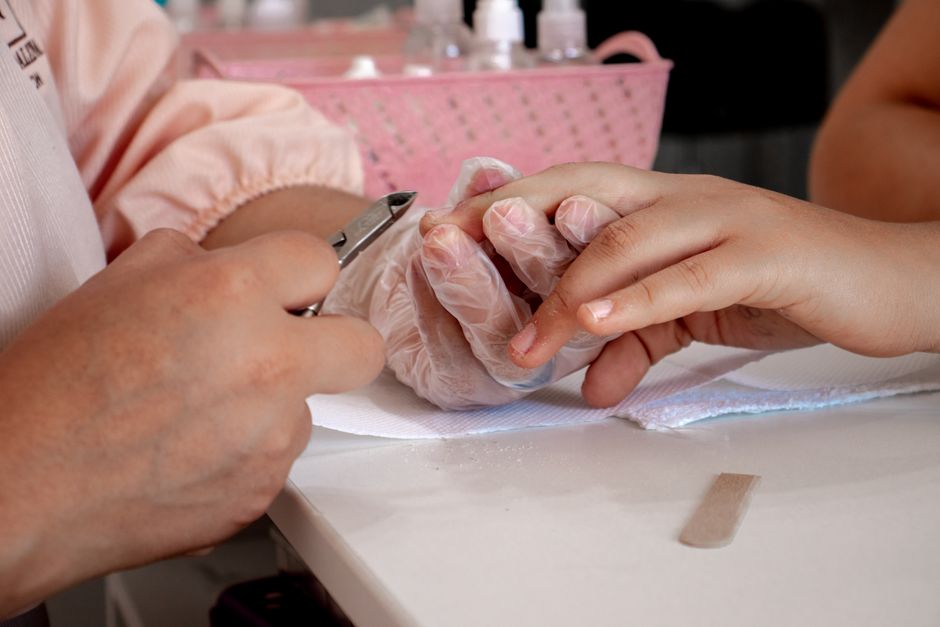
Gel nails last for weeks without chipping, which is exactly why they are so hard to get off at home. The polish is cured under a UV or LED lamp, turning it into a hard plastic-like coating that bonds tightly to your nail. You cannot remove gel nails by soaking them in plain water or peeling them off. The reliable method is to file through the shiny top layer, then soak the nails in pure acetone until the gel softens and lifts away.
Done carefully, this process takes about 15 to 20 minutes per hand and leaves your natural nails intact. Done in a rush, it can strip layers off your nails and leave them thin and sore for weeks.
Why Can’t You Just Peel Gel Nails Off?
Peeling feels satisfying and takes ten seconds. It also removes part of your nail with the polish.
Gel adheres to the nail plate more strongly than regular polish. When you pry it up, the gel usually takes thin layers of the nail’s surface with it. That surface is made of keratin, the same protein that forms your hair. The visible nail plate is already dead tissue, so it does not hurt in the moment. What you are doing is making the nail thinner.
Thin nails bend more easily, feel tender, and are more likely to split. Repeated peeling over months can leave nails that never seem to recover their former thickness, though they do grow out eventually. The nail plate itself does not regenerate in place. New nail grows from the matrix at the base, and it can take several months for a fingernail to fully replace itself.
There is one more risk. Peeling often leaves patches of gel behind, and those rough edges catch on things and tear further. You end up with an uneven surface that looks worse than if you had soaked properly.
What You Need to Remove Gel Nails at Home
The supply list is short. The key item is pure acetone, not acetone-free polish remover.
- 100% acetone (sold as nail polish remover or in the hardware section)
- A coarse nail file or buffer, around 180 to 240 grit
- Cotton balls or cotton pads
- Aluminum foil, cut into squares
- An orange stick or cuticle pusher
- Nail oil or a thick moisturizer for afterward
Acetone-free removers are gentler on skin but generally will not break down cured gel. If the label does not say 100% acetone, it is probably the wrong product for this job.
Acetone is flammable and gives off strong fumes. Use it near an open window or in a well-ventilated room, and keep it away from any open flame. It also dries out skin badly, which is why the moisturizing step at the end matters.
How Do You Remove Gel Nails Step by Step?
Work on one hand at a time so you can still use the other. The full process usually takes 20 to 30 minutes per hand.
Step 1: File off the shine. Use the coarse side of your file to gently scuff the entire surface of each nail. You are breaking the sealed top coat so acetone can get inside. Stop as soon as the glossy finish turns matte. If you see your natural nail showing through, you have filed too far.
Step 2: Soak in acetone. Soak a cotton ball in acetone and place it on the nail. Wrap the fingertip in a square of foil to hold it in place and trap the fumes. Repeat on every finger. Let them sit for 10 to 15 minutes.
Step 3: Check and push. Unwrap one nail and gently push at the gel with an orange stick. If it slides off in soft flakes, you are done. If it resists, rewrap and give it more time. Do not scrape hard. Force is what damages nails.
Step 4: Repeat if needed. Stubborn spots may need a second soak. Thicker gel applications, or gel over acrylic, often take longer.
Step 5: Moisturize. Wash your hands, then work nail oil or heavy cream into each nail and the surrounding skin. Acetone strips oil from both, and replacing it helps reduce peeling and brittleness.
A bowl soak works too. You can rest your fingertips in a shallow dish of acetone for the same amount of time. The foil method tends to work faster because it keeps the acetone from evaporating.




Does the Foil Method Really Work Better Than Soaking?
Yes, for most people. The foil wrap keeps acetone in direct contact with the nail and slows evaporation.
Acetone evaporates quickly at room temperature. In an open bowl, the concentration around your nails drops steadily, so the gel softens more slowly. Wrapping each finger traps the solvent against the nail surface. Many people find the gel is ready to lift in about 10 minutes with wraps, versus a longer soak in a bowl.
That said, a bowl soak is easier if you are doing this alone and find the wrapping fiddly. Both approaches work. The wrap is simply faster and uses less acetone.
What If the Gel Won’t Come Off?
Some gel is genuinely harder to remove than others, and the reason is usually in how it was applied.
Builder gels and hard gels are thicker and more heavily cross-linked than standard gel polish. They can take two or three soak cycles. Gel applied over acrylic or a hard overlay is a different situation entirely, because the acrylic underneath will not dissolve in acetone the way gel does. That combination is usually best handled by a professional, since removing it at home risks serious nail damage.
If a nail still will not budge after two rounds, stop. More filing and scraping will thin your nail. Options at that point include booking a removal appointment, or filing the gel down thin and letting it grow out over the following weeks while keeping the edges smooth.
How Do You Protect Your Nails After Removal?
Your nails will be dry and possibly thin right after removal. That is normal and temporary.
Keep them short for a week or two so they are less likely to catch and tear. Apply nail oil or a moisturizing cream daily. Ingredients like jojoba oil and glycerin help replace some of what the acetone stripped. Avoid another gel application immediately if your nails feel flexible or tender. Give them time to recover.
Some people find their nails feel weak for several weeks after repeated gel cycles. Fingernails grow slowly, roughly a few millimeters per month, so a full replacement takes months rather than days. Patience is the actual treatment here. There is no product that speeds up nail growth in any meaningful way, despite what some supplements claim.
Can You Avoid Damage in the First Place?
Most removal damage comes from rushing, not from the gel itself.
File gently and only until the shine is gone. Soak long enough that the gel releases on its own instead of being pried off. Never use metal tools to scrape. If you get gel done regularly, consider giving your nails a break between sets, and tell your technician if removal ever feels painful.
Pain during removal is not normal and usually means the nail is being damaged. Speak up if it happens.
Frequently Asked Questions
Can I remove gel nails without acetone?
No reliable at-home method removes cured gel without acetone. Filing alone will not get it all off, and acetone-free removers generally do not break down cured gel.
How long do you soak gel nails in acetone?
About 10 to 15 minutes with the foil wrap method, sometimes longer for thicker gels. If the gel has not softened after two rounds, stop and consider a professional removal.
Is it OK to peel gel nails off?
No. Peeling removes thin layers of your natural nail along with the gel, which leaves nails thin, tender, and prone to splitting.
How long should I wait before getting gel nails again?
There is no fixed guideline, but giving nails a week or more to recover between sets is a common approach. If your nails feel thin or tender, wait longer.
