
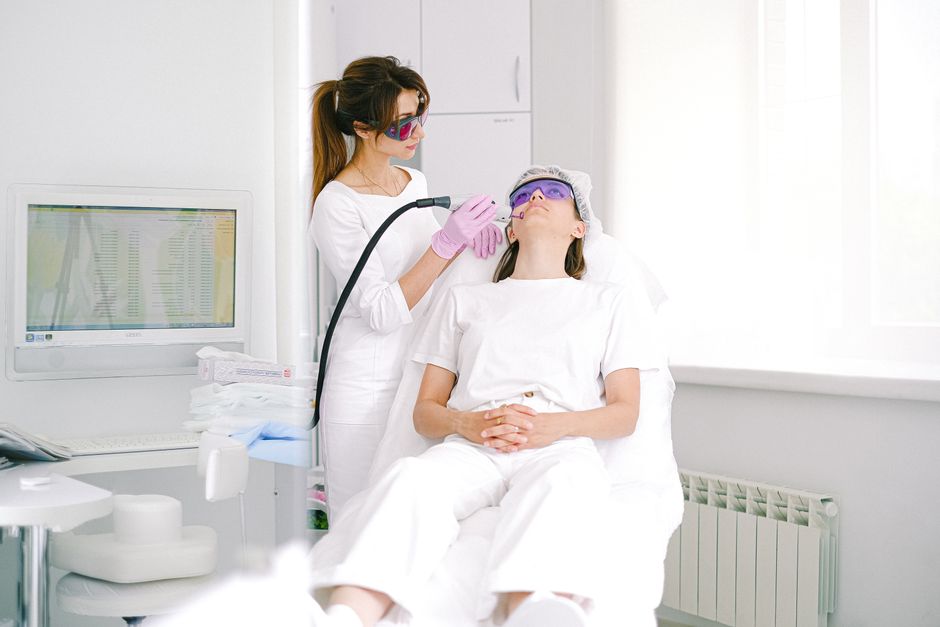
Phototherapy uses specific wavelengths of light to change how cells behave. It does this first in the skin, where the light is absorbed, and then through signals that can reach the blood, the immune system, and organs far from the original treatment area. That chain — from a photon hitting a skin cell to measurable changes elsewhere in the body — is what this article explains.
The word “phototherapy” covers several very different treatments. A dermatologist treating psoriasis with narrowband ultraviolet B (UVB) is doing something different from a hospital using blue light to treat newborn jaundice, or a clinic shining red and near-infrared light on a knee. They share a basic principle: light energy gets absorbed by molecules in tissue and triggers a biological response. But the wavelengths, the depth of penetration, and the strength of the evidence differ a lot between them.
Understanding how phototherapy works from skin to systemic means understanding three things: how far light actually travels into the body, what it does when it gets there, and which of the downstream effects are well documented versus still being studied.
How Does Light Actually Enter the Body and Reach Living Tissue?
Light enters tissue and is either absorbed, scattered, or reflected. Only the absorbed portion can do biological work.
How deep light penetrates depends mostly on wavelength. Ultraviolet light is absorbed very close to the surface — most of it within the outer layers of the skin. Visible light travels somewhat deeper. Near-infrared light, roughly in the 700 to 1100 nanometer range, penetrates furthest, reaching into the dermis and, in some tissues, into muscle. Even then, “deep” is relative. A large share of the energy is scattered and absorbed before it reaches more than a few millimeters.
This is the first honest limit on any claim about phototherapy. Light does not pass through the body like an X-ray. It does not reach internal organs directly from an external light source at meaningful intensity. So when people talk about phototherapy having “systemic” effects, they are not describing light reaching the liver or the brain. They are describing the body’s own response to light absorbed in the skin and, in some cases, in the blood.
The molecules that absorb light are called chromophores. Different chromophores respond to different wavelengths, which is the whole reason different phototherapy types exist.
What Happens Inside Skin Cells When Light Is Absorbed?
Once a chromophore absorbs a photon, it gains energy and can trigger a chemical or biological cascade. The specific cascade depends on the wavelength and the tissue.
In ultraviolet phototherapy, the main chromophore is DNA itself. UVB light causes a specific type of DNA change in skin cells. That sounds alarming, and at high doses over many years it is a genuine cancer risk. But at controlled therapeutic doses, this DNA interaction also triggers repair responses and, critically, drives immune changes in the skin. The therapeutic effect in conditions like psoriasis is thought to come largely from those immune changes, not from the DNA damage itself.
In visible and near-infrared phototherapy, the chromophores are different. One widely studied is cytochrome c oxidase, an enzyme in the mitochondria — the energy-producing structures inside cells. When this enzyme absorbs red or near-infrared light, some research suggests it can influence mitochondrial energy production. This is the proposed basis for much of the “red light therapy” market.
Here is where honesty matters. The mitochondrial mechanism is plausible and has been studied, but the clinical evidence for many consumer red-light devices is far weaker than the marketing implies. No large human trials have confirmed that most at-home devices produce meaningful whole-body effects. The mechanism existing in a lab dish is not the same as a proven benefit in a person.
How Does a Skin-Level Effect Become a Whole-Body Effect?
The skin is not a passive barrier. It is an active immune organ, and that is the bridge between local light exposure and systemic change.
When phototherapy alters cells in the skin, those cells release signaling molecules — cytokines and other mediators — that influence immune activity. Some of these signals stay local. Others enter the bloodstream and can affect immune cells throughout the body. This is one reason UVB phototherapy can calm an inflammatory skin condition, and it is part of why researchers study whether it has effects on systemic inflammation more broadly.
There is a second, more direct route in one specific type of phototherapy. In extracorporeal photopheresis, blood is drawn from the body, treated with a light-sensitizing drug and ultraviolet light outside the body, and then returned. Here the light genuinely acts on blood cells directly, because the blood is temporarily outside the patient. This is a hospital procedure used for certain conditions, and it is not the same as shining light on the skin.
For ordinary skin-based phototherapy, the systemic effects are real but indirect. They travel through the immune system’s own communication channels, not through light reaching distant organs.





Why Do Different Wavelengths Do Different Things?
Wavelength determines which chromophores absorb the light and how deep it reaches. That single fact explains most of the differences between phototherapy types.
- Narrowband UVB — absorbed in the epidermis, used mainly for skin conditions like psoriasis and vitiligo.
- UVA — penetrates slightly deeper than UVB, often combined with a light-sensitizing drug (PUVA) for certain skin conditions.
- Blue light — used in newborns to break down bilirubin, the substance that causes jaundice.
- Red and near-infrared light — penetrates furthest, studied for skin, muscle, and joint applications, with mixed evidence.
The blue-light example is worth pausing on because it is a clean, well-established mechanism. In newborn jaundice, blue light converts bilirubin in the skin into forms the body can excrete more easily. This is not an immune effect and not a deep-tissue effect. It is a direct chemical change in the skin, and it is one of the most thoroughly validated uses of light as medicine.
Which Systemic Effects Are Proven and Which Are Not?
The strength of evidence varies enormously across phototherapy types, and lumping them together is where most confusion starts.
Well established: blue light for newborn jaundice, and narrowband UVB for several inflammatory skin conditions. These have decades of clinical use and clear mechanisms.
Reasonably supported: certain forms of phototherapy for specific skin and blood conditions under medical supervision, such as photopheresis for selected cases.
Mixed or limited: red and near-infrared light for pain, muscle recovery, and skin aging. Some studies suggest benefit in specific settings; results vary, and device quality, dose, and wavelength differ so much that generalizing is unreliable. The evidence is genuinely mixed.
Weak or absent: claims that external light therapy meaningfully treats internal organ disease, or that it produces systemic effects comparable to a drug. No clinical evidence currently confirms this.
One clarification that rarely gets stated: the dose and wavelength that matter are specific. A device that emits the right color but the wrong intensity or the wrong wavelength may do nothing. “Red light” on a label does not guarantee the light is in the studied range.
What Limits How Far the Effects Can Reach?
Physics and biology both set limits. Light attenuates quickly in tissue, so any effect from an external source starts in the skin. From there, the reach of the effect depends on how far the body’s own signals travel — and those signals are not unlimited either.
Inflammation and immune signaling are powerful but diffuse. A skin treatment can shift immune activity, but it does not act like a targeted drug delivered to a specific organ. That is why phototherapy tends to be most effective for conditions where the skin itself, or the immune system broadly, is the target.
There is also a safety dimension. UV light is a known carcinogen with cumulative lifetime risk, which is why medical UV phototherapy is dosed carefully and supervised. Red and near-infrared light do not carry the same DNA-damaging concern, but “safer” is not the same as “proven effective.” Those are separate questions, and conflating them is common in marketing.
How Phototherapy Works From Skin to Systemic: The Full Chain
Putting it together: light enters the skin, is absorbed by a chromophore, triggers a local biological response, and — in some cases — that response is amplified and carried through the immune system or bloodstream. The depth of the first step is limited by wavelength. The reach of the last step is limited by the body’s own signaling, not by the light.
That is the real story. Phototherapy is not light magically reaching every cell. It is light changing the skin, and the skin talking to the rest of the body. How loudly and how far it talks depends entirely on which type of phototherapy you mean — and on evidence that ranges from rock-solid to genuinely unproven.
Frequently Asked Questions
Does phototherapy light actually reach internal organs?
No. External light is absorbed and scattered within the first few millimeters of tissue and does not reach internal organs at meaningful intensity. Any systemic effect comes from the body’s own response to light absorbed in the skin or blood, not from light traveling to the organ itself.
Is red light therapy the same as UV phototherapy?
No, they are completely different. UV phototherapy uses ultraviolet light and carries a cumulative cancer risk, while red and near-infrared therapy uses longer wavelengths that do not damage DNA the same way. Their mechanisms, uses, and evidence bases are not interchangeable.
How does blue light treat newborn jaundice?
Blue light breaks down bilirubin in the baby’s skin into forms the body can excrete more easily. This is one of the most well-established uses of light as medicine.
Can phototherapy change the immune system throughout the body?
Yes, to some degree. Because the skin is an active immune organ, light-induced changes there can release signaling molecules that affect immune cells elsewhere. These effects are real but indirect and generally not comparable to a systemic drug.
