
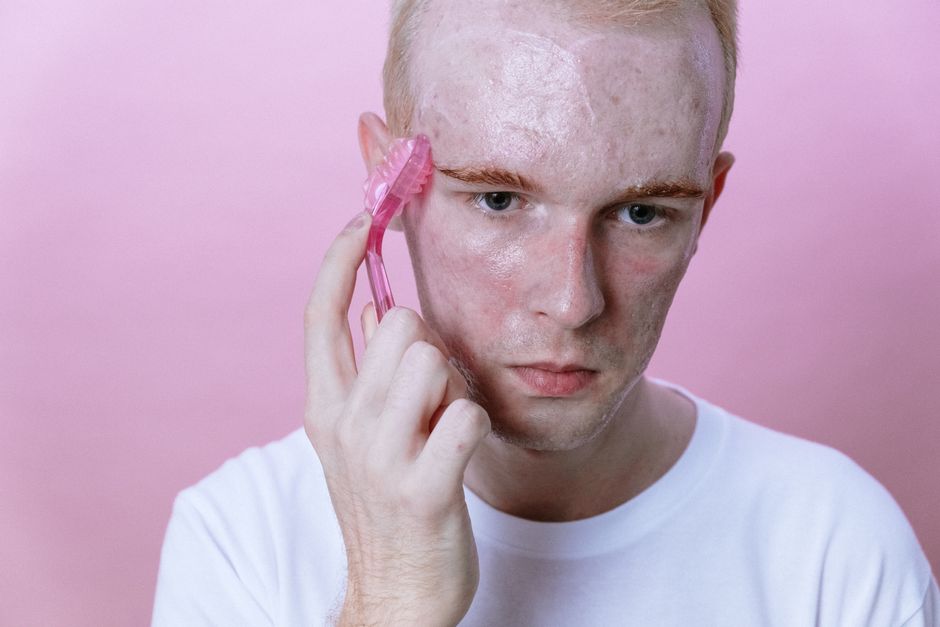
Peptides are short chains of amino acids, the same building blocks that make up proteins like collagen and elastin in your skin. Interest in peptides for acne comes from their role in skin repair and inflammation signaling. Some evidence supports specific peptides for wound healing and skin barrier function, but no large clinical trials have established peptides as an effective acne treatment. The honest position is that peptides may support skin recovery and reduce irritation alongside proven acne care, but they are not a substitute for treatments with real clinical evidence behind them.
What Are Peptides and How Do They Work in Skin?
Peptides are fragments of proteins. When you apply them to skin, they can act as signaling molecules, telling cells to produce more collagen, calm inflammatory pathways, or reinforce the skin barrier.
This is well-established physiology. What is less established is how much of a measurable difference topical peptides make in real-world use, and specifically in acne. The skin’s outer layer, the stratum corneum, is designed to keep large molecules out. Some peptides penetrate; many do not penetrate well. Formulation matters enormously, and a peptide that works in a lab dish may not reach the cells it needs to reach when applied as a cream.
There is also a terminology problem worth knowing. “Peptide” on a label can mean almost anything. Copper peptides, matrixyl, argireline, and antimicrobial peptides are chemically different and do different things. Marketing often treats them as one category when the science does not.
How Peptides For Acne Can Improve Your Skins Health
Peptides do not treat the root causes of acne. Acne forms when hair follicles become blocked by sebum and dead skin cells, bacteria (Cutibacterium acnes) multiply, and inflammation follows. Peptides do not reliably reduce sebum production, unclog pores, or kill acne bacteria.
Where peptides may genuinely help is in the aftermath and the surrounding skin:
- Barrier support. Some peptides are studied for their role in skin barrier repair. A compromised barrier is common in people using acne treatments, and a stronger barrier tends to mean less irritation.
- Inflammation signaling. Certain peptides have shown anti-inflammatory activity in laboratory and some clinical settings. This is plausible for calming post-acne redness, though evidence specific to acne is thin.
- Wound healing and scarring. This is the area with the most legitimate research interest. Peptides involved in tissue repair are studied for their role in healing and scar formation. Whether topical peptides meaningfully reduce acne scarring in humans is not established.
One clarification that gets lost: peptides are often marketed as “collagen boosters.” Applying collagen or collagen peptides to skin does not directly become skin collagen. At best, certain peptides may signal cells to increase production. The effect is indirect and modest.
What Does the Evidence Actually Show?
The evidence for peptides in skin care is uneven. Some peptides have reasonable support for specific functions. Others have almost none outside manufacturer-funded studies.
For acne specifically, the picture is weaker. There is no body of large, independent, randomized controlled trials showing that a peptide product clears acne better than a standard treatment. Some studies suggest certain antimicrobial peptides have activity against acne-related bacteria in laboratory conditions. Lab activity is not the same as clinical benefit on human skin.
This is a pattern worth recognizing. A mechanism that sounds logical — a peptide calms inflammation, so it should calm acne — is not proof that it works. Biological plausibility and demonstrated clinical benefit are different things. Peptides fall firmly into the category of promising but unproven for acne treatment.
What has strong evidence for acne? Topical retinoids, benzoyl peroxide, and prescription options like certain antibiotics and isotretinoin, along with hormonal treatments for some people. These have decades of clinical trials behind them. Peptides do not.
How Do Peptides Fit With Proven Acne Treatments?
The most defensible way to think about peptides is as a supporting ingredient, not a primary treatment. If you are using a retinoid or benzoyl peroxide, these can cause dryness, peeling, and irritation, especially in the first weeks. A peptide-containing moisturizer may help support the skin barrier during that adjustment.
Some clinicians recommend barrier-supporting ingredients alongside active acne treatment for exactly this reason. Whether peptides specifically outperform simpler moisturizing ingredients like ceramides, glycerin, or hyaluronic acid is not well established. Ceramides in particular have more direct evidence for barrier repair than most peptides.
Peptides are generally well tolerated. Some people report irritation from copper peptides in particular. If you have sensitive skin or are using multiple actives, introduce one new product at a time so you can tell what is causing a reaction.
What Should You Watch For With Peptide Products?
Marketing in the peptide space is aggressive. A few things are worth knowing before you spend money.
First, ingredient lists often name a peptide without stating its concentration. Peptides can be expensive to formulate, so the amount in a product may be very low — sometimes included mainly so the name can appear on the label. A product can legally list a peptide that is present in trace amounts.
Second, “clinically proven” on a peptide product usually refers to a study run by the company that makes the ingredient, often measuring things like skin appearance in photographs rather than acne lesion counts. That is not the same as independent evidence of treating acne.
Third, no peptide product has been shown to replace prescription acne treatment for moderate to severe acne. If acne is leaving scars, causing significant distress, or not responding to over-the-counter products, that is a reason to see a dermatologist rather than add more serums.
Are There Risks or Reasons to Avoid Peptides?
Topical peptides are generally low-risk for most people. Allergic reactions are possible with any topical product, and patch testing a small area first is reasonable, especially with sensitive skin.
The main risk is not harm from the peptide itself. It is delay. Relying on peptides instead of evidence-based acne treatment can let acne progress, and acne that scars can leave permanent marks. That trade-off matters more than any theoretical benefit.
For pregnancy and breastfeeding, the picture is less clear. Many peptide products are not formally studied in these groups. Some clinicians consider cosmetic peptides low risk, but if you are pregnant or breastfeeding, check with your doctor before starting new products, and prioritize treatments with established safety data.
Bottom Line
Peptides are real molecules with real biological roles, and some have legitimate evidence for skin barrier support and repair. For acne itself, the evidence is limited. They are not a treatment for acne, but they may be a reasonable supporting ingredient in a routine built around proven acne care.
If your goal is clearer skin, the ingredients with the strongest evidence remain topical retinoids, benzoyl peroxide, and prescription options guided by a clinician. Peptides can sit alongside those. They should not replace them.
Frequently Asked Questions
Do peptides actually help acne?
No strong evidence shows peptides clear acne or treat its root causes. They may support skin barrier repair and calm irritation alongside proven treatments.
Can peptides get rid of acne scars?
This is not established. Some peptides are studied for wound healing and tissue repair, but no large human trials confirm topical peptides reduce acne scarring.
Are peptides safe to use with retinoids?
They are generally well tolerated together, and a peptide moisturizer may help with retinoid-related dryness. Introduce one new product at a time so you can identify any irritation.
What ingredients treat acne better than peptides?
Topical retinoids and benzoyl peroxide have the strongest evidence for over-the-counter and prescription acne care. For moderate to severe acne, a dermatologist can recommend prescription options with established clinical support.
