
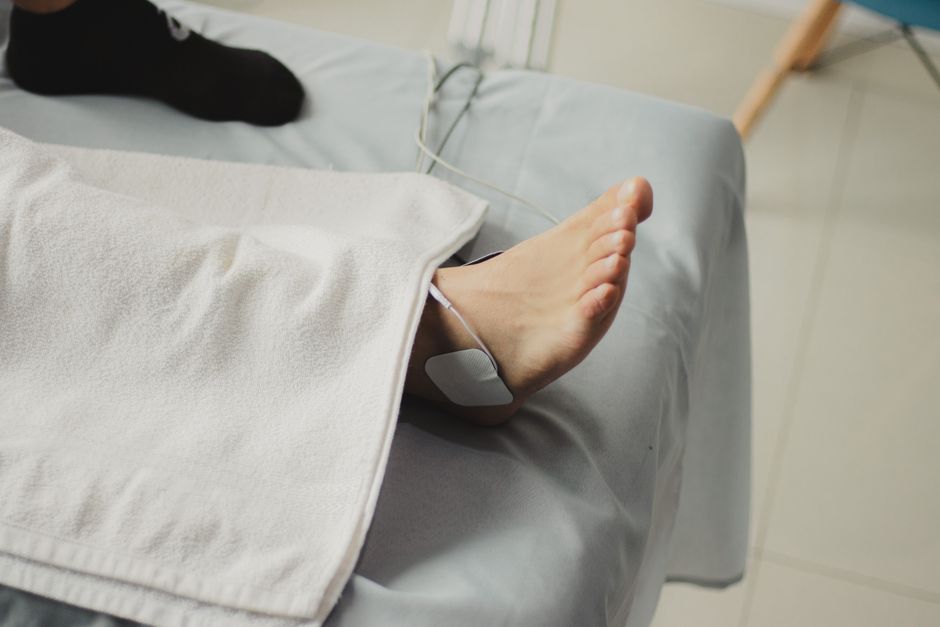
PEMF therapy for osteoporosis uses short bursts of magnetic energy to create tiny electrical currents in bone tissue. Bone responds to electrical signals, and this is the basis for the idea that magnetic stimulation might support bone formation. But here is the honest position: no large human trial has shown that PEMF therapy rebuilds bone density or prevents fractures in people with osteoporosis. The evidence is early, and it is not a substitute for proven treatment.
PEMF stands for pulsed electromagnetic field. A device produces a magnetic field that pulses on and off. The field passes through skin and clothing and reaches bone. Researchers have studied this approach for decades, mostly in small trials and mostly for fracture healing rather than osteoporosis itself. That distinction matters a great deal.
How PEMF Therapy Works for Osteoporosis
Bone is living tissue that constantly rebuilds itself. Specialized cells called osteoblasts build new bone, while osteoclasts break down old bone. In osteoporosis, breakdown outpaces building, so bone becomes less dense and more fragile.
Bone also generates small electrical signals when it is squeezed or stressed. This is a well-documented physiological property of bone tissue. Researchers have known for decades that bone responds to electrical and mechanical stimulation. PEMF devices aim to mimic or amplify these signals without physical load.
The proposed mechanism works like this. The pulsing magnetic field induces tiny electrical currents in bone. Those currents are thought to influence osteoblast activity and possibly shift the balance toward bone formation. Some laboratory and animal studies support this idea. Human evidence is much thinner.
This is where a non-obvious point matters. The fact that a mechanism sounds logical does not prove a treatment works in people. Many biological ideas look promising in cells and animals and then fail in human trials. PEMF for osteoporosis sits in that uncertain middle ground. The mechanism is plausible. The clinical proof is not there yet.
It is also worth separating two different questions. Does PEMF help heal an existing fracture? And does PEMF raise bone density or prevent fractures in osteoporosis? Most research has looked at the first question. Very little has tested the second.
What Does the Research Actually Show?
The strongest PEMF evidence in bone care concerns fracture healing, not osteoporosis. Some studies suggest PEMF may help certain fractures that are slow to heal, though even here results vary and the quality of trials is mixed. Some clinicians use it as an adjunct for stubborn fractures.
For osteoporosis specifically, the picture is much weaker. Some small studies have reported changes in markers of bone turnover or modest effects on bone density. These studies tend to be small, short, and sometimes lack a proper control group. That makes it hard to separate a real effect from chance or from other factors.
No large, well-controlled human trial has demonstrated that PEMF therapy increases bone mineral density enough to reduce fracture risk. Fracture reduction is the outcome that matters most in osteoporosis, and that outcome has not been established for PEMF.
Some research suggests PEMF may help with bone healing after spinal fusion surgery or in specific orthopedic situations. That is a different use than treating osteoporosis itself. Evidence from one setting does not automatically carry over to another.
Be cautious with marketing. Many PEMF products make broad claims about bone health, pain, and general wellness. No study has confirmed that consumer PEMF devices prevent fractures or reverse osteoporosis. Claims like “supports bone health” are not the same as demonstrated clinical benefit.
Is PEMF a Replacement for Osteoporosis Medication?
No. PEMF therapy is not a replacement for proven osteoporosis treatment. This is the most important point in this article.
Osteoporosis medications have been tested in large human trials with fracture outcomes. Several classes of drugs reduce fracture risk, and that is a well-established finding. These include bisphosphonates, and other agents your clinician may discuss depending on your situation. These drugs carry their own risks and benefits, and the decision is one to make with a doctor.
Treatment decisions in osteoporosis are usually guided by bone density testing and an estimate of your personal fracture risk. A clinician weighs your age, prior fractures, bone density score, and other health factors. PEMF is not part of standard fracture-risk reduction guidelines.
Some people are drawn to PEMF because they want to avoid medication or because they worry about drug side effects. That is understandable. But replacing an evidence-based treatment with an unproven one can leave bone unprotected. If you are considering PEMF, the safer path is to discuss it as an addition to your current plan, not a swap.
If you are on osteoporosis medication, do not stop it to try PEMF without talking to your doctor first.





What Are the Established Ways to Protect Bone?
The proven foundations of bone health have not changed. These steps are supported by consistent research and clinical guidance.
- Weight-bearing and resistance exercise — activities like walking, stair climbing, and strength training load the bone and signal it to maintain density. This is one of the most reliable non-drug approaches.
- Adequate calcium — official intake recommendations vary by age and sex. Adults generally need roughly 1,000 to 1,200 mg per day from food and supplements combined, depending on age and sex.
- Vitamin D — helps the body absorb calcium. Many adults need a supplement, and your doctor can check your level and advise on dose.
- Not smoking and limiting alcohol — both are linked to faster bone loss.
- Fall prevention — most fractures happen after a fall. Balance training, home safety, and vision care reduce that risk.
- Medication when indicated — for people at high fracture risk, drug treatment is the most proven way to lower fracture rates.
These measures have something PEMF does not: large human trials showing they reduce fractures. That is the standard any new approach should be measured against.
Is PEMF Therapy Safe?
PEMF devices are generally described as low-risk in the published literature, and serious side effects are rarely reported. Common complaints are mild, such as temporary tingling or discomfort at the treatment site.
Safety is not the same as proof of benefit. A treatment can be low-risk and still not do what it claims. That is the key distinction with PEMF for osteoporosis.
Some people should be cautious. If you have a pacemaker, implanted electronic device, or metal implant, ask your doctor before using PEMF. Device manufacturers often list these as precautions. Pregnant women should also check with a clinician first. No clinical guidelines currently establish PEMF dosing or safety for pregnant women or children.
There is also a practical risk that is easy to overlook. Relying on an unproven therapy can delay or replace proven care. If bone loss goes untreated while you wait to see whether PEMF helps, that lost time matters. Osteoporosis can progress quietly, and fractures are often the first sign.
Should You Try PEMF for Osteoporosis?
That is a personal decision to make with your doctor, and the evidence does not support strong claims either way. What the evidence does support is being clear-eyed about what PEMF can and cannot do.
PEMF has a plausible biological basis and some supporting laboratory and animal data. Human evidence for osteoporosis specifically is limited and has not shown fracture reduction. It is not part of standard osteoporosis treatment.
If you are curious about PEMF, the reasonable approach is to keep it in perspective. Continue proven measures. Do not stop prescribed medication. Tell your doctor what you are using, especially if you have implants or a medical device.
Above all, do not let an unproven add-on crowd out the steps that have real evidence behind them. Exercise, adequate calcium and vitamin D, fall prevention, and medication when appropriate remain the backbone of bone protection. PEMF, at best, is an open question. It is not a solution.
Frequently Asked Questions
Does PEMF therapy increase bone density?
Some small studies suggest possible effects, but no large controlled trial has shown that PEMF raises bone density enough to matter. The evidence is not strong enough to confirm this benefit.
Can PEMF replace osteoporosis medication?
No. Osteoporosis drugs have been shown in large trials to reduce fractures, while PEMF has not. Do not stop prescribed medication to try PEMF without talking to your doctor.
Is PEMF therapy safe for people with osteoporosis?
PEMF is generally described as low-risk, with mostly mild side effects reported. People with pacemakers, implanted devices, or metal implants should check with a doctor first.
How often do you use PEMF for osteoporosis?
No clinical guidelines establish a standard dose or schedule for PEMF in osteoporosis. Any specific protocol you see is not backed by established medical guidance.
