
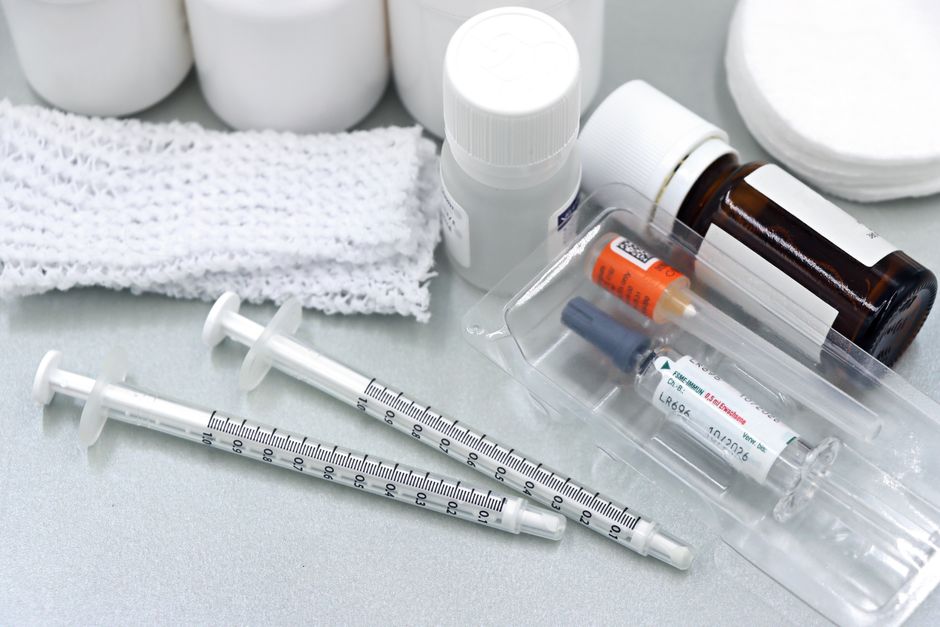
Most vaccines are given with a needle. A few are swallowed or dripped into the mouth, and they work in a fundamentally different way. Oral vaccines train the immune system at the point where many pathogens first enter the body — the moist lining of the mouth, throat, and gut. That difference explains both their unique strengths and their well-known limitations.
What Makes Oral Vaccines Different From Injected Vaccines?
An injected vaccine delivers its instructions into muscle tissue. Immune cells there pick up the signal, then carry it to lymph nodes, where the body builds a systemic response — antibodies and memory cells circulating in the blood.
An oral vaccine starts somewhere else entirely. It lands on mucosal tissue, the thin, wet lining that covers the digestive tract. This lining is not just a barrier. It is an active immune organ, packed with specialized cells that constantly sample what passes through.
That difference in location shapes the kind of immunity produced. Injected vaccines are good at generating systemic immunity — protection that travels through the bloodstream. Oral vaccines can generate mucosal immunity — protection at the surface where a pathogen actually tries to get in.
For diseases that enter through the gut, like polio or cholera, that surface-level protection matters. A bloodstream full of antibodies may not stop a virus replicating in the intestinal wall. Antibodies present right at that wall can.
How Does the Gut Immune System Respond to an Oral Vaccine?
The gut lining contains organized clusters of immune tissue. The best studied are Peyer’s patches — small collections of immune cells embedded in the wall of the small intestine. They act as surveillance posts, sampling material from the gut contents.
When a weakened or inactivated pathogen in an oral vaccine reaches these patches, specialized cells called M cells ferry it across the lining. Below the surface, dendritic cells and macrophages process it and present pieces of the pathogen to other immune cells.
This triggers a local response. B cells in the region mature into cells that produce a specific antibody type called secretory IgA. Unlike the antibodies that circulate in blood, secretory IgA is exported back onto the mucosal surface, where it can neutralize pathogens before they establish an infection.
Some of these activated immune cells also migrate to other mucosal surfaces, including the respiratory tract. This is one reason an oral vaccine can sometimes produce protection beyond the gut itself.
A useful point that often gets lost: the gut immune system has to tolerate food proteins while attacking real threats. It has evolved tight controls to avoid reacting to everything it encounters. An oral vaccine has to work within those controls, which is part of why designing one is harder than it might appear.
Why Do Oral Vaccines Sometimes Work Less Well?
Oral vaccines are not simply “weaker” versions of injected ones. Their performance depends heavily on conditions in the gut, and those conditions vary between people and populations.
One well-documented pattern involves children in low-income settings. Oral vaccines against polio and rotavirus have shown lower effectiveness in some of these populations compared with children in wealthier countries. Researchers have proposed several explanations, though no single cause is confirmed:
- Repeated exposure to other gut infections may keep the immune system in a state that blunts vaccine response.
- Malnutrition and micronutrient deficiencies can affect immune function.
- Maternal antibodies passed through breast milk may interfere with the vaccine in young infants.
- Differences in gut bacteria between populations may influence how the immune system responds.
This is an active area of research. What is clear is that the same vaccine can perform differently depending on the environment and the person receiving it.
Another limitation is practical. Anything swallowed must survive the stomach. Acid and digestive enzymes can destroy a vaccine before it reaches the immune tissue that matters. Some oral vaccines are given as multiple doses partly for this reason, and some are formulated to protect the active ingredient during passage through the stomach.





Which Diseases Have Oral Vaccines?
Only a handful of oral vaccines are in widespread use. Each one reflects a disease where mucosal protection offers a real advantage.
| Vaccine | Target Disease | Form |
|---|---|---|
| Oral polio vaccine (OPV) | Poliomyelitis | Drops |
| Rotavirus vaccine | Rotavirus gastroenteritis | Liquid |
| Oral cholera vaccine | Cholera | Liquid |
| Typhoid vaccine (oral form) | Typhoid fever | Capsule |
The oral polio vaccine is the most historically significant. It was central to polio elimination across much of the world and remains a key tool in the final push to eradicate the disease. Inactivated polio vaccine, given by injection, is used in many countries alongside or instead of the oral version.
Rotavirus vaccines are given to infants to prevent severe diarrheal illness, which remains a leading cause of death in young children globally. Oral cholera vaccines are used in outbreak settings and in areas where the disease is endemic.
For most other infectious diseases, no licensed oral vaccine exists. The list is short because the biology is demanding, not because the idea is new.
What Role Do Oral Vaccines Play in Global Health?
The practical advantages of oral vaccines are substantial in settings with limited health infrastructure.
They do not require needles, which reduces the need for trained injection staff and lowers the risk of needle-related injuries and infection. They are easier to transport and store in some cases, though cold-chain requirements still apply. And because they can be given by mouth, mass campaigns can move faster.
These factors made the oral polio vaccine central to global eradication efforts. Large-scale campaigns reached children in remote areas where delivering injections to every child would have been far slower.
Rotavirus vaccines have changed the picture for childhood diarrheal deaths in countries that have introduced them. Global health organizations have supported their rollout in lower-income countries, where the burden of severe rotavirus disease is highest.
There is a complication worth knowing. The oral polio vaccine uses a weakened live virus. In rare circumstances, that weakened virus can change and regain the ability to cause illness, leading to cases of vaccine-derived polio. This is uncommon, and it is one reason some countries have shifted to injected vaccine for routine use while keeping oral vaccine for outbreak response. The trade-offs are real and are weighed differently depending on local conditions.
Could More Oral Vaccines Be Developed?
Researchers have worked for decades on oral versions of vaccines for diseases like influenza, norovirus, and various bacterial infections. Progress has been slow for reasons that come back to the same biological hurdles: surviving the stomach, triggering a strong enough mucosal response, and doing so reliably across different populations.
Newer approaches are being explored. Some use nanoparticles or other delivery systems designed to protect the vaccine through the digestive tract and target it to immune tissue in the gut. Others use different routes that also reach mucosal surfaces, such as nasal sprays.
It is reasonable to say that the field is active but that no oral vaccine for a major respiratory disease is currently in routine use. Claims that a new oral vaccine will soon replace injections for most diseases should be treated with caution until large human trials confirm it.
Frequently Asked Questions
How do oral vaccines actually work?
They deliver a weakened or inactivated pathogen to the mucosal lining of the gut, where immune tissue samples it and produces antibodies at that surface. This creates mucosal immunity at the point where many pathogens first enter the body.
Are oral vaccines as effective as injected vaccines?
It depends on the vaccine and the population. Some oral vaccines have shown lower effectiveness in certain low-income settings, though the reasons are not fully understood and are still being studied.
Which diseases have oral vaccines available?
Polio, rotavirus, cholera, and typhoid are the main diseases with licensed oral vaccines. No widely used oral vaccine currently exists for most other infectious diseases.
Why is the oral polio vaccine sometimes linked to polio cases?
The oral polio vaccine uses a weakened live virus that can rarely change and regain the ability to cause illness. This is uncommon but is one reason some countries now use injected vaccine for routine immunization.
