
You can donate plasma starting at age 18 in the United States. Most plasma collection centers also require donors to be 65 or younger, though some allow older adults to donate with written approval from a physician. Beyond age, donors must meet weight, health, and identification requirements set by the U.S. Food and Drug Administration and individual collection centers.
Age is only one part of the screening process. Plasma donation has specific rules about who qualifies, how often you can donate, and what health conditions may disqualify you. Here is what the current guidelines actually say.
How Old Do You Have to Be to Donate Plasma?
The minimum age to donate plasma in the U.S. is 18. This is set by FDA regulations that govern blood and plasma collection. No state allows plasma donation below age 18 for paid donation centers.
Some countries set the minimum at 17 with parental consent. In the U.S., that exception generally does not apply to plasma collection centers. If you are 17, you will need to wait until your 18th birthday at most U.S. centers.
You must also bring government-issued photo identification showing your date of birth. Centers verify age before any screening begins.
Is There an Upper Age Limit for Plasma Donation?
Many U.S. plasma centers set an upper age limit of 65. Donors older than 65 may still qualify if they provide written consent from a licensed physician. The physician’s note typically confirms that donating plasma does not pose a health risk for that individual.
This upper limit is not a federal requirement. It is a center policy. Some centers allow donors over 65 without extra paperwork. Others require the physician’s letter every time or on a set schedule.
The reason for the upper limit is not that older adults cannot donate safely. It reflects caution about cardiovascular strain and the higher likelihood of underlying health conditions in older donors. The evidence on plasma donation safety specifically in adults over 65 is limited. Most clinical studies of plasma donation have enrolled younger, healthier participants.
What Other Requirements Do Plasma Donors Need to Meet?
Age alone does not determine eligibility. Plasma centers screen for several other factors before accepting a donor.
- Weight: Donors must weigh at least 110 pounds (50 kilograms). This threshold exists because plasma volume is calculated partly by body weight, and lower-weight donors face higher risk of reactions.
- Health status: You must be in generally good health. Active infections, certain chronic conditions, and recent surgeries may temporarily or permanently disqualify you.
- Medications: Some medications disqualify donors. Others do not. The center’s medical staff reviews your medication list during screening.
- Travel history: Recent travel to areas with certain infectious disease outbreaks may require a waiting period.
- Tattoos and piercings: Recent tattoos or piercings may require a deferral period, typically several months, depending on state regulations.
- Substance use: Current intravenous drug use is disqualifying. Other substance use is evaluated case by case.
Each center applies these rules slightly differently. A donor who qualifies at one center may be deferred at another.




How Often Can You Donate Plasma?
The FDA allows plasma donation as often as twice in a seven-day period, with at least 48 hours between donations. This is the federal maximum. Individual centers may set stricter schedules.
This frequency is possible because the body replaces donated plasma relatively quickly. Plasma is about 90% water. After donation, the body restores plasma volume within about 24 to 48 hours. Proteins and other components take longer to fully replenish, which is why the 48-hour minimum between donations exists.
Red blood cell donation, by contrast, requires a waiting period of several weeks. Plasma donation puts less strain on the body’s iron stores because it returns red blood cells to the donor during the process.
Frequent plasma donors should pay attention to protein intake and hydration. Some research suggests that regular plasma donation can lower total protein levels and affect immunoglobulin levels over time. The long-term effects of frequent donation are still being studied.
What Happens During Plasma Donation?
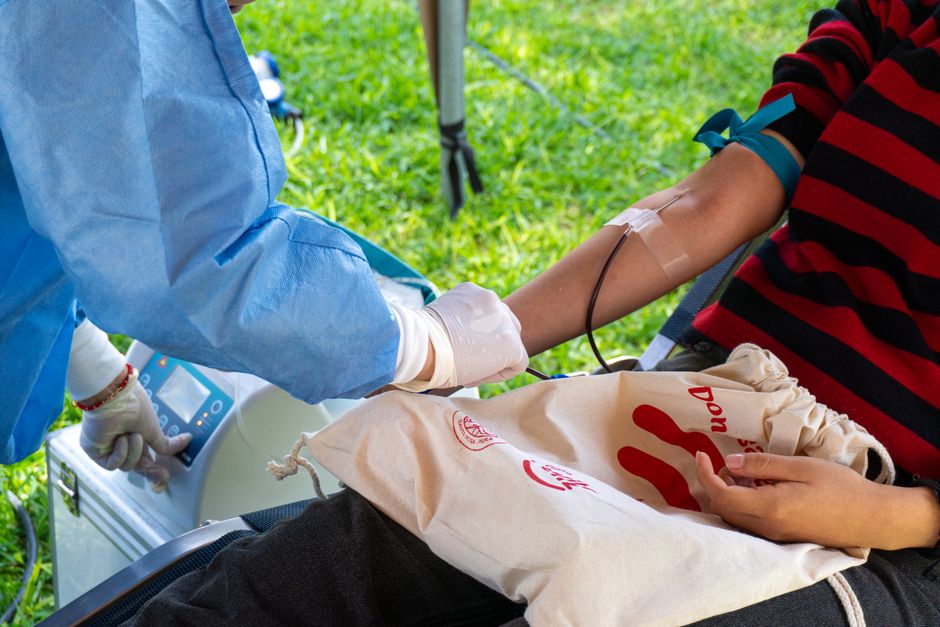
Plasma donation uses a process called plasmapheresis. Blood is drawn from a vein in your arm. A machine separates the plasma from your blood cells. The blood cells and most of the fluid are returned to your body. The collected plasma is then frozen and later used to make treatments for conditions like hemophilia, immune deficiencies, and burns.
The process takes longer than whole blood donation. A typical plasma donation session lasts about 1 to 2 hours, including screening and recovery time. The actual collection usually takes 30 to 45 minutes.
Most centers pay donors. Payment amounts vary by center, location, and how often you donate. The FDA does not set payment rates.
Are There Health Risks for Older Plasma Donors?
Plasma donation is generally well tolerated. The most common side effects are lightheadedness, fatigue, and bruising at the needle site. These occur across all age groups.
For donors over 65, the main concern is cardiovascular response. The fluid shift during plasmapheresis can affect blood pressure and heart rate. This is why some centers require physician clearance for older donors.
The evidence here is limited. No large clinical trials have specifically studied plasma donation outcomes in adults over 65. The physician clearance requirement is a precaution based on physiological reasoning and general safety principles, not on strong trial data showing harm.
If you are over 65 and interested in donating, talk to your doctor first. Bring up any heart conditions, blood pressure medications, or history of fainting. The center will also screen for these during the physical exam.
Can You Donate Plasma If You Have a Health Condition?
It depends on the condition. Some are permanent disqualifiers. Others require a waiting period or physician approval.
Conditions that typically disqualify donors include:
- HIV or hepatitis B or C infection
- Certain cancers
- Organ transplant recipients
- Active intravenous drug use
Conditions that may require evaluation or a deferral period include:
- Recent surgery or dental work
- Active infection or fever
- Recent pregnancy (waiting period applies)
- Certain autoimmune conditions
- Uncontrolled high blood pressure or heart disease
This list is not complete. Plasma centers maintain detailed eligibility guidelines and review each donor individually. If you have a specific condition, ask the center directly before scheduling an appointment.
How Does Plasma Donation Differ From Blood Donation?
| Factor | Plasma Donation | Whole Blood Donation |
|---|---|---|
| Minimum age | 18 | 16 or 17 in many states (with consent) |
| Minimum weight | 110 lbs | 110 lbs |
| Frequency | Up to twice in 7 days | Every 56 days |
| Time per session | 1 to 2 hours | About 10 to 15 minutes |
| Payment | Often paid | Not paid in most cases |
The age rules differ mainly because plasma donation is more common at commercial centers, which set their own age policies within FDA limits. Whole blood donation happens mostly at nonprofit blood banks with different age rules.
What Should You Bring to Your First Plasma Donation?
Bring a government-issued photo ID showing your date of birth. This can be a driver’s license, passport, or state ID card. Some centers also ask for proof of address and a Social Security card.
Eat a full meal and drink plenty of water before your appointment. Avoid alcohol and fatty foods on donation day. Wear a short-sleeved shirt or one with sleeves that roll up easily.
The first visit takes longer because it includes a physical exam and health history questionnaire. Plan for 2 to 3 hours. Subsequent visits are usually faster.
Frequently Asked Questions
Can you donate plasma at 17?
No, the minimum age at U.S. plasma centers is 18. A few countries allow 17-year-olds to donate with parental consent, but this does not apply to U.S. paid plasma centers.
Can you donate plasma after 65?
Some centers allow it with written physician approval. Others decline donors over 65 regardless. Policies vary by center, so call ahead to confirm.
How much do you weigh to donate plasma?
You must weigh at least 110 pounds (50 kilograms). This minimum exists because plasma volume is partly based on body weight, and lower-weight donors face higher risk of reactions.
How often can a person donate plasma?
The FDA allows plasma donation up to twice in a seven-day period, with at least 48 hours between donations. Individual centers may set stricter schedules.
