
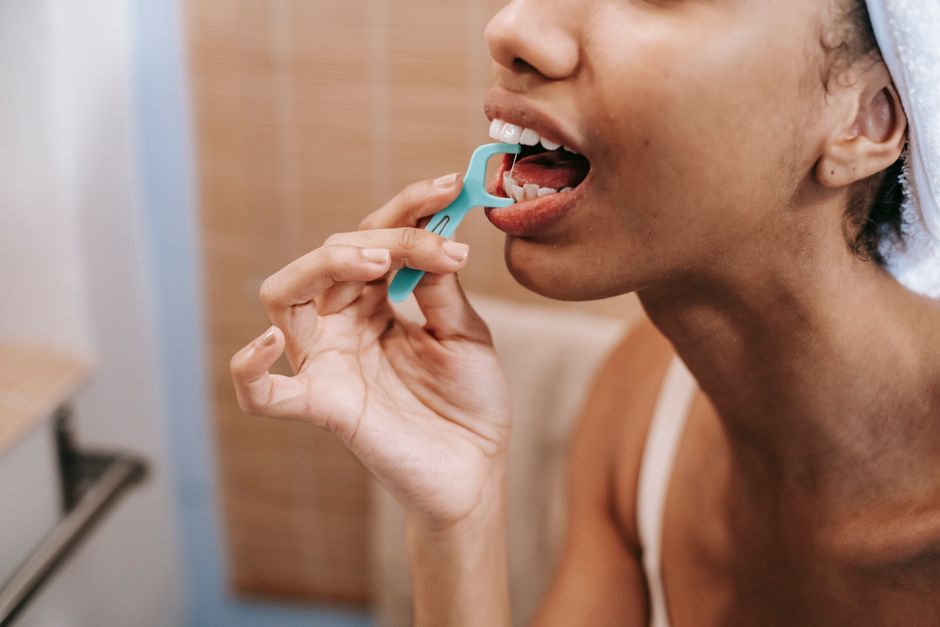
There is no single schedule that fits every mouth, but the most common clinical recommendation is once a day. The American Dental Association advises cleaning between your teeth once daily with floss or another interdental cleaner. Most dentists suggest doing it at night, before you brush, so the fluoride in your toothpaste stays in contact with the clean spaces between your teeth overnight.
How Often Should You Floss Teeth?
Once a day is the standard recommendation from major dental organizations, including the American Dental Association. This applies to adults and children old enough to floss effectively, which is generally around age 10 or when a child can manage the motion without help.
Twice a day is not harmful. Some dentists suggest it for people with a history of gum disease, orthodontic braces, or food that consistently gets trapped between teeth. But there is no strong evidence that flossing twice daily produces better outcomes than once daily for most people.
The reason once a day is considered enough comes down to how plaque works. Plaque is a soft, sticky film of bacteria that forms on teeth continuously. When it is not removed, it hardens into tartar (calculus) over roughly 24 to 72 hours. Once tartar forms, it cannot be removed by flossing or brushing — only a dental professional can scrape it off. Flossing once a day interrupts that hardening process before it becomes permanent.
What matters more than frequency is thoroughness. A quick pass between two teeth does not remove the plaque that sits below the gumline, where gum disease starts. The technique matters as much as the habit.
What Happens If You Only Floss Once a Week?
Flossing once a week is better than never flossing, but it is not enough to prevent gum disease in most people. The gap gives plaque time to harden into tartar, which then irritates the gums and cannot be brushed or flossed away.
Gingivitis — the early, reversible stage of gum disease — develops when plaque stays on the teeth and along the gumline for several days. Symptoms include redness, swelling, and bleeding when you brush or floss. At this stage, the damage can still be reversed with consistent daily cleaning and a professional cleaning.
If gingivitis is not addressed, it can progress to periodontitis. In periodontitis, the inflammation extends below the gumline and the tissues and bone that hold teeth in place begin to break down. This damage is not reversible. It is managed, not cured, and it is a leading cause of tooth loss in adults.
Some research suggests that the bacteria involved in gum disease may also be linked to other health conditions, including cardiovascular disease and diabetes. The relationship is real but complex — it is not yet clear whether gum disease causes these conditions or simply shares risk factors with them. What is clear is that preventing gum disease is worth doing on its own merits.
Is Flossing Every Day Really Necessary?
Yes, if you want to prevent gum disease and cavities between teeth. A toothbrush cannot reach the tight spaces between most teeth. Those surfaces make up a meaningful portion of each tooth’s total surface area, and they are where a large share of cavities begin in adults.
There has been public debate about the strength of the evidence for flossing. In 2016, news reports noted that some reviews found the evidence for flossing’s benefits to be weak or inconsistent. That coverage was widely misread. The issue was the quality of the studies, not proof that flossing does nothing.
Dental professionals point out that flossing is very hard to study well. You cannot ethically ask a group of people to stop cleaning between their teeth for years and then measure how much gum disease they develop. Most studies rely on people reporting their own habits, which is unreliable. The absence of perfect trials is not the same as evidence of no benefit.
What is well established is the mechanism: plaque between teeth causes inflammation and decay if it is not removed. Floss removes it. That logic is sound, and it is why nearly every dental organization still recommends daily cleaning between teeth.





Should You Floss Before or After Brushing?
Before brushing is the better order for most people, based on the limited research available. Flossing first loosens plaque and food particles, and brushing afterward helps sweep them away. It also lets fluoride from toothpaste reach the spaces between teeth more effectively.
A small study published in the Journal of Periodontology found that flossing before brushing removed more plaque than brushing first. The difference was modest, and one study is not enough to settle the question. If you prefer to brush first, the most important thing is that you floss at all.
Timing within the day matters less than consistency. Pick a time you will actually stick with. Many people choose bedtime because it clears the day’s buildup before sleep, when saliva flow drops and bacteria have more opportunity to multiply. But morning flossing is far better than no flossing.
What If Flossing Makes Your Gums Bleed?
Bleeding gums during flossing usually means the gums are inflamed, not that you are flossing too hard. The most common cause is plaque that has been sitting along the gumline, which irritates the tissue. Bleeding is a sign to floss more consistently, not less.
If you have not flossed in a while, some bleeding for the first several days is common. As the gums heal and inflammation drops, the bleeding typically stops. If it continues for more than a week or two of daily flossing, see a dentist. Persistent bleeding can also point to other issues, including gum disease, a bleeding disorder, or a side effect of certain medications.
Technique matters here. Snapping floss against the gums or sawing aggressively can cut tissue and cause bleeding on its own. Use a gentle back-and-forth motion to slide the floss between teeth, then curve it into a C shape against one tooth and slide it up and down, including just below the gumline. Repeat on the other side of the same gap. Use a fresh section of floss for each space.
What If You Cannot or Do Not Want to Floss?
Floss is not the only option. Several interdental cleaners can remove plaque between teeth, and for some people they are easier or more effective than string floss.
- Interdental brushes — small brushes that fit between teeth. For people with wider gaps or gum recession, these may clean better than floss. Some research suggests they outperform string floss for plaque removal in these cases.
- Water flossers — devices that shoot a stream of water between teeth. They are helpful for people with braces, bridges, or implants, though evidence suggests they remove plaque less thoroughly than string floss or interdental brushes on their own.
- Floss picks — plastic handles with a short piece of floss. Convenient, but they can be harder to curve against each tooth properly.
- Wooden or plastic toothpicks — designed for interdental cleaning. Useful in a pinch but not as thorough as floss for tight spaces.
The best interdental cleaner is the one you will use every day. A tool used consistently beats a better tool used rarely. If you have braces, bridges, implants, or gum recession, ask your dentist which option fits your mouth.
How Does Flossing Fit With Brushing and Dental Visits?
Flossing is one part of a routine. Brushing twice a day with fluoride toothpaste for two minutes each time is the foundation. Flossing once a day handles the spaces a brush cannot reach. Regular professional cleanings remove tartar that has already formed and catch problems early.
Most dental organizations recommend a checkup and cleaning every six months for people with healthy mouths. If you have gum disease, a history of cavities, or other risk factors, your dentist may recommend more frequent visits. That schedule is a general guideline, not a fixed rule — your needs may differ.
One point that gets overlooked: flossing does not replace brushing, and brushing does not replace flossing. They clean different surfaces. Skipping one leaves part of each tooth untouched.
Frequently Asked Questions
How often should you floss your teeth?
Once a day is the standard recommendation from the American Dental Association and most dental professionals. Flossing more often is not harmful, but there is no strong evidence that twice daily is better for most people.
Is it OK to floss once a week?
Flossing once a week is better than never, but it is not enough to prevent gum disease in most people. Plaque can harden into tartar within about 24 to 72 hours, and tartar can only be removed by a dental professional.
Should you floss before or after brushing?
Flossing before brushing is generally recommended, based on limited research showing it removes more plaque. That said, the most important factor is that you floss at all — the order matters far less than consistency.
Why do my gums bleed when I floss?
Bleeding usually means your gums are inflamed from plaque buildup, not that you are flossing too hard. If bleeding continues after a week or two of daily flossing, see a dentist to rule out gum disease or other causes.
