
Most babies do not need a bath every day. Three times a week is plenty for a healthy newborn or young infant, and sponge baths are the standard until the umbilical cord stump falls off and, for boys, until the circumcision has healed. Daily bathing is not harmful for most babies, but it can dry out delicate skin, so more frequent washing is usually reserved for babies who genuinely need it.
How Often To Bathe Infant: What Do Health Authorities Recommend?
Major pediatric guidance is consistent on this point. The American Academy of Pediatrics recommends bathing a newborn two to three times a week in the first year. More frequent baths are fine if your baby enjoys them and their skin tolerates it, but they are not required for hygiene.
This surprises many parents. Babies simply do not get very dirty. They do not sweat heavily the way older children and adults do, and their skin has less surface area to accumulate grime. The main things that need cleaning are the diaper area, the face, the neck folds, and the hands.
What matters more than the number of baths is what happens during and after them. Short baths in warm water, gentle washing, and prompt moisturizing do more for skin health than the frequency itself.
Why Daily Bathing Can Be a Problem for Infant Skin
Infant skin is thinner and more permeable than adult skin. The outer layer, called the stratum corneum, is still maturing in the first year. It holds moisture less effectively and loses water more readily.
Frequent bathing, especially with soap and warm water, strips away some of the natural oils that help seal in moisture. That can leave skin dry, tight, and more prone to irritation. For babies with a family history of eczema or dry skin, this matters more.
Soap is not the enemy, but it does not need to be used on the whole body every time. Plain warm water is enough for most of the body on many bath days. Save cleanser for the diaper area, hands, face, and any visibly soiled spots.
One clarification worth knowing: the goal of bathing a baby is not sterilization. Skin has its own microbiome, and harsh scrubbing or antibacterial products disturb it without benefit. Ordinary gentle cleansing is the standard.
Sponge Baths vs. Tub Baths: When to Switch
Newborns start with sponge baths. The umbilical cord stump needs to stay dry until it falls off, which usually happens within the first few weeks. Submerging it in water can slow drying and raise the risk of irritation or infection.
Once the stump has separated and the area has healed, tub baths are appropriate. For circumcised boys, follow your clinician’s guidance on when the site is healed enough for immersion. For uncircumcised boys, no special cleaning under the foreskin is needed in infancy — the foreskin is still attached and should not be forced back.
Here is a simple comparison:
- Sponge bath: Use until the cord stump falls off and the area heals. Wipe with a soft cloth and warm water, then pat dry.
- Tub bath: Use once the cord site is healed. Fill only a few inches of warm water and never leave the baby unattended for even a second.
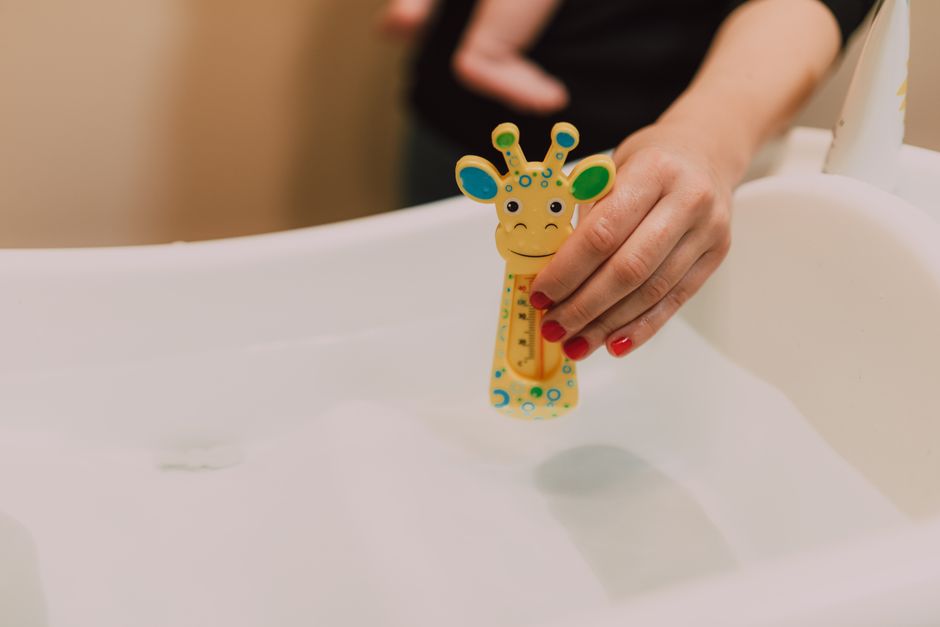
Water temperature should feel comfortably warm to your inner wrist or elbow, not hot. Test it before your baby goes in.
What About Babies Who Spit Up, Sweat, or Have Blowouts?
Bathing frequency is a baseline, not a rule to follow rigidly. Some days call for a bath regardless of the schedule.
Spit-up that lands in neck folds, diaper leaks, and heavy spit-up episodes all warrant cleaning. A quick wipe-down with a warm damp cloth is often enough. You do not need a full bath every time your baby spits up.
Babies in hot weather or who sweat noticeably may benefit from more frequent rinsing. There is no harm in a plain water bath more often if the skin is not drying out.
Watch the skin as your guide. If it looks dry, flaky, or irritated, cut back on soap and frequency. If your baby seems comfortable and skin looks healthy, you are likely doing fine.
How Do You Bathe a Baby Safely?
Safety during bath time is not optional. Drowning can happen in very shallow water, and a baby can slip under in seconds.
Never leave a baby alone in the tub, not even to grab a towel. Have everything within arm’s reach before you start: towel, diaper, clean clothes, and any moisturizer you plan to use.
Keep one hand on your baby at all times. Fill the tub with just a few inches of water. Use a bath seat or your arm to support the head and neck, which babies cannot control well in the early months.
Keep the bath short. Prolonged soaking softens and dries the skin. Five to ten minutes is generally enough for a young infant.
After the bath, pat the skin dry rather than rubbing. Apply a fragrance-free moisturizer within a few minutes while the skin is still slightly damp. This helps trap water in the skin and is a well-established practice for reducing dryness.
Does Bathing Help a Baby Sleep or Soothe Colic?
A warm bath can be calming, and many parents find it fits naturally into a bedtime routine. The evidence that a bath directly improves infant sleep is limited, though some studies suggest a warm bath before bed may help some babies settle.
What is well established is that routines help. A predictable sequence — bath, feed, quiet time, bed — gives babies cues that sleep is coming. The bath itself is one part of that pattern.
For colic, there is no strong evidence that bathing reduces crying. A warm bath may soothe some babies, but colic is not something a bath routine resolves. If your baby cries excessively, talk with your pediatrician.
What Should You Use to Bathe a Baby?
Less is more. A gentle, fragrance-free cleanser and warm water cover almost everything.
Fragrance is a common irritant for infant skin, so unscented products are generally a safer choice. Avoid antibacterial soaps, which are not needed for routine bathing and can be harsh. Bubble baths are best avoided in young infants, especially girls, because they can irritate the genital area.
Wash the diaper area thoroughly but gently. For girls, wipe from front to back to reduce the risk of spreading bacteria toward the urethra. For boys, clean the penis and scrotum without pulling back the foreskin in uncircumcised babies.
Do not use adult soaps, essential oils, or home remedies on infant skin without checking with your pediatrician. Some natural products are irritating or unsafe for babies.
Frequently Asked Questions
Can I bathe my newborn every day?
Yes, daily bathing is generally safe for most newborns, but it is not necessary and can dry out delicate skin. Two to three times a week is the standard recommendation unless your baby needs extra cleaning.
When can I give my baby a tub bath instead of a sponge bath?
Once the umbilical cord stump has fallen off and the area has healed, usually within the first few weeks. For circumcised boys, wait until the site is healed and follow your clinician’s advice.
What temperature should bath water be for a baby?
Warm, not hot — test it on your inner wrist or elbow before your baby goes in. There is no single official number, but the water should feel comfortably warm to your skin, not hot.
Is it okay to skip a bath if my baby seems clean?
Yes. Babies do not get very dirty, and spot-cleaning the face, hands, neck, and diaper area with a warm damp cloth is enough on days between baths.
