
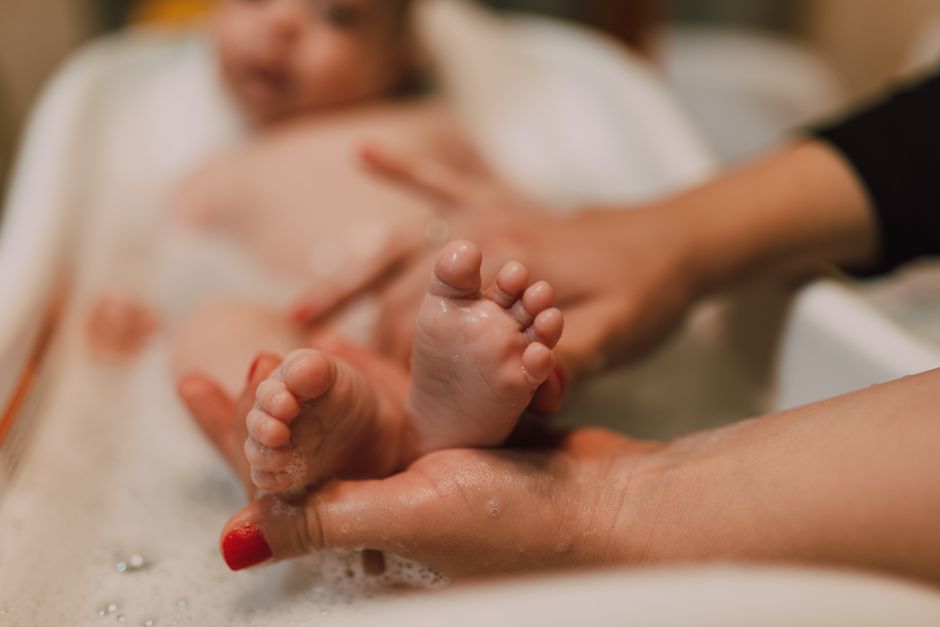
New parents often wonder how often they should bathe a newborn. The short answer is that a newborn only needs a bath two to three times per week during the first few months. Daily bathing is not necessary and can actually dry out a baby’s delicate skin. Between baths, you should clean the face, neck, and diaper area daily with a warm, damp cloth to keep your baby fresh and comfortable.
Why Newborns Do Not Need Daily Baths
Newborn skin is thinner and more sensitive than adult skin. It lacks the mature barrier that protects older children and adults from moisture loss and irritation.
Bathing too frequently strips away the natural oils that keep a baby’s skin soft and healthy. This can lead to dryness, flaking, and conditions like eczema. The American Academy of Pediatrics recommends sponge baths until the umbilical cord stump falls off, which usually happens within one to three weeks after birth.
After the cord stump is gone, you can transition to regular tub baths. Even then, two to three baths per week is enough for the first year of life.
Sponge Baths Before the Umbilical Cord Falls Off
Until the umbilical cord stump dries up and falls off, you should give your baby sponge baths only. Submerging the belly button in water before the stump separates can increase the risk of infection.
To give a sponge bath, lay your baby on a flat, safe surface in a warm room. Have a bowl of warm water, a soft washcloth, and a clean towel ready before you begin.
Dip the washcloth in the warm water and wring it out well. Wipe your baby’s face first, then move down the body. Pay special attention to the skin folds under the arms, behind the ears, around the neck, and in the diaper area. Pat the skin dry and apply a gentle, fragrance-free moisturizer if the skin appears dry.
How to Bathe a Newborn Safely in a Tub
Once the cord stump has fallen off, you can start giving tub baths. The water should feel warm but not hot. Test it with your wrist or elbow — it should feel comfortably warm, not hot. The room should also be warm to prevent your baby from getting chilled.
Fill the tub with only two to three inches of warm water. Never leave your baby unattended in the bath, even for a few seconds. Babies can drown in less than an inch of water, and it happens silently and quickly.
Support your baby’s head and neck with one hand while you wash with the other. Use a mild, fragrance-free baby soap and shampoo. Wash the scalp with a small amount of shampoo, and rinse thoroughly by cupping water over the head while shielding the eyes with your hand.
Clean the diaper area last, using a fresh part of the washcloth. After the bath, wrap your baby in a hooded towel and pat the skin dry. Apply a fragrance-free moisturizer immediately after patting dry to lock in moisture while the skin is still slightly damp.





How Often To Bathe a Newborn: The Key Routine
The core routine for newborn bathing is straightforward: two to three baths per week is plenty. On non-bath days, spot-clean the areas that need attention.
Every day, you should wash your baby’s face with a warm, damp cloth. The neck area also needs daily attention because milk, drool, and spit-up can collect in the folds and cause irritation.
The diaper area needs cleaning at every diaper change. Use warm water and a soft cloth, or fragrance-free baby wipes. Always wipe from front to back for girls to reduce the risk of urinary tract infections.
Hands and feet can be cleaned as needed. Babies often put their hands in their mouths, so wiping them down during the day is a reasonable practice, especially after outings.
What to Do About Cradle Cap and Dry Skin
Cradle cap is a common condition that causes scaly, greasy patches on a baby’s scalp. It is not harmful and usually resolves on its own within the first year.
To manage cradle cap, gently massage a small amount of baby oil or mineral oil into the scalp and let it sit for a few minutes. Then brush the scalp gently with a soft brush and wash with baby shampoo. This loosens the scales without picking or scratching, which can cause infection.
Dry skin is also common in newborns, especially in winter or in dry climates. Bathing too often makes it worse. If you notice dry patches, reduce bathing frequency and apply a thick, fragrance-free moisturizer after each bath.
Some parents wonder if adding products to bathwater helps. Oatmeal bath products are sometimes used for dry or irritated skin, but there is limited evidence on their effectiveness for newborns. Plain warm water with a gentle cleanser is sufficient for most babies.
Signs You Are Bathing Too Often
If you bathe your newborn every day, you may start to notice signs of over-bathing. Dry, flaky skin is the most common sign. You may also see redness or irritation, especially in the skin folds.
Some babies develop eczema, which appears as dry, itchy, red patches. Frequent bathing can trigger or worsen eczema flare-ups. If your baby’s skin seems persistently dry or irritated despite moisturizing, reducing bath frequency is a reasonable first step.
Talk to your pediatrician if you have concerns about your baby’s skin. They can help determine whether a skin condition needs medical treatment or whether simple changes to your bathing routine are enough.
When Bathing Frequency Can Increase
As your baby grows and becomes more mobile, the bathing routine will change. Once your baby starts eating solid foods, crawling, and exploring, they will get messier and may need more frequent baths.
By the time your baby is a toddler, daily baths are common and generally fine. But for the first several months, the two-to-three-times-per-week guideline holds. The goal is to keep your baby clean without stripping the skin of its natural protective oils.
If your baby seems to enjoy bath time and it is part of a calming bedtime routine, you can still bathe more often as long as the skin does not show signs of dryness. Some families bathe daily as part of a wind-down ritual, and that can work well if the skin stays healthy. The key is to watch your baby’s skin and adjust accordingly.
Bath Safety Essentials Every Parent Should Know
Bath time safety is non-negotiable. Never leave a baby alone in the bath, even for a moment. Have everything you need — soap, washcloth, towel, clean diaper, and fresh clothes — within arm’s reach before you start.
Keep the water temperature safe. A water temperature of about 100°F (37.8°C) is considered comfortable for a baby bath. Some parents use a bath thermometer, but testing with your wrist or elbow works just as well.
Check the water heater setting in your home. Set it to no higher than 120°F (49°C) to reduce the risk of scalding. Hot water burns happen quickly and can be severe.
Use a non-slip mat in the tub once your baby can sit up. Until then, keep a firm grip on your baby at all times. Babies are slippery when wet, and a secure hold is essential.
Frequently Asked Questions
How many times a week should I bathe my newborn?
Two to three times per week is enough for a newborn. Daily bathing can dry out sensitive baby skin.
Can I bathe my newborn every day?
Yes, but it is not necessary and may cause dry skin. If you bathe daily, use plain warm water and a gentle cleanser, and apply moisturizer afterward.
When can I give my newborn a real bath in a tub?
You can start tub baths once the umbilical cord stump falls off, usually within one to three weeks after birth. Until then, sponge baths are recommended.
What water temperature is safe for a newborn bath?
About 100°F (37.8°C) is a comfortable bath temperature for a baby. Always test the water with your wrist or elbow before placing your baby in the tub.
