
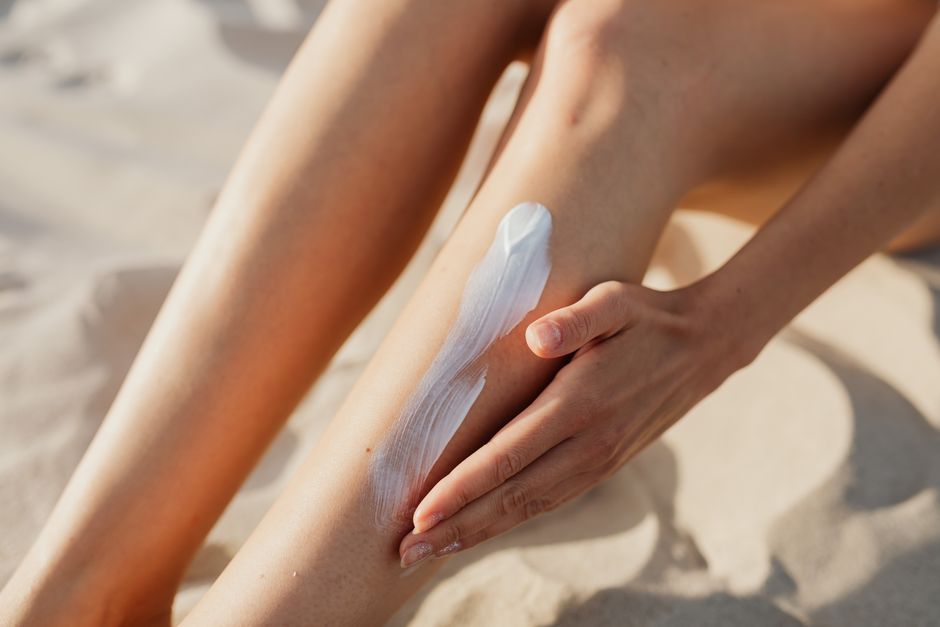
Sunscreen only works while it’s actually on your skin, and it doesn’t stay there all day. Most people should reapply sunscreen every two hours during sun exposure, and sooner if they’ve been swimming, sweating heavily, or toweling off. That’s the short answer. The longer answer involves your skin type, the UV index, what kind of sunscreen you’re using, and a handful of mistakes almost everyone makes.
How Often Should You Reapply Sunscreen?
Every two hours is the standard recommendation from dermatology organizations, including the American Academy of Dermatology. That interval applies whenever you’re outdoors in daylight, even on cloudy days. UV radiation passes through clouds, and it reflects off water, sand, snow, and concrete.
Two hours is not arbitrary. Sunscreen ingredients break down with UV exposure, and the film of product on your skin thins as you sweat, touch your face, and move around. A product labeled SPF 50 does not stay SPF 50 for six hours. The rating is based on how it performs shortly after application under controlled testing conditions.
Reapply sooner than two hours if any of these apply:
- You swam or got out of the water, even with a water-resistant formula
- You sweated heavily, such as during exercise or yard work
- You dried off with a towel
- You rubbed your face or wiped your skin
Water-resistant sunscreens are tested to maintain their SPF for either 40 or 80 minutes of water activity, depending on the label. After that window, protection is no longer guaranteed. The FDA regulates the water-resistance claim, so the number on the bottle means something specific.
Why Do You Need to Reapply Every Two Hours?
UV radiation degrades sunscreen ingredients over time, and the protective layer physically wears away. Both things happen at once, which is why the two-hour rule holds even if you’re sitting still in the shade of a beach umbrella.
There’s a detail most people miss. UV exposure doesn’t just fade sunscreen — it also damages skin in ways that accumulate silently. Sunburn is visible. DNA damage from UVA and UVB is not. You can spend four hours outside without turning pink and still accumulate meaningful UV exposure. Reapplying is about limiting total dose, not just preventing a burn.
SPF itself is measured in a lab under specific conditions: 2 milligrams of sunscreen per square centimeter of skin. Studies have found that real-world users apply far less than that, often a quarter to half the tested amount. When you apply less, you get less protection than the label suggests. Reapplying helps close that gap.
Does the SPF Number Change How Often You Reapply?
No. A higher SPF does not extend the reapplication interval. SPF 30 and SPF 100 both need to be reapplied every two hours.
What SPF changes is how much UV gets through while the product is intact and applied correctly. SPF 30 filters out roughly 97 percent of UVB rays. SPF 50 filters out about 98 percent. SPF 100 filters out around 99 percent. The differences look small on paper but matter over hours of exposure.
The FDA has noted that SPF values above 50 offer only marginal additional benefit over SPF 50. Some products still label higher numbers. The practical takeaway is that SPF 30 or higher is the target, and the reapplication habit matters more than chasing the biggest number on the shelf.
One more thing: SPF only measures UVB protection. It says nothing about UVA. Look for the words “broad spectrum” on the label, which means the product has been tested for UVA protection as well.





How Much Sunscreen Should You Apply Each Time?
Most adults need about one ounce of sunscreen to cover the body — roughly a shot glass worth. For the face and neck alone, about a teaspoon is a reasonable estimate.
This is where most people fall short. Applying half the needed amount doesn’t give you half the SPF in a neat linear way; the protection drops faster than the amount applied. A thin smear of SPF 50 might perform closer to SPF 15 or lower in practice.
Spray sunscreens complicate this further. It’s easy to miss spots, and wind carries product away before it lands. If you use a spray, apply it until the skin looks visibly wet, then rub it in. Don’t spray directly onto the face — spray into your hands first, then apply. And never spray near an open flame, since aerosol sunscreens are flammable.
Does Sunscreen Need to Be Reapplied Indoors or in the Car?
Window glass blocks most UVB but lets a significant amount of UVA through. If you sit near a window for long periods or drive frequently, UVA exposure adds up. UVA contributes to premature skin aging and plays a role in some skin cancers.
For a short commute, reapplication isn’t practical or necessary for most people. For long drives or a desk beside a sunny window, applying broad-spectrum sunscreen to exposed areas in the morning is a reasonable step. Reapply every two hours if you’re genuinely getting sustained exposure through glass.
Indoors away from windows, UV exposure is negligible. You don’t need to reapply sunscreen while sitting in an interior office or at home with the blinds drawn.
What About Makeup, Moisturizer, and Sunscreen Powders?
Makeup with SPF rarely provides enough protection on its own. The SPF value is tested at the full 2 milligrams per square centimeter, and almost nobody applies foundation that thickly. Think of SPF makeup as a small bonus, not your primary defense.
The workable approach is to apply a dedicated sunscreen first, let it settle, then apply makeup over it. Reapplying over makeup is awkward, which is why some people use SPF powders or setting sprays. These can help, but they are hard to apply evenly and in sufficient quantity. They are better than nothing and worse than a proper reapplication.
Sunscreen sticks fall in a similar category. They’re convenient for the face, ears, and part lines, but you need several passes over the same area to build up adequate coverage.
Do You Need Sunscreen on Cloudy Days and in Winter?
Yes. Clouds reduce UV intensity but don’t eliminate it. Some cloud conditions can actually scatter UV in ways that increase exposure. And UVB, the main cause of sunburn, is strongest between 10 a.m. and 4 p.m. regardless of cloud cover.
Winter is a separate issue. Snow reflects up to 80 to 90 percent of UV rays, which nearly doubles your exposure compared to standing on bare ground. Skiers and snowboarders get sunburned at high rates for this reason. Altitude adds more: UV intensity increases roughly 4 to 5 percent for every 1,000 feet of elevation gain.
So the two-hour reapplication rule doesn’t take a season off. If you’re outside with exposed skin, it applies.
What Happens If You Don’t Reapply?
You lose protection gradually and may not notice until it’s too late. Sunburn can take several hours to appear after exposure, so by the time your skin turns red, the damage has already happened.
Repeated unprotected UV exposure is the primary cause of skin cancer, including basal cell carcinoma, squamous cell carcinoma, and melanoma. It’s also the main driver of photoaging — wrinkles, dark spots, and loss of skin elasticity.
Using sunscreen regularly has been shown in research to reduce the risk of squamous cell carcinoma and melanoma. The evidence for basal cell carcinoma is less consistent. Sunscreen is one part of sun protection, not a force field. Shade, clothing, hats, and timing outdoor activity away from peak UV hours all matter.
Quick Reference: Reapplication Timing
| Situation | When to Reapply |
|---|---|
| General outdoor exposure | Every 2 hours |
| Swimming or heavy sweating (water-resistant formula) | Every 40 or 80 minutes, per label |
| After toweling off or rubbing skin | Immediately |
| Indoors, away from windows | Not needed |
| Long drives or desk near a window | Every 2 hours if exposure is sustained |
Frequently Asked Questions
How often should you reapply sunscreen?
Reapply every two hours during sun exposure, and sooner after swimming, heavy sweating, or toweling off. Water-resistant formulas are tested to last either 40 or 80 minutes in water, depending on the label.
Can you reapply sunscreen too often?
No, reapplying more often than every two hours is not harmful and can be helpful if you’re sweating or in water. The two-hour mark is a minimum interval, not a limit.
Does SPF 100 last longer than SPF 30?
No. Higher SPF does not extend how long protection lasts — both need reapplication every two hours. SPF 100 filters slightly more UVB while intact, but the FDA has noted that values above 50 add only marginal benefit.
Do you need to reapply sunscreen if you’re inside all day?
Not if you’re away from windows. Glass blocks most UVB but lets UVA through, so reapply every two hours if you have sustained sun exposure through a window, such as during a long drive.
