
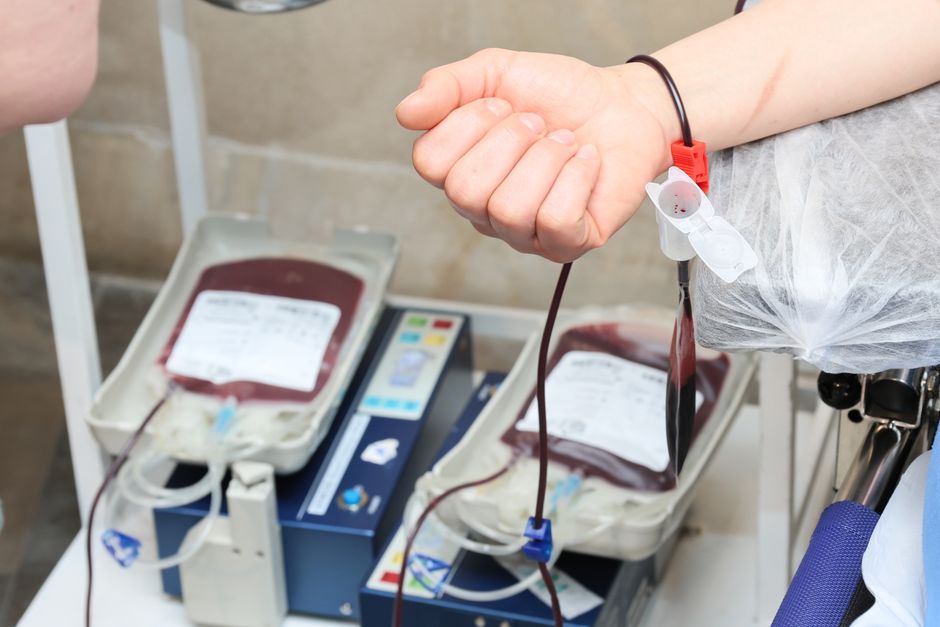
Most healthy adults in the United States can donate whole blood every 8 weeks, which works out to about 6 donations a year. That interval is set by the FDA, and it applies to whole blood specifically. Other types of donations have different timelines. Platelet and plasma donations can be done more often because your body replaces those components faster than it replaces red blood cells.
How often you can give blood depends on what you’re donating, your health, and the rules of the collection center. The 8-week rule for whole blood is the most common starting point, but it is not the only number that matters.
How Often Can You Give Whole Blood?
Whole blood donation is the most common type, and the FDA allows it once every 8 weeks, or 56 days. That schedule caps most donors at 6 whole blood donations per year.
The 8-week wait is not arbitrary. A whole blood donation removes about 1 pint of blood, and roughly half of that is red blood cells. Your body needs time to rebuild its red blood cell supply. Red blood cells carry oxygen, and if you donate again too soon, your hemoglobin can drop low enough to cause fatigue, dizziness, or anemia.
Hemoglobin is the protein in red blood cells that carries oxygen. Before every donation, the center checks your hemoglobin level with a finger-stick test. For women, the minimum is usually 12.5 g/dL. For men, it is usually 13.0 g/dL. If you are below the cutoff, you are deferred even if 8 weeks have passed.
Some donation centers use a slightly longer interval. The American Red Cross, for example, asks whole blood donors to wait 8 weeks, which matches the FDA minimum. Other countries set different rules. In the United Kingdom, men must wait 12 weeks between whole blood donations and women must wait 16 weeks. The difference reflects a precaution against iron depletion, not a difference in how fast blood regenerates.
How Often Can You Donate Platelets or Plasma?
Platelets and plasma can be donated more often than whole blood because the body replaces them faster. Platelets can typically be donated every 7 days, up to 24 times per year. Plasma can be donated every 28 days, up to 13 times per year.
These are apheresis donations. A machine draws your blood, separates out the component it needs, and returns the rest to you. That is why the recovery is different. You lose platelets or plasma, but you keep your red blood cells, which are the slowest component to rebuild.
Platelets are tiny cell fragments that help blood clot. They circulate for only about 8 to 10 days, so the body constantly makes new ones. Plasma is the liquid part of blood, and it is mostly water and proteins. It can be replaced within a day or two.
Because apheresis takes longer and involves returning fluid to your body, the process itself has its own limits. A platelet donation can take 2 to 3 hours. Plasma takes about 1 to 2 hours. Some centers allow a combined platelet and plasma donation, and the wait times then follow the longer of the two intervals.
What Is the Minimum Time Between Blood Donations?
The FDA sets 8 weeks as the minimum interval between whole blood donations. This is a floor, not a target. Donating every 8 weeks for a full year is legal and allowed, but it is not necessarily wise for everyone.
Here is where the numbers get more complicated. Each whole blood donation removes roughly 200 to 250 milligrams of iron. A typical adult diet provides about 8 to 18 milligrams of iron per day, depending on age and sex, according to USDA data. That means replacing the iron lost in one donation can take weeks or months, even when your hemoglobin has already recovered enough to pass the finger-stick test.
This is the part many donors do not hear. Hemoglobin can return to normal before your iron stores do. The finger-stick test measures hemoglobin, not stored iron. So you can pass the test and still be running low on iron.
Frequent whole blood donors — especially menstruating women — are at higher risk of iron deficiency. Some blood centers now offer ferritin testing to regular donors. Ferritin is a protein that stores iron, and low ferritin is an early sign of iron depletion, before anemia develops. If you donate regularly, it is reasonable to ask your center whether ferritin testing is available.




What Affects How Often You Can Give Blood?
Several factors change how often you can donate, and they are not all about the calendar. Your health, your iron status, and the type of donation all play a role.
- Hemoglobin level — below the cutoff, you are deferred regardless of timing.
- Weight — donors generally must weigh at least 110 pounds for whole blood.
- Age — most states allow donation from age 16 or 17, with some requiring parental consent under 18. There is no upper age limit as long as you meet health requirements.
- Medications and travel — certain medications and recent travel to areas with specific infections can trigger temporary deferrals.
- Pregnancy — you cannot donate while pregnant, and centers typically ask you to wait at least 6 weeks after giving birth.
- Recent illness or procedures — colds, flu, and some dental or surgical procedures require a waiting period.
Menstruation matters too. Women who menstruate lose iron every month, which can make it harder to rebuild stores between donations. This is one reason some countries set longer intervals for women than men.
Is Donating Every 8 Weeks Safe?
Donating whole blood every 8 weeks is considered safe for most healthy adults, but the evidence on long-term iron status is more mixed than the donation schedule suggests. The FDA interval is designed to protect red blood cell levels. It does not fully account for iron stores.
Research on frequent donors has found that regular whole blood donation can lead to iron depletion over time, even when hemoglobin stays within the acceptable range. Some studies suggest that donors who give blood at the maximum allowed frequency are more likely to develop low ferritin and, in some cases, iron deficiency without anemia.
Iron deficiency without anemia means your stores are low but your hemoglobin is still normal. Symptoms can include fatigue, reduced exercise tolerance, and difficulty concentrating. These symptoms are easy to dismiss, and many people do.
The honest position is this: the 8-week interval is safe for occasional donors. For people who donate at or near the maximum frequency for years, monitoring iron status is reasonable. Some blood centers now recommend that frequent donors take iron supplements or space out their donations. This is not universal, and recommendations vary by center.
If you donate regularly and feel persistently tired, it is worth talking to a doctor about iron testing. Do not start iron supplements without checking first. Iron can build up to harmful levels if you take too much and do not need it.
How Often Can You Give Blood If You Have a Rare Blood Type?
Your blood type does not change how often you can donate. The interval rules are the same whether you have O negative, AB positive, or any other type.
What changes is how much your donation is needed. O negative blood is the universal donor type for red blood cells, meaning it can be given to patients of any blood type in an emergency. People with O negative blood are sometimes asked to donate more often because their blood is in high demand.
That said, being asked does not mean you should ignore the 8-week rule or your own iron status. The need for your blood type does not change the biology of how fast your body rebuilds red blood cells. If a center pressures you to donate more often than the FDA interval allows, that is a red flag.
Some centers run special programs for rare blood types and may coordinate donations more closely. These programs still follow the same minimum intervals.
What Should You Do Before and After Donating?
Preparation and recovery affect how you feel and how quickly you can donate again. The basics are well established.
Before donating, eat a meal and drink plenty of water. Dehydration makes it harder to find a vein and increases the chance you feel lightheaded. Avoid heavy alcohol the day before. Get a good night’s sleep.
After donating, rest for a few minutes and have a snack and drink. Keep the bandage on for several hours. Avoid heavy lifting or intense exercise for the rest of the day. Drink extra fluids for the next 24 hours.
Most people feel fine within a day. Some feel tired for a day or two. If you feel dizzy, sit or lie down until it passes.
The 8-week wait exists because your body needs it. Following the rule is not just a formality. It protects your red blood cell supply and, over the long run, your iron stores.
Frequently Asked Questions
How often can you give blood?
Healthy adults can give whole blood every 8 weeks, or 56 days, which is about 6 times a year. Platelets can be donated every 7 days and plasma every 28 days.
Can you donate blood every month?
No, whole blood donation requires an 8-week wait between donations. Platelet donations can be done more often, but whole blood cannot be given monthly.
How long does it take to recover from giving blood?
Most people feel normal within 24 to 48 hours, though red blood cells take several weeks to fully rebuild. Plasma and platelets are replaced much faster, often within days.
Is it safe to donate blood every 8 weeks?
For most healthy adults, donating every 8 weeks is considered safe and is allowed by the FDA. Regular donors at maximum frequency may want to monitor their iron levels, since iron stores can drop even when hemoglobin stays normal.
