
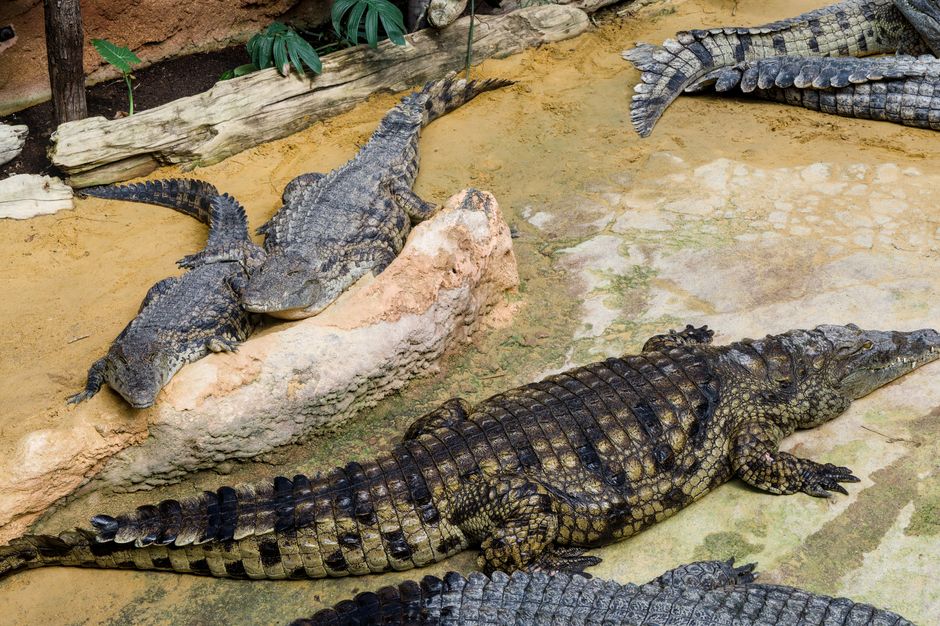
How often a crocodile eats depends entirely on its body temperature, its size, and what it last swallowed. A large adult crocodile that has just taken down a big meal may not eat again for weeks or even months. A small juvenile, by contrast, might feed every few days when prey is easy to catch.
The reason comes down to cold blood. Crocodiles are ectotherms, meaning they do not burn food to keep a warm body running. That single fact shapes everything about how often they hunt, how much they eat at once, and why a crocodile can go so long between meals without starving.
How Often Does a Crocodile Eat in the Wild?
There is no fixed schedule. A wild crocodile eats when it can catch something, and that timing is driven by opportunity and temperature rather than hunger on a clock.
Large adults sit at the top of their food chain and can afford to wait. After a substantial kill, an adult may go several weeks before hunting seriously again. Some well-fed adults have gone far longer, though reports of extreme fasting usually involve large crocodiles in cool conditions where their metabolism has slowed dramatically.
Juveniles live a different life. They eat insects, small fish, frogs, and crustaceans, which are small meals with little staying power. A young crocodile that is warm and growing will feed far more often than a big adult, sometimes several times a week when prey is abundant.
The honest summary: frequency ranges from every few days for small, active crocodiles to once every few weeks or longer for large adults. There is no single number that applies across the species.
Why Cold Blood Changes Everything
A crocodile’s food intake is tied to its body temperature. Because it cannot generate its own heat, its metabolism rises and falls with its surroundings.
When a crocodile is warm, digestion speeds up and appetite returns. When it is cool, digestion nearly stalls and the animal has little interest in food at all. This is why crocodiles in cooler climates or during cold seasons may eat far less often than the same species in the tropics.
A warm crocodile also digests faster, which means it gets hungry sooner. A crocodile that basks in the sun after a meal will process that meal more quickly than one that stays in cool water. The relationship between temperature and appetite is one of the most reliable patterns in crocodile biology.
This is also why you may see a crocodile lying in the sun for hours after eating. It is not resting for its own comfort. It is raising its body temperature to break down a meal that would otherwise sit undigested.
How Much Can a Crocodile Eat at Once?
Crocodiles are built to eat large meals in single sittings. A big adult can consume a substantial fraction of its own body weight in one feeding, which is part of why it can then go so long without eating again.
Their anatomy supports this. Crocodiles have a powerful bite and teeth designed for gripping and tearing rather than chewing. They swallow prey in large chunks or whole. Their stomachs are highly acidic, which helps break down bone and other tough material that would overwhelm most digestive systems.
There is a limit, though. A crocodile cannot simply eat without end. Once full, it stops, and digestion takes over. The combination of a large meal and slow metabolism is what allows the long gaps between feedings.





Do Crocodiles Store Food for Later?
Crocodiles do not cache food the way some mammals do. They do not bury a kill and return to it weeks later in any organized way.
What they do have is a remarkable ability to store energy in their own bodies. A well-fed crocodile carries fat reserves, and its slow metabolism means those reserves last a long time. This is the real reason a crocodile can skip meals for weeks: it is living off stored energy, not off a hidden food supply.
Some crocodiles have been observed leaving a large carcass in the water and returning to it as it decomposes, feeding over several days. This is opportunistic scavenging rather than deliberate storage, but it does stretch a single kill into multiple meals.
How Long Can a Crocodile Go Without Eating?
Large crocodiles can survive long periods without food, and this is well documented in captive animals. The key word is survive, not thrive.
A big adult crocodile in a cool environment can go months without eating and remain alive. Its metabolism drops, it becomes largely inactive, and it draws on stored fat. This is not a comfortable state, and it is not something a crocodile seeks out. It is a tolerance, not a lifestyle.
Smaller crocodiles have far less stored energy relative to their size and cannot endure nearly as long. A juvenile that goes weeks without food is in real trouble. Size matters enormously here, which is why general statements about how long a crocodile can fast should always be qualified by how big the animal is.
How Often Do Crocodiles Eat in Captivity?
Captive crocodiles are usually fed on a schedule set by keepers, and that schedule varies widely by facility, species, and the animal’s size.
Many zoos and farms feed adult crocodiles relatively infrequently, sometimes once every week or two, adjusting for temperature and the animal’s condition. Younger, growing crocodiles are typically fed more often. Keepers watch body condition closely, since overfeeding a slow-metabolism animal can cause health problems just as underfeeding can.
This is worth noting because captive feeding schedules are not a natural baseline. They reflect what caretakers have found works to keep animals healthy in an enclosure, not how often the same crocodile would eat in the wild.
What Do Crocodiles Actually Eat?
Diet shifts dramatically with age. A hatchling eats insects, small fish, and tiny crustaceans. As it grows, its prey grows with it.
- Juveniles: insects, small fish, frogs, crustaceans, and other small aquatic animals
- Sub-adults: larger fish, birds, reptiles, and small mammals
- Adults: fish, turtles, birds, and mammals of various sizes, depending on what is available
Adults are opportunistic and will take whatever they can catch or find, including carrion. The larger the crocodile, the larger the prey it can handle, and the larger the meal, the longer it can go before needing another.
Does Hunting Cost a Crocodile Much Energy?
Crocodiles are ambush predators, and this is central to how often they need to eat. They do not run down prey over long distances. They wait, often submerged with only their eyes and nostrils above the surface, and strike when something comes close.
This strategy is low-cost. A failed strike wastes little energy compared with a chase. A successful one delivers a large meal for a small expenditure. That efficiency is exactly why a crocodile can afford to eat infrequently: it is not burning much fuel between meals.
A crocodile that had to chase prey across open ground would need to eat far more often. It does not, and that shapes its whole feeding rhythm.
The Bottom Line on Crocodile Feeding Frequency
There is no universal answer to how often a crocodile eats. A young, warm, growing crocodile may feed several times a week. A large adult in cool conditions may go weeks or months between meals and remain alive.
The controlling factors are temperature, size, and the size of the last meal. Cold blood makes long fasting possible. A big body and a big meal make it last. Nothing about this is a fixed schedule, and any source that gives you one number for all crocodiles is oversimplifying a genuinely variable animal.
Frequently Asked Questions
How often does a crocodile eat?
A large adult may eat once every few weeks or longer, while a small juvenile may feed several times a week.
The gap depends mainly on the crocodile’s size, its body temperature, and how big its last meal was.
Can a crocodile go a year without eating?
Large crocodiles can survive very long fasts, and captive adults have gone months without food.
Smaller crocodiles cannot endure nearly as long because they carry far less stored energy.
Do crocodiles eat every day?
No. Most crocodiles do not eat daily, and large adults often go weeks between meals.
Only small, actively growing crocodiles in warm conditions with abundant prey might feed close to that often.
What makes a crocodile eat more often?
Warmth and small body size are the two biggest factors.
A warm crocodile digests faster and gets hungry sooner, and a small crocodile burns through its reserves much more quickly than a large one.
