
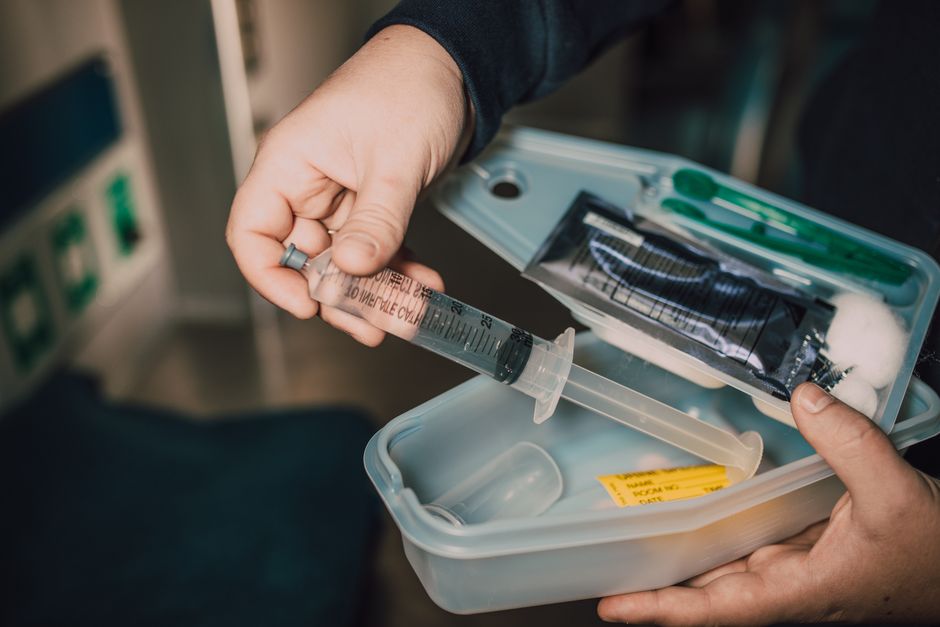
There is no single schedule for PRP injections that applies to everyone. The honest answer is that frequency depends almost entirely on what is being treated, and even then, protocols vary widely between clinics and there is no national standard that all providers follow.
PRP, or platelet-rich plasma, is blood plasma with a higher concentration of platelets than normal blood. Clinics draw a small amount of your blood, spin it in a centrifuge to concentrate the platelets, and inject that concentrated portion into an injured area. The idea is that platelets release growth factors that may support tissue repair. Whether that translates into meaningful healing is still being studied, and the evidence is stronger for some conditions than others.
How Often Can You Get PRP Injections?
Most PRP treatment plans use a series of injections spaced roughly two to four weeks apart, followed by a longer gap before any repeat treatment. That spacing is not random. It reflects the biological timeline of how platelets release growth factors and how long the initial inflammatory response lasts after an injection.
Because there is no single governing body that sets PRP dosing, the schedule you get depends on your provider, the condition being treated, and the specific product or preparation method used. Some clinics inject once and wait. Others recommend a series of two to three injections. A few suggest more. The variation is real, and it reflects how unsettled this field still is.
What most protocols share is a gap of at least a couple of weeks between injections. Injecting the same site more frequently than that is not well supported and may work against the goal, since the healing response needs time to unfold.
Why Does the Schedule Differ by Condition?
Tendons, joints, and skin heal on different timelines, so the treatment approach changes with the target tissue.
For chronic tendon problems — like tennis elbow or Achilles tendinopathy — providers often use a series of injections spaced a few weeks apart. Tendons have limited blood supply and heal slowly, so the logic is to give the tissue repeated signals over a period of weeks rather than one large dose.
For knee osteoarthritis, some studies have used a series of injections given at set intervals, often weekly or every few weeks, then compared results against other treatments. The evidence here is mixed. Some trials show pain improvement, others do not, and study designs differ enough that drawing firm conclusions is difficult.
For hair restoration, the schedule tends to be more frequent at the start and then spaced out for maintenance. For skin and cosmetic uses, protocols vary even more because there is little standardization across products and techniques.
The point is that “how often” cannot be answered without knowing “for what.” A schedule that makes sense for a tendon is not automatically right for a joint or for skin.
What Does the Evidence Actually Show?
PRP has been studied for years, and the results are genuinely mixed. This is not a case where the science is settled in either direction.
For some tendon conditions, research suggests PRP may reduce pain and improve function compared with doing nothing or with certain other non-surgical options. For other conditions, studies have found little or no advantage over placebo injections or standard care.
A recurring problem in this research is that PRP is not one thing. The concentration of platelets, whether white blood cells are included, how the blood is processed, and how many injections are given all vary between studies. That makes it hard to compare results and hard to say definitively what works.
What is fair to say: PRP is an active area of research, some evidence supports it for specific uses, and the evidence does not support it as a universal treatment for all joint, tendon, or cosmetic concerns. Anyone presenting it as a guaranteed fix is going beyond what the data shows.




What Factors Change How Often You Get Injections?
Several things influence the schedule a provider recommends.
- The condition being treated — acute injuries, chronic tendon problems, and joint arthritis each follow different logic.
- How you respond — if you get relief after the first injection, the plan may change.
- The provider’s protocol — clinics follow their own internal guidelines, which differ.
- Your overall health — conditions that affect blood or healing may matter.
- Cost and coverage — PRP is often not covered by insurance, which affects how many sessions people pursue.
Response matters most. If a first injection brings no change, some providers adjust the plan; others stop. There is no rule that says you must complete a set number of injections.
Is There a Maximum Number of PRP Injections?
No official maximum exists, because no regulatory body sets PRP dosing the way it does for drugs. That absence of a standard is worth understanding, because it is different from most medical treatments.
In practice, many providers limit the number of injections in a series and then reassess. The concern with repeated injections is not a well-documented toxicity but rather that more is not necessarily better, and each injection carries its own small risks.
Those risks include temporary pain, swelling, and a small chance of infection at the injection site. These are generally short-lived, but they are real. Anyone considering PRP should weigh the cost and the lack of insurance coverage against uncertain benefit.
How Does the Timing Between Injections Work?
The gap between injections is designed around how the body responds to the injection itself. After PRP is injected, there is an initial inflammatory phase, followed by tissue remodeling that unfolds over weeks.
Injecting again too soon may interrupt that process. This is why most protocols wait at least a couple of weeks, and often longer, before repeating.
Some providers also recommend avoiding anti-inflammatory medications around the time of injection, on the theory that inflammation is part of the intended response. Whether this matters clinically is not firmly established, and guidance on it varies. Ask your provider what they recommend and why.
What Should You Ask Before Starting PRP?
Because protocols vary so much, the most useful thing you can do is ask direct questions before committing.
- How many injections are planned, and how far apart?
- What evidence supports this schedule for my specific condition?
- What results should I realistically expect, and by when?
- What are the risks, and what happens if it does not work?
- Is this covered by insurance, and what will it cost?
If a provider promises a specific outcome or a guaranteed result, that is a signal to slow down. Honest providers will tell you the evidence is mixed and that responses vary.
Frequently Asked Questions
How often can you get PRP injections?
Most protocols space injections about two to four weeks apart as a series, followed by a longer gap before any repeat. There is no single standard, so the exact schedule depends on the condition and the provider.
How many PRP injections do you need?
Many providers recommend a series of two to three injections, but this varies widely and no official maximum exists. Some people need fewer, and some plans involve more based on how you respond.
Can you get PRP injections too often?
Injecting the same site more frequently than every couple of weeks is not well supported and may interfere with the healing response. Each injection also carries small risks like pain, swelling, and a low chance of infection.
Is PRP covered by insurance?
PRP is often not covered by insurance because it is still considered investigational for many uses. Check with your provider and your insurer before starting, since costs are usually paid out of pocket.
