
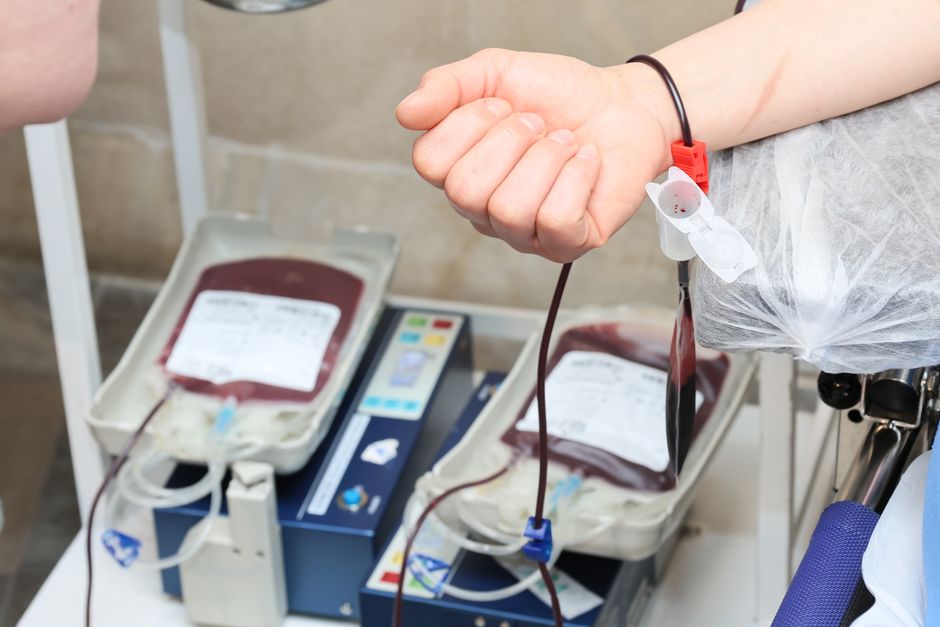
Plasma donation is limited to once every 28 days in the United States, which works out to a maximum of 13 donations in a 12-month period. That 28-day gap is a federal rule, not a suggestion. The same 28-day standard applies whether you donate through a community blood center or a for-profit plasma collection company. If you donate plasma and also give whole blood or platelets, those donations count against separate schedules, and you need to track both.
The rules exist because plasma donation removes fluid, proteins, and salts from your body, and your body needs time to replace them. The limits are designed to protect donors, not to ration a resource.
How Often Can I Give Plasma Weekly And Annual Limits?
You cannot donate plasma weekly in the United States. Federal guidance from the Food and Drug Administration sets the minimum interval at 28 days between plasma donations, which means roughly one donation per month. Over a full year, that caps you at 13 plasma donations.
This is the rule that licensed plasma collection centers follow, and it applies to both source plasma (the kind collected at dedicated plasma centers) and plasma collected during a whole blood donation. The 28-day clock starts from the date of your last donation.
The annual limit comes from the math, not a separate rule: 365 days divided by 28 days is about 13 donations. Some centers track donations on a rolling calendar basis, so your exact annual total depends on when you start.
One point people often miss: the 28-day rule is a federal minimum. Individual collection centers can set stricter schedules, and some do. Always confirm the current interval with the center where you donate, because their policy governs your appointment.
Why Is There a 28-Day Waiting Period Between Plasma Donations?
Plasma is about 90 percent water, and the rest is a mix of proteins, electrolytes, and other substances. When you donate, you lose a meaningful volume of that fluid and those proteins in one sitting. Your body replaces the water within a day or two, but rebuilding plasma proteins takes longer.
The proteins matter most. Albumin and clotting factors are produced by your liver, and replacing what you lost takes time. The 28-day interval gives your body room to restore those levels before the next donation. Research on frequent plasma donors has shown that protein levels can dip with repeated donations, which is one reason the waiting period exists.
There is also a practical safety reason. Plasma donation uses a process called plasmapheresis, where blood is drawn, the plasma is separated out, and the red cells and other components are returned to you. That process involves anticoagulant citrate and a longer time on the machine than a whole blood donation. The interval protects against cumulative strain on your body and your veins.
The 28-day rule is not arbitrary. It reflects a balance between collecting a needed medical product and keeping donors healthy over years of repeat donation.
What Are the Annual Limits and How Are They Tracked?
The annual limit is 13 plasma donations per 12-month period, based on the 28-day interval. Collection centers track this through a national database, so a donation at one center is visible to another.
This matters because donors sometimes try to donate at multiple centers to shorten the wait. That does not work. Plasma centers are required to check a shared registry before accepting a donor, and a recent donation will show up regardless of which company runs the center.
Whole blood donation has its own schedule. In the US, you can give whole blood every 56 days, which is about eight weeks. If you donate whole blood, the plasma in that donation counts as plasma, and you generally need to wait before donating plasma by apheresis. The two schedules interact, so keep a record of every donation type.
Platelet donation follows a different timeline again, and it can be done more frequently than plasma donation because platelets are replaced faster. If you donate multiple blood products, the most restrictive interval applies to your next donation.
What Happens to Your Body Between Plasma Donations?
Most of the fluid you lose during a plasma donation is replaced within 24 to 48 hours if you drink enough fluids. That is why many donors feel normal the next day. The proteins take longer.
Albumin, the most abundant plasma protein, has a half-life of about 20 days in the body. That means your levels recover gradually over the weeks between donations. This is a big part of why the 28-day interval lines up with the biology of protein replacement.
Clotting factors are replaced faster than albumin, but they still need time. Repeated donations at the shortest allowed interval can keep protein levels at the lower end of normal in some donors. That is not necessarily harmful, but it is why centers check your protein levels periodically.
If your total protein or albumin falls below the center’s threshold, you may be deferred temporarily. This is a safety check, not a punishment. It means your body needs more time before the next donation.
Does Donating Plasma Every 28 Days Cause Health Problems?
For most healthy donors, donating plasma at the maximum allowed frequency does not cause lasting harm. Studies of long-term plasma donors have generally found that the body adapts, and protein levels stay within acceptable ranges in donors who follow the rules and stay well hydrated and well nourished.
That said, the evidence is not unlimited. Long-term studies of very frequent donors exist but are not large, and they do not cover every possible health outcome. The honest position is that the 28-day rule is built on solid physiological reasoning and donor safety data, but it is not a guarantee that every donor will tolerate the maximum schedule equally well.
Some donors report fatigue, bruising, or lightheadedness with frequent donations. Others notice nothing. Individual response varies, and there is no reliable way to predict who will struggle. If you feel run down after donations, spacing them further apart is reasonable.
Donating plasma also removes some antibodies and other immune proteins. The body replaces them, but the process takes time. This is another reason the interval exists.
What Should You Do Before and After a Plasma Donation?
Hydration is the single most useful thing you can control. Drink water in the hours before and after donation. Being well hydrated helps your body handle the fluid shift and can reduce the chance of feeling faint.
Eat a normal meal beforehand, ideally with some protein and complex carbohydrates. Donating on an empty stomach increases the risk of lightheadedness. Avoid alcohol before donation, since it adds to dehydration.
After donation, keep the bandage on as directed by the center, avoid heavy lifting or intense exercise for the rest of the day, and eat and drink normally. If you feel dizzy, sit or lie down rather than trying to push through it.
Tell the center staff about any medications, recent illnesses, or travel. Some medications and health conditions affect eligibility, and the screening exists to protect both you and the people who receive the plasma.
How Does Plasma Donation Differ From Whole Blood Donation?
Plasma donation takes longer than whole blood donation, often around 45 minutes to an hour or more depending on the machine and your body. Whole blood donation is usually quicker, around 10 to 15 minutes for the draw itself.
The recovery is different too. Whole blood removes red blood cells, which take weeks to regenerate, which is why the whole blood interval is 56 days. Plasma donation returns your red cells to you, so you do not lose them. That is why plasma can be donated more often than whole blood.
The trade-off is that plasma donation involves returning fluid to your body through the same needle, which uses an anticoagulant. Some donors feel a tingling sensation from the citrate, which staff can usually manage by slowing the return or adjusting the process.
Both types of donation matter. Plasma is used for people with immune deficiencies, bleeding disorders, and burn injuries, among other conditions. Whole blood is used for surgery and trauma. The schedules reflect what each donation takes out of you.
Can You Donate Plasma More Often in Other Countries?
Rules vary by country, and some allow shorter intervals than the US. That does not mean those schedules are safer for every donor. It means regulators weigh the same trade-offs differently.
In the US, the 28-day interval is the standard you should follow if you donate here. If you travel and donate elsewhere, tell the center when you return, since their records may not automatically capture donations made abroad.
The safest approach is to follow the rules of the country where you are donating and to be honest about your donation history. Centers rely on donor honesty to keep the system safe.
Frequently Asked Questions
Can I donate plasma twice in one week?
No. US rules require at least 28 days between plasma donations, so twice in one week is not allowed at licensed centers. Attempting to donate at a different center will not work because donations are tracked in a shared registry.
How many times a year can you donate plasma?
The 28-day interval allows a maximum of 13 plasma donations in a 12-month period. Your exact number depends on when you start, since the count is based on a rolling calendar.
Does donating plasma weekly hurt your body?
Weekly plasma donation is not permitted in the US, and the 28-day rule exists to give your body time to replace plasma proteins. Donating more often than allowed could keep protein levels too low, which is why centers monitor donors.
Can I donate plasma and whole blood in the same month?
You can, but the schedules interact, and the most restrictive waiting period applies to your next donation. Tell the center about any recent whole blood donation so they can confirm your eligibility.
